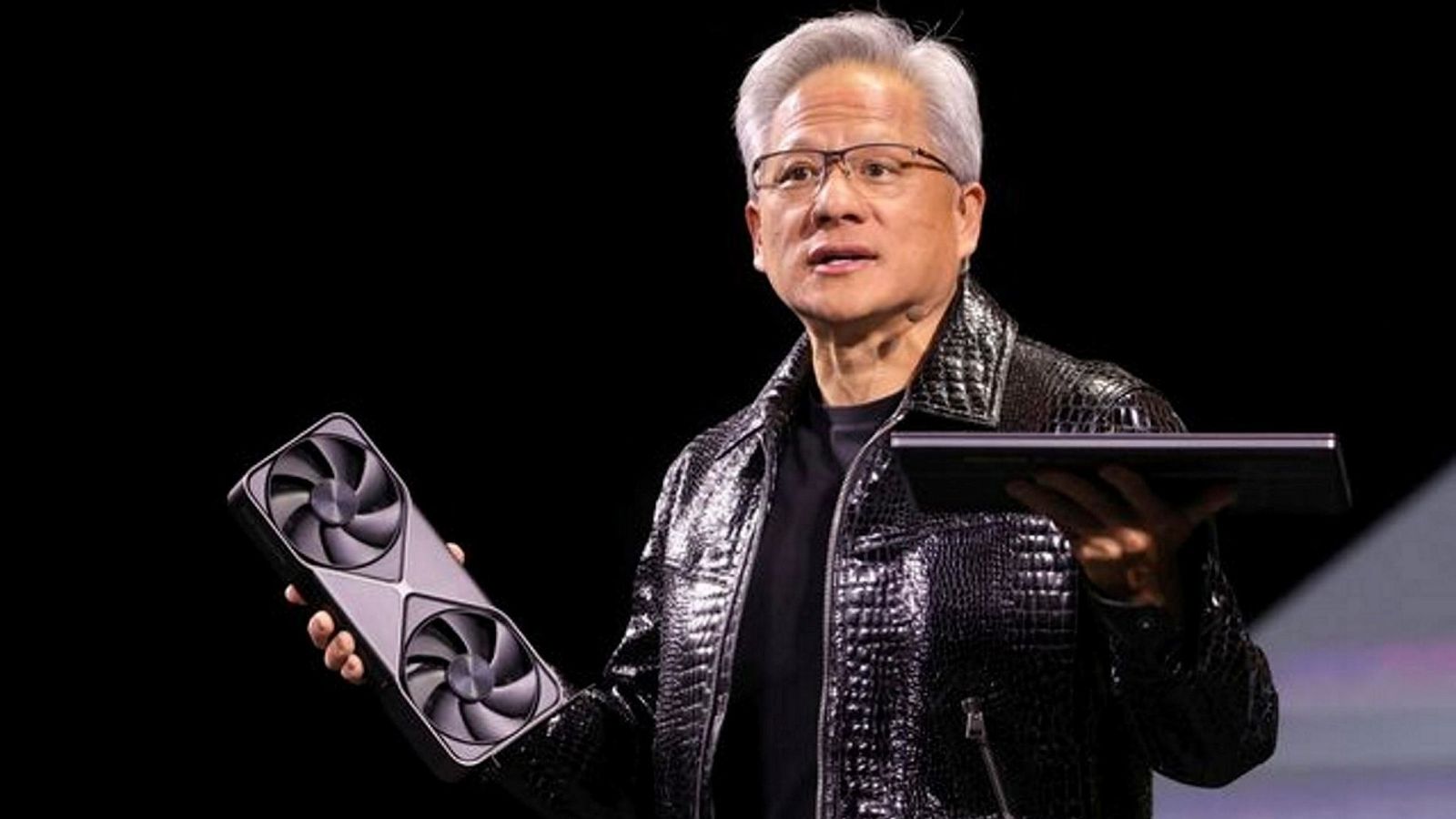
Rumors about Jensen Huang stepping down—or making some dramatic "return" to the corner office—circulate on Wall Street every single quarter. Let's clear the air right away. Jensen Huang never left Nvidia. He co-founded the company in 1993, and he's been sitting in the chief executive chair every day since.
If you stumbled across headlines claiming "Jensen Huang's return as CEO is not Nvidia's plan," you're looking at a classic case of broken-telephone journalism or a misread succession report. You can't return to a job you never vacated. Still, those confusing headlines point toward a much bigger, very real question that institutional investors and tech insiders actually lose sleep over. What happens when the longest-tenured CEO in the semiconductor industry eventually steps aside?
Why The Jensen Huang CEO Rumors Keep Happening
Financial news cycles move fast. Too fast. When a major business outlet publishes a piece analyzing Nvidia's board governance, succession planning, or leadership structure, aggregator sites often mangled the framing. Sometimes a translated headline turns "Nvidia has no plans for a post-Huang leadership transition" into something garbled about a "return." Other times, commentators confuse Huang's situation with founder-CEOs who actually did step down and come back, like Steve Jobs at Apple, Howard Schultz at Starbucks, or Bob Iger at Disney.
Huang isn't Bob Iger. He didn't retire to write a memoir and then sweep back in to rescue a floundering stock price.
Under his uninterrupted three-decade watch, Nvidia transformed from a niche PC graphics card maker into the foundational hardware and software engine of modern artificial intelligence. That kind of stability is unheard of in Silicon Valley. Most tech founders either get pushed out by venture capitalists before an IPO or cash out once the company hits a hundred billion dollars. Huang stayed through the near-bankruptcy of the mid-1990s, the crypto-mining boom-and-bust cycles, and the blocked Arm acquisition.
Because his identity is so tightly fused with Nvidia's market valuation, even a minor regulatory filing mentioning executive continuity triggers algorithmic news bots. Those bots spit out awkward headlines, retail traders panic-click, and suddenly half the internet thinks Jensen took a sabbatical.
How Nvidia Actually Runs Without Traditional Hierarchy
To understand why a sudden leadership shakeup isn't on Nvidia's immediate roadmap, you have to look at how Huang manages the building. Most Fortune 500 CEOs sit atop a rigid pyramid. Information filters up through layers of vice presidents, gets sanitized in slide decks, and reaches the boss weeks too late.
Huang hates that setup. He runs Nvidia with an unusually flat organizational chart.
He reportedly has around 50 to 60 direct reports. Think about that number for a second. In a company employing tens of thousands of people, dozens of executives answer directly to one man. He doesn't hold regular one-on-one meetings unless a direct report specifically requests one to solve an immediate problem. Instead, he relies on massive group meetings where junior engineers and senior vice presidents sit in the same room, hearing the exact same critique at the exact same time.
This structure has two massive consequences for Nvidia's succession reality:
- No obvious crown prince exists. Because Huang doesn't use a traditional Chief Operating Officer buffer, there isn't a single deputy running half the company while waiting to inherit the throne.
- Institutional knowledge is distributed horizontally. Key lieutenants like Chief Financial Officer Colette Kress, Executive Vice President of Worldwide Field Operations Jay Puri, and engineering veterans like Jonah Alben and Dwight Diercks own massive, distinct pillars of the business.
Honestly, this flat model works brilliantly while Huang is at the helm. He acts as the central router for corporate strategy, reviewing "Top 5 Things" emails sent directly by employees across the ranks to spot technical bottlenecks before competitors even realize a market shift is happening.
What Nvidia's Board Says About Succession Planning
Public company boards don't get to shrug and hope their founder lives forever. The U.S. Securities and Exchange Commission and institutional shareholders demand formal succession frameworks, especially when a single executive commands the kind of influence Huang does.
In Nvidia's annual proxy statements, the board's Compensation Committee and Nominating and Corporate Governance Committee explicitly outline their ongoing review of executive talent and emergency contingency plans. That's standard corporate governance. Every major S&P 500 company maintains a "hit by a bus" envelope—a confidential protocol naming an interim chief executive in case sudden tragedy strikes.
Having an emergency binder in a safe is completely different from actively preparing a handover.
Huang, born in 1963, has repeatedly brushed aside retirement chatter in interviews. When asked how long he plans to stay, his answer usually boils down to a simple metric: as long as he's still having fun, still learning, and still feeling useful to the team. Unlike executives who view their job as a grueling sprint toward a yacht in the Mediterranean, Huang treats engineering architecture and market creation as his primary hobbies.
He also holds a massive personal stake in the company—roughly 3.5 percent of Nvidia's outstanding shares. At Nvidia's multi-trillion-dollar scale, his net worth rises and falls by billions of dollars on a random Tuesday afternoon. He doesn't need a golden parachute, and he isn't working for a base salary.
The Real Key-Person Risk Investors Should Watch
If you're analyzing Nvidia as an investor, a customer, or a competitor, stop worrying about phantom "return" headlines and focus on actual key-person risk. Wall Street analysts talk about key-person risk all the time, usually as a dry footnote in a 40-page equity research report. At Nvidia, it's the whole ballgame.
Consider what Huang actually brings to the table beyond standard administrative oversight:
- Product architecture intuition. Huang isn't a finance guy who learned tech buzzwords. He holds a master's degree in electrical engineering from Stanford and worked as a microprocessor designer at LSI Logic and AMD before starting Nvidia. He understands transistor physics, memory bandwidth constraints, and CUDA software compilation at a granular level.
- Supplier leverage. Building modern AI data center clusters requires coordinating hundreds of suppliers, starting with Taiwan Semiconductor Manufacturing Company (TSMC) for advanced packaging and silicon wafers, plus SK Hynix and Micron for high-bandwidth memory. Huang's decades-long personal relationships in Taiwan—where he was born—give Nvidia allocation priority that rival chipmakers simply cannot buy.
- Developer ecosystem lock-in. Nvidia's real moat isn't just the GPU hardware; it's CUDA, the proprietary software platform that millions of developers use to program those chips. Huang bet the company on CUDA back in 2006, taking brutal heat from Wall Street for years while margins compressed to fund a software ecosystem nobody yet needed. A conventional CEO would have killed that project after four quarters of stock declines.
Replacing a manager is easy. Replacing a founder who combines deep silicon engineering literacy with fearless capital allocation is nearly impossible. Look at Intel over the past decade. When engineering-driven founders stepped back and financial or operational executives took over, Intel missed mobile, fumbled manufacturing nodes, and surrendered its crown to TSMC and Nvidia.
Why Competitors Hope For A Leadership Change
Rivals across the semiconductor industry—from AMD and Intel to hyperscalers designing custom silicon like Google's TPUs and Amazon's Trainium chips—know they can't out-spend Nvidia right now. Their best long-term opening isn't a single benchmark victory; it's organizational fatigue at the top of Nvidia.
Keeping a giant corporation moving at startup speed requires relentless cultural pressure. Huang famously talks about running the company as if it's always "30 days from going out of business." That mindset keeps teams from getting complacent when gross margins hover above 70 percent.
If Huang ever does step away, Nvidia's biggest threat won't be a sudden collapse in chip quality. The threat will be bureaucracy creeping in. Without a founder at the top tearing up org charts and forcing painful architectural pivots—like shifting from pure gaming graphics to accelerated computing, or from individual chips to full-rack networking systems—a successor might naturally optimize for safe, incremental quarterly beats. And in semiconductors, playing it safe is a slow death sentence.
How To Separate Real Nvidia News From Clickbait
When you see sensational headlines about executive shakeups at major tech companies, run a quick reality check before adjusting your portfolio or citing the story in a meeting.
Check the primary source first. Did the news come from an official Form 8-K filing with the SEC, a press release on Nvidia's investor relations portal, or a tier-one financial outlet like Bloomberg, Reuters, or The Wall Street Journal? If a headline only cites "a report" without naming an original journalist or regulatory document, treat it as noise.
Look closely at the phrasing. Search engines and social feeds reward confusion. Articles discussing "what happens after Jensen Huang" or "why Nvidia isn't planning a leadership change" frequently get scraped, rewritten by automated tools, and spit back out with bizarre grammar like "Huang's return not Nvidia's plan."
Pay attention to actual executive movement underneath the CEO layer instead. In healthy tech companies, succession readiness shows up years early through expanded roles for senior vice presidents, increased visibility on quarterly earnings calls, and keynote appearances at major industry events like GTC. Until you see Nvidia systematically handing flagship keynote duties and strategic architectural announcements over to a designated lieutenant, Jensen Huang isn't going anywhere—and he certainly doesn't need to plan a return.


