Every few years, international headlines declare that Benjamin Netanyahu is finally finished. And every few years, those predictions age terribly.
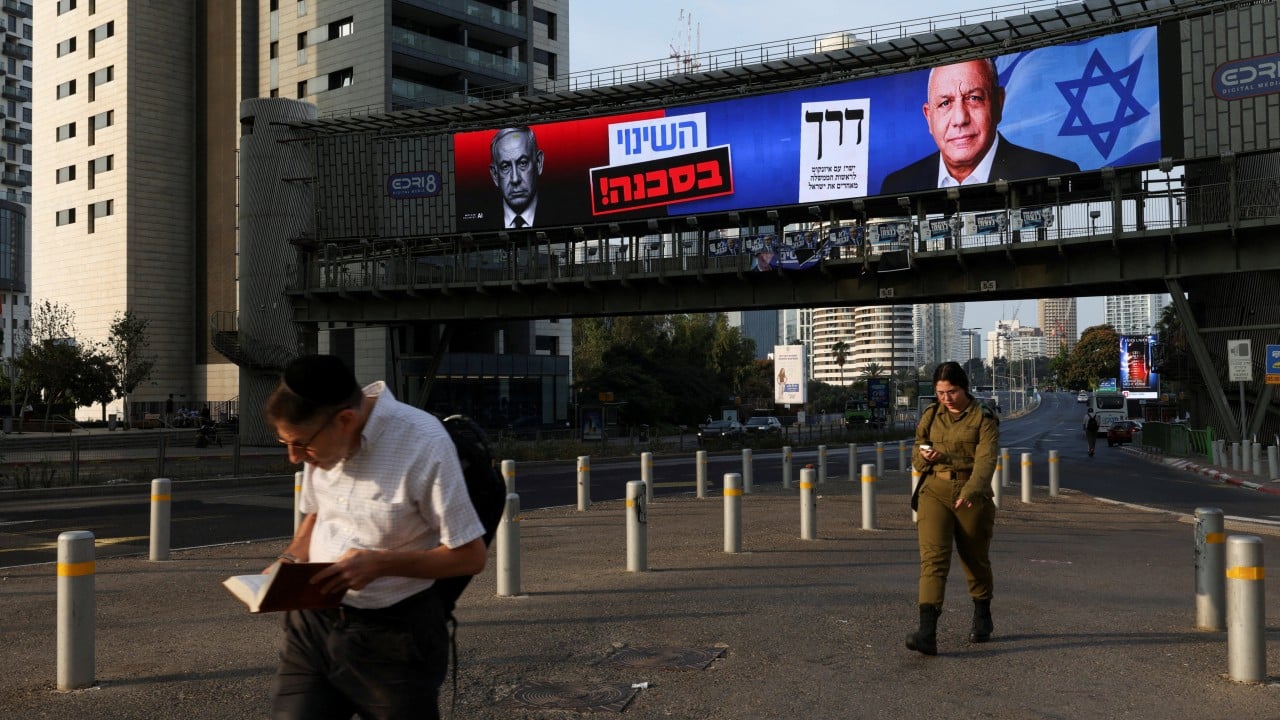
When Israelis head to the polls in a tense election testing Netanyahu's grip on power, outside observers usually treat it like a standard referendum on one man's popularity. That's a massive misreading of how Israeli politics actually works. You can't understand the outcome of an Israeli election just by looking at approval ratings or assuming voter fatigue will naturally sweep the longest-serving prime minister out of office. Don't miss our previous coverage on this related article.
To see what's really happening at the ballot box, you have to look past the surface-level drama and examine the rigid coalition math, the deep demographic shifts, and the structural quirks of the Knesset that keep Netanyahu in the game long after other politicians would have retired.
Why Israeli Elections Rarely Hinge on a Single Issue
If you're used to American or British elections, Israeli politics looks like absolute chaos. Voters don't cast a ballot for a prime minister. They vote for a party list, and the 120 seats in the Knesset are divided proportionally among any party that clears the 3.25% electoral threshold. To read more about the context here, USA Today provides an informative summary.
Nobody wins an outright majority. It hasn't happened once since Israel was founded in 1948.
Because of that system, winning the most votes doesn't guarantee you get to govern. In several past cycles, Netanyahu's Likud party didn't even need to crush the opposition in raw vote totals to stay in power. All he needed was a cohesive bloc of ideological and transactional allies willing to recommend him to the president as the person best positioned to form a 61-seat coalition.
This dynamic changes everything about how campaigns are run. While Western media often focuses on sweeping ideological debates, the real battle happens at the margins. A fraction of a percentage point can knock a small party below the 3.25% threshold, instantly wiping out four Knesset seats and handing them to the rival camp.
The 61-Seat Trap
Coalition building in Jerusalem isn't about finding broad consensus. It's about surviving blackmail from smaller partners.
When a prime minister relies on a razor-thin majority of 61 or 64 seats, a single faction with six or seven lawmakers holds total veto power over the government's survival. If they threaten to bolt, the coalition collapses, and the country goes back to the polls.
We saw this play out repeatedly between 2019 and 2022, when Israel held five elections in less than four years. Voters weren't necessarily changing their minds in huge numbers from one vote to the next. Instead, the political system was locked in a stalemate between a pro-Netanyahu bloc and an anti-Netanyahu bloc that agreed on almost nothing except their desire to replace him.
What Drives Voters Inside the Booth
Outside coverage often flattens the Israeli electorate into simple binaries like left versus right or hawks versus doves. That framework died a long time ago.
The traditional Israeli left, represented by the historic Labor party that built the state, has shrunk to a shadow of its former self. Today, the real fault lines cut across identity, institutional trust, and competing visions of what a Jewish and democratic state should look like.
Security and the Shadow of War
National security always sits near the top of the agenda, yet voters draw wildly different conclusions from the same events.
For years, Netanyahu marketed himself as "Mr. Security"—the only leader with the diplomatic stature and caution needed to keep Israel safe without dragging it into endless regional wars. The catastrophic Hamas attacks of October 7, 2023, shattered that carefully curated image for millions of Israelis. Polls taken in the months following the attack showed massive majorities blaming the government for the intelligence and military failures, with huge numbers demanding Netanyahu's resignation once the fighting subsided.
Yet political memories in the Middle East move fast, and existential threats have a way of scrambling voter priorities.
As the conflict expanded to multiple fronts—including Hezbollah in Lebanon, the Houthis in Yemen, and direct exchanges with Iran—Netanyahu leaned hard into a wartime leadership narrative. He framed himself as the only figure tough enough to withstand intense international pressure, including friction with Washington, to achieve total military objectives. For a core segment of right-wing voters, replacing a leader mid-crisis felt riskier than keeping a flawed one.
The Judicial Overhaul and Institutional Trust
Even before the war dominated every headline, Israel was tearing itself apart over the judiciary.
In 2023, Netanyahu's coalition pushed a sweeping judicial overhaul aimed at curbing the power of the Supreme Court, changing how judges are appointed, and limiting judicial review over government decisions. Hundreds of thousands of Israelis poured into the streets week after week in the largest protest movement in the country's history. Reserve pilots and intelligence officers threatened to stop volunteering for duty, warning that the reforms would gut Israel's democratic checks and balances.
Supporters of the overhaul saw things completely differently. To them, the Supreme Court had become an unelected, overwhelmingly secular elite that routinely blocked right-wing and religious policies passed by a democratically elected majority.
This divide hasn't gone away. It sits right beneath the surface of every election campaign, pitting Israelis who view the courts and attorney general as vital guardrails against those who view them as an obstructive "deep state."
The Ultra-Orthodox Conscription Crisis
If there's one issue capable of blowing up Netanyahu's coalition from the inside, it's military service.
For decades, ultra-Orthodox (Haredi) men studying in religious seminaries received blanket exemptions from mandatory military service, while secular and national-religious Israelis served for years and spent months in the reserves. That arrangement became politically unsustainable once the military faced severe manpower shortages during prolonged multi-front fighting.
In June 2024, Israel's Supreme Court ruled unanimously that the government could no longer exempt ultra-Orthodox yeshiva students from the draft and ordered an end to state funding for institutions whose students refused to enlist.
That ruling put Netanyahu in an impossible bind. His ultra-Orthodox coalition partners—Shas and United Torah Judaism—are his most loyal political allies. Without their seats, he cannot form a right-wing government. Yet passing a law to enshrine draft exemptions infuriates secular voters and alienates members of his own Likud party whose families are carrying the burden of reserve duty.
How Netanyahu's Strategy Actually Works
Critics often underestimate Netanyahu because they judge him by standard political rules. He doesn't play by those rules.
His political survival rests on a few consistent tactics that have worked for over a decade:
- Consolidating the Right: Netanyahu has spent years ensuring no viable rival emerges inside Likud. Potential successors are either marginalized, sent abroad to diplomatic posts, or kept close enough that they can't build an independent power base.
- Exploiting Opposition Divisions: The anti-Netanyahu camp stretches from center-right security hawks to liberal secularists and Arab-Israeli parties. While they share a goal of unseating him, they clash bitterly on Palestinian statehood, economic policy, and religion-state relations. Netanyahu relentlessly highlights those contradictions to peel away soft opposition voters.
- Controlling the Framing: Whether through friendly media outlets like Channel 14, aggressive social media messaging, or late-night press conferences, he excels at turning complex policy failures into binary loyalty tests. You're either with the national camp, or you're siding with elites and foreign critics who want Israel to capitulate.
The Opposition's Chronic Problem
You can't beat somebody with nobody. That's been the central headache for Netanyahu's opponents for years.
Figures like Benny Gantz, Yair Lapid, and Naftali Bennett have all taken turns leading the charge against him. Each brings distinct appeal, yet none has managed to lock down a permanent, cohesive majority.
Gantz, a former military chief of staff, repeatedly surged in polls as a reassuring, consensus-building alternative whenever voters grew exhausted by political polarization. However, his decision to join Netanyahu's emergency war cabinet in late 2023—and his eventual exit in June 2024—left many of his own supporters frustrated, arguing he gave Netanyahu political cover without securing strategic changes.
Lapid, leader of the centrist Yesh Atid party, commands a loyal base among secular, middle-class Israelis in Tel Aviv and the central coastal plain. Still, he struggles to break into traditional working-class and Mizrahi communities that form the backbone of Likud's support.
Meanwhile, figures like Avigdor Lieberman and former prime minister Naftali Bennett compete for the exact same pool of disillusioned right-wing voters—people who hold hawkish views on security and settlements, hate the ultra-Orthodox draft exemptions, and simply want Netanyahu gone. When too many opposition leaders run separate campaigns, they risk splitting the vote or wasting ballots on parties that barely clear the threshold.
What to Watch When the Results Come In
If you want to know who actually won an Israeli election, ignore the early exit polls at 10 p.m. local time. They routinely miss late-breaking shifts and don't account for "double envelopes"—the ballots cast by soldiers, diplomats, hospital patients, and prisoners, which are counted last and often swing two or three crucial seats.
Instead, watch these three indicators as the real tally updates:
- Voter Turnout in Arab Communities: Arab citizens make up roughly 20% of Israel's population, yet turnout fluctuates wildly depending on whether Arab parties run together or split into competing factions. Low turnout among Arab voters almost automatically boosts the relative seat count of Netanyahu's right-wing bloc.
- Parties Hovering Near 3.25%: Check the small factions right on the razor's edge of the electoral threshold. If a left-wing party like the Democrats (formed by the merger of Labor and Meretz) or an Arab faction falls short by a few thousand votes, Netanyahu's path to 61 seats becomes dramatically easier.
- The Post-Election Kingmakers: Watch who refuses to commit to either bloc before election day. In Israeli politics, pre-election promises not to sit with a particular leader routinely evaporate the morning after the votes are counted.
Follow the live Central Elections Committee tally rather than cable news punditry, track the seat math across blocs rather than individual party rankings, and pay close attention to which party leaders get summoned to the President's Residence in Jerusalem first. That's where the real election begins.