Corporate executives don't usually talk about getting shot in the back. They talk about margins, scale, and operational efficiency. But Jerry Murrell isn't your typical executive.
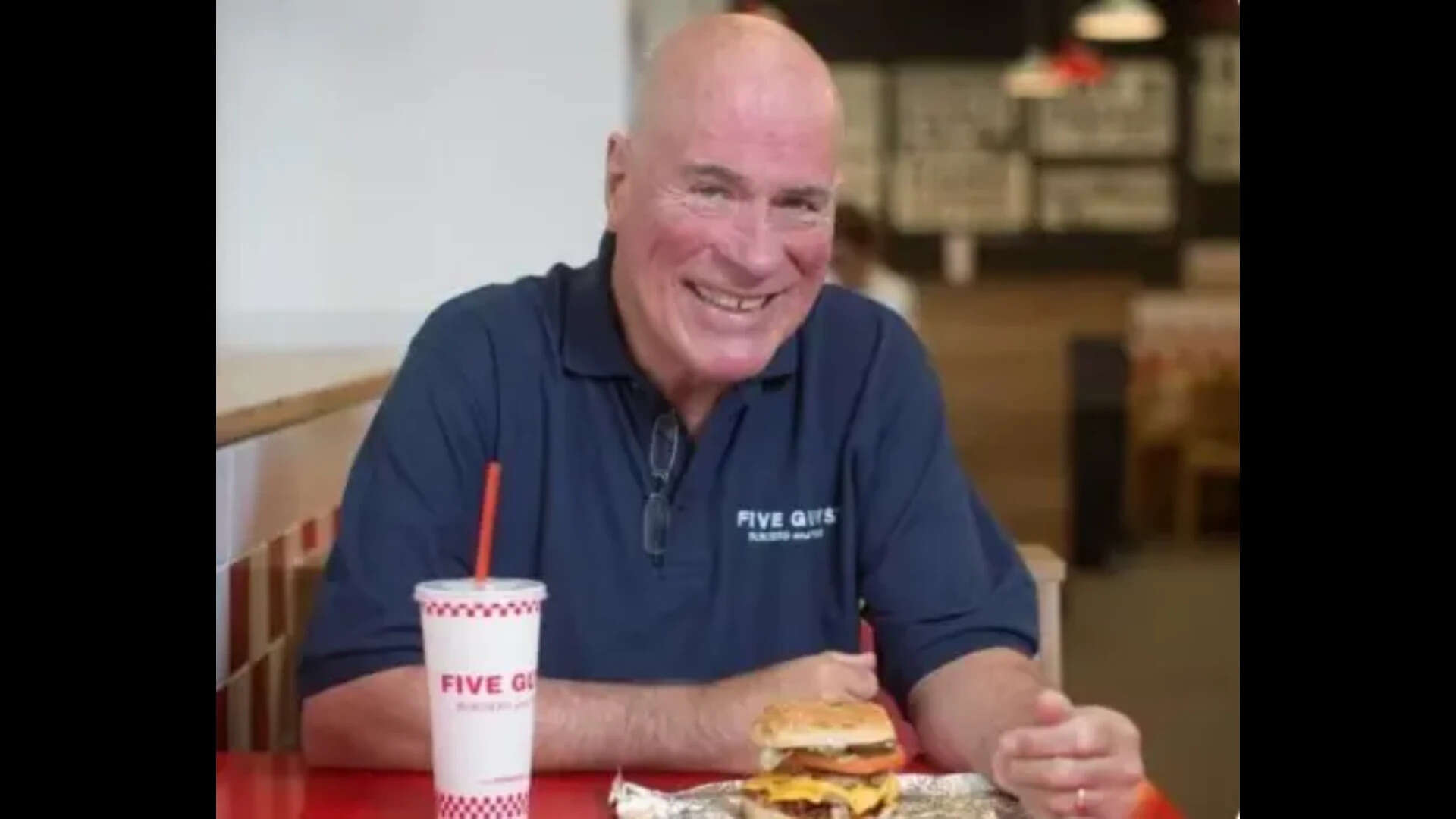
The 82-year-old founder and chief executive officer of Five Guys made waves when he admitted he dropped $1.5 million in surprise employee bonuses for a highly specific reason. He didn't want anyone shooting him.
It sounds like a headline from a satirical news site. It isn't. The burger boss openly confessed to Fortune magazine that his sudden wave of corporate generosity was fueled by a mix of dark humor, logistical panic, and the lingering shadow of recent corporate violence in America.
When you look past the shocking quote, you find a messy reality about fast-food economics, executive panic, and the massive disconnect between corporate offices and the frontline workers who actually run the kitchens.
The Birthday Promotion That Broken the App
The trouble started with a burger giveaway. To celebrate its 40th anniversary, Five Guys launched a buy-one-get-one-free promotion. It was meant to be a simple thank-you to loyal customers.
Instead, it triggered absolute chaos.
The chain completely miscalculated the demand. Sales didn't just tick upward; they skyrocketed by 130%. Almost immediately, the corporate mobile app buckled under the traffic and crashed. Hungry customers swarmed physical locations across the United States.
Kitchens ran completely dry. Ingredients vanished. Lines wrapped around city blocks.
Because the digital infrastructure failed, individual store crews had to deal with thousands of furious, hungry people. Many store managers ended up pulling the plug on the promotion early just to keep their staff safe and sane. That decision triggered a secondary wave of intense backlash on social media.
The corporate office had to issue multiple public apologies. They begged customers for a do-over, admitting they completely let people down and failed their own standards. But while executives were busy drafting press releases, frontline workers were the ones taking the heat from angry crowds.
What Jerry Murrell Actually Meant
During his subsequent interview, Murrell didn't hold back about how badly the company messed up. He openly acknowledged that the frontline staff bore the brunt of the corporate error.
To smooth things over, Murrell bypassed standard corporate channels and wrote 1,500 individual checks of $1,000, distributing one to each US store. He joked that the money came directly from a personal fund he originally set aside to buy his wife a new fur coat.
Then came the line that went viral. Murrell stated he handed out the cash because he didn't want anyone shooting him in the back.
The comment wasn't made in a vacuum. Industry observers immediately tied his dark joke to the December 2024 killing of UnitedHealthcare CEO Brian Thompson, who was shot and killed on a Manhattan street. That incident sparked a massive wave of anti-corporate commentary online, turning the alleged shooter, Luigi Mangione, into an internet meme regarding public anger over corporate greed.
Murrell was using pitch-black humor to acknowledge a terrifying new reality. Corporate leaders are starting to realize that public anger toward the executive class is reaching a boiling point. When corporate decisions make life miserable for workers and customers alike, a pizza party doesn't cut it anymore.
The Real Math Behind the 1.5 Million Dollar Bonus
While a $1.5 million payout sounds massive on paper, the actual math tells a completely different story.
When you break down how that money actually distributes across a massive fast-food apparatus, the grand gesture starts to look incredibly small.
- Total Bonus Pool: $1,500,000
- Total US Locations: Roughly 1,500 stores
- Payout Per Store: $1,000
A single $1,000 check sent to a store doesn't go to one person. It gets divided among the entire frontline crew that worked through the anniversary disaster. If a store employs 15 to 20 people across different shifts, each worker walks away with roughly $50 to $66 before taxes.
In reality, that bonus barely covers the cost of two large bacon burger combos and a couple of milkshakes at Five Guys' current prices.
Social media users quickly pointed out this discrepancy. While some praised Murrell for at least doing something, others noted that a multi-millionaire CEO sharing pocket change after a historic operational failure is peak corporate America. It highlights a massive systemic issue: the people at the top capture the vast majority of the financial upside during a boom, but the workers at the bottom bear 100% of the physical stress when things go wrong.
Moving Past Pizza Parties and Quick Checks
If you run a business, manage a team, or oversee operations, the Five Guys debacle offers a massive lesson in crisis management and labor relations. Sending a nominal check after the fact doesn't fix a broken system. You have to build real infrastructure to protect your people.
Stop running high-volume promotions without stress-testing your digital infrastructure first. If your app crashes, your frontline staff pays the price.
Give your store managers the explicit authority to shut down operations or cancel promotions when safety or supply chains fail, without fear of corporate retaliation.
If you are going to distribute financial relief after an operational disaster, ensure the payout matches the scale of the stress. Giving a worker fifty bucks for surviving a riotous shift isn't a bonus; it's an insult.
True operational resilience isn't about writing a damage-control check because a viral news story made you nervous. It means building a system where the people on the ground floor don't have to suffer for the mistakes made in the boardroom. Ensure your technical capacity matches your marketing ambition before you invite the entire country to show up at your door.