Election Day isn't really a single day anymore. It's a month-long rolling deadline that happens to end on a Tuesday in November.
During the 2026 midterm cycle, more than 50 million Americans had already cast their ballots three full days before November 3 even arrived. Yet if you talk to people standing in line at a county clerk's office, half of them still think they need a doctor's note or a plane ticket to vote ahead of schedule.
They don't. Early voting in US midterm elections has quietly become the default way Americans participate in democracy, shifting from a rare accommodation for traveling salespeople into a massive, decentralized system that spans 47 states and Washington, D.C. And while Americans tend to argue endlessly about whether early ballots help or hurt certain parties, they rarely look across the border to see how dozens of other democracies have been doing this—often much more smoothly—for decades.
How Early Voting Actually Works in US Midterms
At its core, early voting is exactly what it sounds like. Instead of waiting until the first Tuesday after the first Monday in November to squeeze into a local elementary school gym, registered voters cast their ballots during a designated window days or weeks beforehand.
The catch? There is no single "American" system. Under the US Constitution, states run the show, which means your experience depends entirely on your zip code.
Right now, 47 states plus the District of Columbia allow some form of no-excuse in-person early voting. You don't need to be out of town, hospitalized, or working a double shift. You just show up. Only three holdouts—Alabama, Mississippi, and New Hampshire—still refuse to offer no-excuse in-person early voting, forcing their residents to either show up on Election Day or qualify for a strict absentee excuse.
For everyone else, the process breaks down into two distinct buckets.
In-Person Early Voting
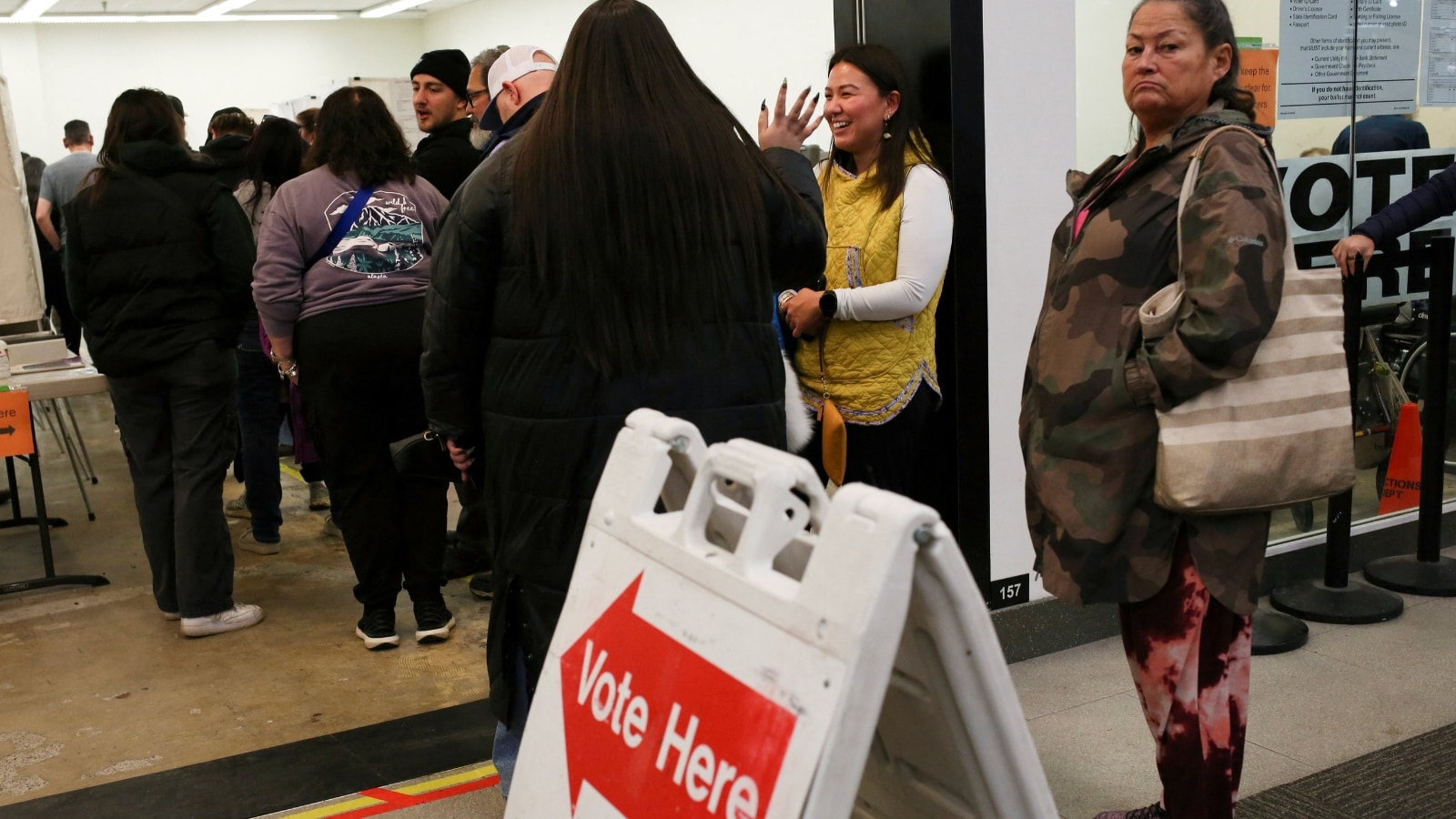
This feels almost identical to traditional voting, just without the frantic rush. Counties open up regional vote centers, public libraries, city halls, or county election offices. You walk in, check in with poll workers, show identification if your state requires it, and feed your ballot straight into a scanner or touch-screen machine.
The beauty of in-person early voting is flexibility. Unlike Election Day, when you're usually locked into one specific neighborhood precinct, many states let you vote at any designated early voting center in your county. If you work across town, you can vote on your lunch break. Twenty-seven states also mandate weekend hours, and fourteen require evening hours past 5 p.m., which takes a massive weight off hourly workers who can't just duck out of a shift on a Tuesday morning.
No-Excuse Mail-In and Absentee Voting
People often lump mail voting and early voting together, and practically speaking, they serve the same purpose. In states like California, Colorado, Hawaii, Oregon, Utah, Washington, Nevada, and Vermont, every active registered voter automatically gets a ballot mailed to their house weeks before the election. You fill it out at your kitchen table, sign the security envelope, and either drop it in a mailbox or slide it into a monitored county drop box.
In most other states, you can request a mail-in ballot without giving a reason. Once your local election office verifies your signature against your voter registration file, your vote is logged.
The Timing Trap That Trips Voters Up
If you've ever worked a voter hotline, you know the single biggest mistake people make isn't forgetting who's on the ballot—it's misjudging the calendar.
Because every state writes its own rules, the early voting window swings wildly across state lines.
- The Marathon States: Minnesota, South Dakota, and Virginia start in-person early voting a full 45 to 46 days before Election Day. People in Arlington or Minneapolis are literally casting midterm ballots in mid-September while baseball's regular season is still wrapping up.
- The Sprint States: Kentucky and Oklahoma keep their in-person windows tight, offering just three or four days of early voting right before the election.
- The Weekend Cutoff: Most states shut down in-person early voting on the Friday, Saturday, or Sunday before Election Day so poll workers can transport machines, reconcile voter rolls, and prepare precinct books. Every single year, thousands of voters show up at a county annex on Monday afternoon expecting to beat the Tuesday crowd, only to find locked doors.
There's also a crucial difference between ballot collection and ballot counting. Just because you cast your vote in October doesn't mean the local news knows who's winning before November 3. States are legally barred from releasing results until polls close on Election Day. Some states, like Florida and Arizona, allow election officials to process and scan early ballots weeks ahead of time so results drop minutes after polls close. Others, like Pennsylvania and Wisconsin, historically restricted officials from even opening mail ballot envelopes until Election Day morning—a bottleneck that guarantees slow counts in tight midterm races.
Why Midterm Early Voting Hits Differently Than Presidential Years
Midterm elections used to be sleepy affairs dominated by older, hyper-engaged voters. Early voting changed that dynamic, though not always in the way political pundits predicted.
Historically, early voting was pitched as a turnout booster. The logic seemed obvious—make voting easier, and more people will show up. Political scientists have actually found a more nuanced reality. Research from institutions like the MIT Election Data and Science Lab shows that convenience voting mostly shifts when reliable voters cast their ballots rather than magically turning chronic non-voters into regulars.
Still, in a midterm election—where turnout always lags behind presidential years—banking votes early matters enormously for campaigns. Once your name hits the public voter file as having voted, campaigns stop spending money to reach you. Your mailbox clears out. The relentless text messages stop. Campaigns then redirect their cash toward chasing down low-propensity voters who haven't turned in a ballot yet.
It also insulates elections against November chaos. A sudden blizzard in the Midwest, a hurricane on the Gulf Coast, a broken water main at a precinct, or a kid waking up with a 102-degree fever on Tuesday morning used to mean lost votes. When 40% to 50% of the electorate votes early, Election Day hiccups stop being democratic emergencies.
Which Other Countries Allow Early Voting
Americans sometimes talk about early voting as if it were a radical experiment invented in the last decade. It isn't. Across the globe, dozens of established democracies treat multi-day or advance voting as basic administrative common sense.
According to data tracked by the International Institute for Democracy and Electoral Assistance (International IDEA), countries on every continent offer advance in-person voting to all eligible citizens.
The Nordic Model Where Early Voting Is King
If you want to see early voting pushed to its logical extreme, look at Scandinavia.
In Norway, advance voting (forhåndsstemming) opens roughly a month before election day and runs until the Friday prior. Here's the part that blows Americans away—during that early window, a Norwegian citizen can walk into any early polling station anywhere in the entire country, regardless of where they live, and cast a ballot. You don't have to worry about county lines. You can vote at a shopping mall, a university campus, or a library while on vacation. By the 2021 parliamentary elections, nearly 58% of all Norwegian votes were cast early.
Finland takes accessibility even further. Advance voting starts 11 days before election day at municipal offices, post offices, and embassies abroad. The Finnish government also sets up special advance polling stations inside hospitals for patients and prisons for detainees. If a voter has a severe illness or mobility impairment, election officials will literally make a house call to collect their advance ballot. Sailors aboard Finnish ships at sea can even vote 18 days ahead.
Sweden runs a massive advance voting operation where libraries and community centers stay open for weeks, routinely accounting for well over 40% of total turnout.
Canada, Australia, and New Zealand
Across the Commonwealth, advance voting is deeply ingrained.
- Canada: Elections Canada operates advance polls over a four-day weekend (Friday through Monday) roughly a week before federal election day. Canadians can also walk into any local Elections Canada office at almost any point after an election is called and vote via special ballot, or use "Vote on Campus" stations set up directly inside universities.
- Australia: Even though voting is compulsory in Australia, early voting has exploded. Voters can cast ballots at pre-poll voting centers starting two weeks before election day. In recent federal elections, roughly half of all Australians voted before Saturday morning arrived.
- New Zealand: Advance voting opens about two weeks prior to election day, with polling booths popping up in supermarkets, community halls, and marae across the country. Over two-thirds of New Zealanders now cast their votes early.
Germany, Switzerland, and Estonia
Other democracies skip long lines altogether by rethinking the mechanics of the ballot box.
Germany doesn't bother with in-person early voting booths. Instead, any registered voter can request a postal ballot (Briefwahl) with zero excuse required—a rule change Germany finalized in 2008. In the 2021 federal election, 47.3% of German voters cast their ballots by mail before election Sunday.
Switzerland takes postal voting even further. Every registered Swiss citizen automatically receives their ballot papers at home weeks before national referendums and elections. Roughly 90% of Swiss votes are cast early by mail.
Estonia sits in a league of its own. Since 2005, Estonians have been able to vote online from anywhere in the world during a multi-day advance window using their state-issued digital ID cards. Even better, Estonian law lets online voters change their minds and cast a new ballot during the early window—or override their online vote with a paper ballot on election day—which completely neutralizes the risk of someone coercing you while you're sitting at your laptop.
Where Early Voting Isn't the Norm
It's worth noting that early voting isn't universal across Europe or the developing world. Countries like France, Italy, Belgium, and Austria largely stick to a single election day for in-person voting, though France relies heavily on proxy voting (vote par procuration), where you legally designate another registered voter to cast your ballot at your polling station on Sunday. Ireland restricts advance in-person voting almost exclusively to residents of remote coastal islands so bad Atlantic weather doesn't trap ballot boxes on the wrong side of the water.
What Smart Voters Actually Do Before Heading Out
If you're planning to take advantage of early voting in a US midterm election, treat it like a quick errand rather than a major event—but don't wing it completely.
First, verify your registration status through your state's Secretary of State website or Vote.org at least a month out. Voter rolls get cleaned up between cycles, and finding out you were marked inactive is much easier to fix three weeks early than on a Tuesday afternoon.
Second, pull up a sample ballot before you leave the house. Midterm ballots are notoriously long and confusing. Once you get past the high-profile US Senate, House, or governor races, you'll hit pages of state judges, school board members, water district commissioners, and dense constitutional amendments written in legalese. You can bring paper notes or a marked-up sample ballot into the booth with you in virtually every state—just check your local rules before pulling out a smartphone, since several states ban photography inside polling places.
Finally, aim for the sweet spot on the calendar. The very first day of early voting and the final Friday or Saturday before Election Day draw the longest lines. Go on a random Tuesday or Wednesday morning during the middle week of your state's window. You'll walk past the greeter, check in, mark your ballot, and be back in your car before your coffee gets cold.