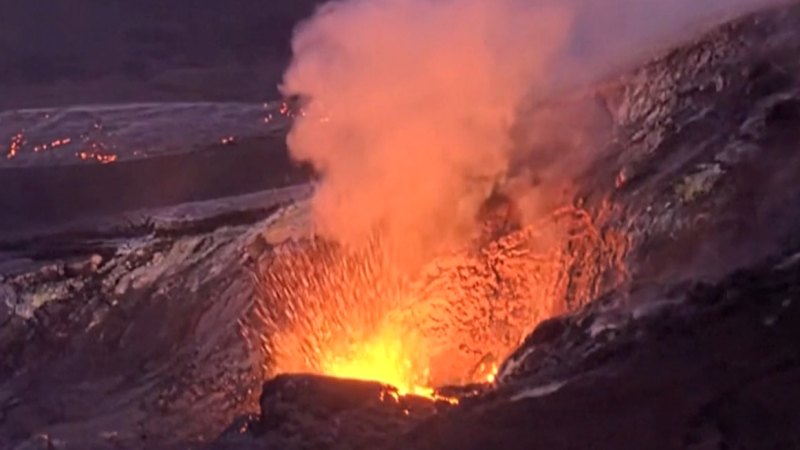
Kilauea is eating away at the map of Hawaii again. When news networks flash footage of lava flows from Hawaii's Kilauea Volcano, they always frame it the same way. Apocalyptic. Destructive. A terrifying monster waking up to terrorize paradise.
That framing is completely wrong.
If you talk to geologists at the U.S. Geological Survey (USGS) or locals who live on the Big Island, they view the volcano differently. Kilauea is a builder, not just a destroyer. It's one of the most active volcanoes on Earth, yet it's also one of the most predictable. Understanding how these lava flows actually behave changes how you look at volcanic hazards entirely.
Lava flows from Hawaii's Kilauea Volcano don't typically explode out of nowhere and wipe out cities in minutes. Instead, they ooze, crawl, and occasionally surge through well-documented rift zones. Here is what is actually happening on the ground, minus the sensationalized media hype.
The Two Faces of Kilauea Lava
You can't understand Kilauea without understanding the two distinct types of lava it produces. They have Hawaiian names used by scientists worldwide: pahoehoe and aa. They come from the exact same basaltic magma, but they look and act like entirely different beasts.
Pahoehoe is smooth, billowy, or ropey lava. It moves relatively slowly, skinning over with a silvery crust while the liquid rock continues to pump underneath. It's mesmerizing. It can inflate like a balloon, breakouts leaking out of the edges as it creeps across the landscape.
Then there's aa. Aa is the exact opposite. It's a rough, jagged, clinkery wall of rock that moves like a tank tread. It makes a chilling metallic sound as cooled volcanic glass fragments roll down the advancing front. Aa moves faster and happens when lava loses its gas and cools down while being violently agitated by rapid flow.
When Kilauea erupts from its summit caldera, Halemaumau, the lava usually stays contained within a deep crater lake. The real trouble starts when magma moves into the East Rift Zone or Southwest Rift Zone. That's when lava pushes underground, opens up fissures in residential areas, and changes lives forever.
What Happened in the Lower East Rift Zone
Look at the massive 2018 eruption. That event destroyed over 700 homes in the Leilani Estates area and completely reshaped the coastline. Media outlets covered it like an unexpected freak accident.
It wasn't.
Geologists had mapped those exact hazard zones decades prior. The state of Hawaii breaks the island into nine lava flow hazard zones based on the location of eruptive vents and past behavior. Zone 1 is the most dangerous. Leilani Estates was built directly on top of Zone 1, right along the active East Rift Zone.
During that 2018 crisis, Fissure 8 shot fountains of lava over 200 feet into the air. It created a fast-moving channel of aa lava that rushed toward the ocean at speeds up to 17 miles per hour in some sections. That speed is unusually fast for Hawaiian lava, driven by a high volume of magma dumping out of a steep slope. But even then, residents had hours, sometimes days, to evacuate. You can outwalk most Hawaiian lava flows. You just can't stop them from burning down everything in their path.
The Invisible Threat Nobody Talks About
Everyone focuses on the bright red rivers of rock. They make great photos. But the real daily hazard of Kilauea is invisible and airborne.
Vog.
Volcanic smog forms when sulfur dioxide gas escapes from the vents and reacts with oxygen, moisture, and sunlight. It creates a hazy mix of sulfate aerosols that blankets parts of the island, especially the Kona side downwind from the volcano. On high-emission days, vog causes headaches, watery eyes, and severe respiratory issues for anyone with asthma or COPD.
When lava hits the ocean, it creates another hazard called laze. This acid mist forms when boiling lava chemically reacts with seawater, sending hydrochloric acid and fine volcanic glass particles into the air. It's highly corrosive. Tourists who get too close to ocean entries often underestimate how toxic that white steam plume actually is.
Tracking the Magma Plumbing System
How do scientists know what Kilauea will do next? They watch its plumbing.
The Hawaiian Volcano Observatory (HVO) uses an array of tiltmeters, GPS stations, and seismometers to track the movement of magma beneath the surface. Before an eruption, the ground literally swells up like a balloon. Scientists call this inflation. As magma pushes upward, it cracks the surrounding rock, triggering hundreds of micro-earthquakes.
Once the eruption starts and pressure releases, the ground deflates. By monitoring these inflation and deflation cycles, geologists can predict new outbreaks with remarkable accuracy. They can't stop the flow, but they can give emergency managers enough warning to clear the area.
Managing Volcanic Risk Realistically
If you're planning to visit the Big Island or looking into how communities live alongside an active volcano, throw out the disaster movie tropes. Keep these practical realities in mind.
First, check the daily USGS HVO updates before visiting Hawaii Volcanoes National Park. Volcanic activity changes by the hour. An area that was safe yesterday might be closed today due to high gas emissions or new breakouts.
Second, never ignore park barriers. Walking onto active lava fields or unstable coastal lava benches is a quick way to get trapped or fall through a hollow lava tube.
Third, respect the local culture. For Native Hawaiians, the volcano is the home of the deity Pele. The lava flows aren't just a geological spectacle; they represent a sacred process of creation and purification. Treat the landscape with the reverence it demands. Kilauea will keep flowing, reshaping the island one layer of basalt at a time, entirely indifferent to human timelines.