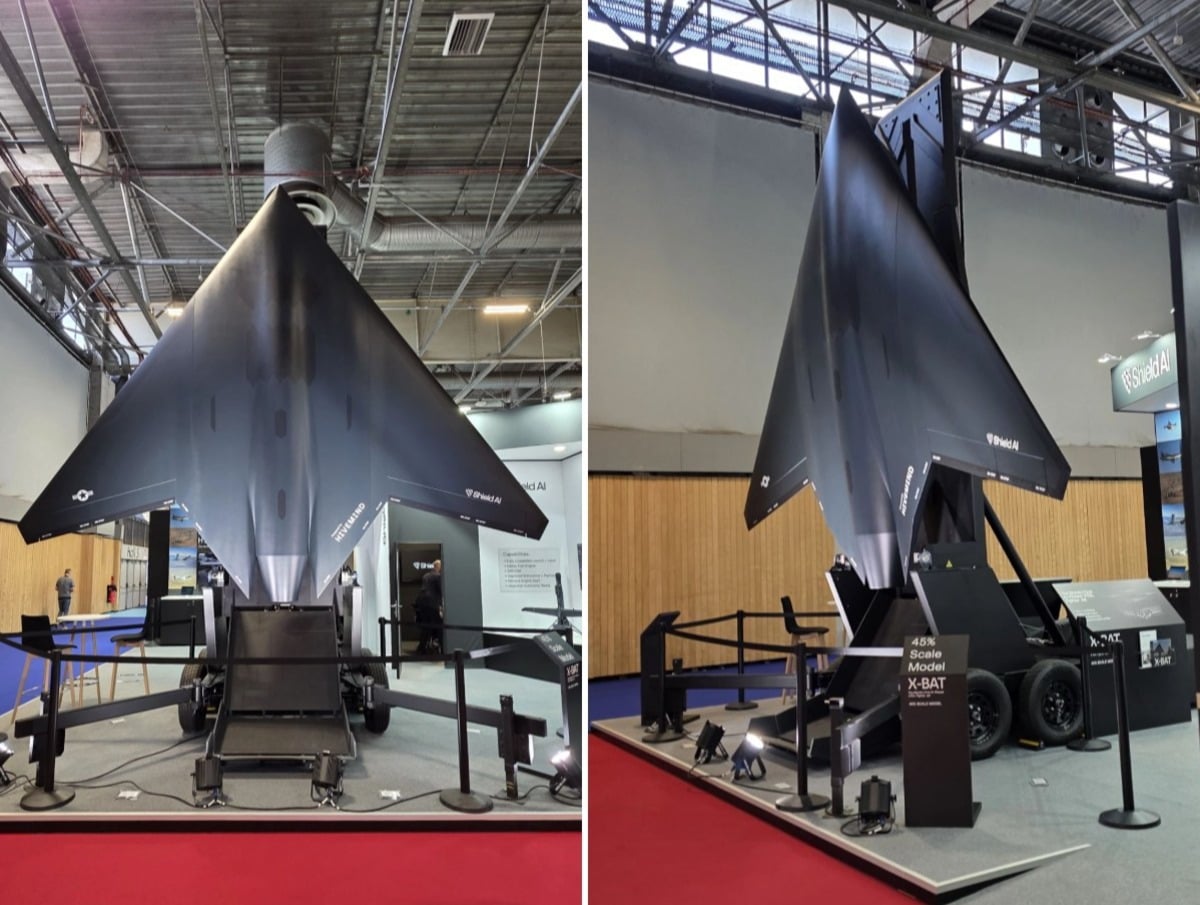
Tech conferences love a good optical illusion. Every year, corporate executives fly into Paris, pack into sprawling convention centers like VivaTech, and congratulate themselves on building the future. The media eats it up. They write breathless headlines about flying taxis over the Seine, AI-powered mirrors, and flashy hardware taking over iconic Parisian streets.
It is a beautiful, expensive illusion.
I have spent fifteen years sitting in the back of these keynotes, auditing innovation budgets for multinational firms, and watching companies burn millions of dollars on what I call "innovation theater." The consensus among tech journalists is that these massive festivals are the heartbeat of European tech acceleration. They are wrong. These events have mutated into glorified PR circuses that actively drain resources away from actual engineering and sustainable business models.
If Europe wants to compete with Silicon Valley or Shenzhen, it needs to stop throwing parties and start building infrastructure.
The Flawed Premise of the "Flying Taxi" Economy
Let’s dismantle the most prominent piece of bait used by tech festivals to secure mainstream news coverage: urban air mobility. For years, the public has been promised that electric vertical takeoff and landing (eVTOL) aircraft will revolutionize city travel, with Paris positioned as the ultimate launchpad.
The premise is deeply flawed. The underlying engineering and economic realities of eVTOLs do not scale for mass transit.
Imagine a scenario where a city deploys a fleet of one hundred flying taxis. To operate safely, these vehicles require strict air traffic management, immense power grids for rapid charging, and localized vertiports that comply with stringent urban noise ordinances. The physical footprint alone makes it impossible to serve more than a fraction of one percent of a city's population.
More importantly, the energy mechanics are working against them. Traditional trains and electric buses benefit from ground-plane efficiency and continuous power delivery. An eVTOL must expend massive amounts of energy simply defying gravity before it even begins lateral movement.
When you strip away the sleek carbon-fiber shells on display at trade shows, you are left with a luxury helicopter service masquerading as green public transit. It is a playground for ultra-wealthy executives who want to bypass traffic, funded under the guise of municipal innovation.
Why Do Smart Companies Buy Into the Hype?
- The Valuation Premium: Simply uttering the word "aerospace" or "autonomy" adds a speculative premium to early-stage funding rounds.
- The Halo Effect: Legacy industrial giants partner with these startups to signal modernity to their shareholders, even if the technology never leaves the prototype stage.
- Regulatory Capture: Companies use these public demonstrations to lobby governments for relaxed airspace regulations before proving the technology is safe or viable.
The Tragedy of the Three-Minute Demo
Walk the floor of any major tech gathering and you will see hundreds of early-stage startups crammed into tiny kiosks. They have three seconds to grab a passing venture capitalist’s attention and three minutes to pitch their entire existence.
This environment filters for charisma, not competence.
The current venture ecosystem rewards founders who can construct a compelling narrative over engineers who can build complex, defensible technology. A flashy software interface that hooks into a generic third-party API will always draw a bigger crowd on a trade show floor than a breakthrough in battery chemistry or a new database architecture. The latter looks like lines of boring text on a monitor; the former looks good in an Instagram story.
I have watched brilliant technical founders leave these events completely empty-handed because they refused to pivot their messaging toward the buzzword of the month. Meanwhile, companies with zero intellectual property walk away with multi-million dollar term sheets because their founder gave a polished performance on a side stage.
The downside to calling out this system is obvious: it alienates the very gatekeepers who control the capital. If you refuse to play the festival game, you miss out on the initial wave of hype-driven investment. But the long-term survival rate of hype-born startups is abysmal. When the macroeconomic environment tightens, the market stops caring about your stage presence and starts looking at your unit economics.
Dismantling the "People Also Ask" Consensus
When people look at international tech summits, their questions focus on surface-level metrics. Let’s address the most common assumptions with cold reality.
Do these events actually help startups secure customer contracts?
Rarely. The vast majority of attendees at large consumer-facing tech festivals are students, journalists, and mid-level corporate employees who lack procurement authority. The senior executives who actually hold the budget strings are sequestered in private VIP lounges, drinking champagne and networking with their peers. They are not wandering the floor looking at raw startups. If you want corporate contracts, save your registration fee and spend it on targeted, cold enterprise sales.
Is European tech lagging behind because of a lack of visibility?
No. The "visibility gap" is a myth manufactured by event organizers. Europe has exceptional engineering talent, world-class universities, and solid foundational research. The real bottleneck is growth-stage capital and regulatory fragmentation.
A startup in the United States can scale across fifty states instantly under a single regulatory framework. A European startup must navigate different tax laws, labor codes, and language barriers the moment they expand outside their home country. A giant festival in Paris does absolutely nothing to fix the structural friction of the European single market.
Should legacy corporations build innovation outposts at these hubs?
Only if they want to waste money. The concept of the "corporate innovation hub" or "incubator" inside a tech festival is a proven failure. These outposts operate in a vacuum, completely detached from the core business units of the parent company.
An innovation team might find an interesting AI startup at a convention, but when they try to integrate that technology into the company’s legacy ERP system, the IT department shuts it down due to security compliance and infrastructure incompatibility. The exercise becomes an expensive PR stunt that never impacts the bottom line.
The Cost of Chasing the Buzzword Cycle
The tech industry’s attention span has degraded significantly. Look at the shifting themes of these major European conferences over the last five years:
| Year | The "Core" Focus | Current Status |
|---|---|---|
| 2021 | Blockchain & Decentralized Finance | Relegated to niche forums after market corrections. |
| 2022 | The Metaverse & Virtual Real Estate | Abandoned by major brands after zero consumer adoption. |
| 2023 | Generative AI Wrappers | Consumed by infrastructure providers; standalone apps failed. |
| 2024 | Sovereign Cloud & Quantum Computing | Heavy government subsidization with long-term horizons. |
This table exposes the systemic flaw of the tech festival model: it forces the ecosystem to chase immediate trends rather than invest in generational technology. True innovation does not fit neatly into a twelve-month event cycle. Deep tech—such as synthetic biology, nuclear fusion, or silicon manufacturing—takes a decade of quiet, unglamorous development to mature.
When you force the industry to gather annually to show off "what’s new," you incentivize founders to build shallow products that can be shipped quickly and discarded just as fast when the next hype cycle begins.
Stop Networking. Start Engineering.
If you are a founder running a serious technology company, the most radical thing you can do is stay home.
Withdraw your marketing team from the exhibition floor. Cancel the expensive booth that costs more than a senior engineer’s annual salary. Stop optimizing your pitch deck for a panel of judges who haven't written a line of code in twenty years.
Take that capital and reinvest it where it actually generates value: into your product, your infrastructure, and your core team. Let your competitors spend their weeks drinking bad coffee, handing out printed brochures, and collecting business cards that will sit in a drawer until they are thrown away.
While they are busy shouting over the noise of the convention floor, you can focus on building a product that is so undeniably functional, scalable, and profitable that you won't need a tech festival to prove your worth to the world.