The environmental lobby is suffering from a severe case of historical myopia.
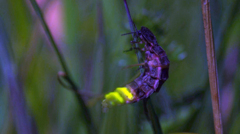
Open any mainstream news outlet today and you will find a predictably mournful piece about the Atlantic oakwoods of Scotland’s west coast. They call it the Scottish rainforest. They treat you to macro-photography of rare slime moulds and the bioluminescent glow of Lampyris noctiluca—the common glow-worm. Then comes the inevitable, hand-wringing thesis: this ancient ecosystem is on the brink of collapse, choked by invasive rhododendrons, overgrazed by deer, and fragmented by human greed.
It is a beautiful, tragic, and utterly flawed narrative.
The lazy consensus treats the Scottish rainforest as a fragile, static museum piece that must be frozen in time. Conservationists act as curators, desperately trying to construct a plastic perimeter around a specific snapshot of ecological history.
They are missing the entire point of boreal and temperate ecology. What the media frames as a "declining masterpiece" is actually a dynamic, hyper-resilient ecosystem undergoing a messy, natural transition. The obsession with returning Scotland to a mythical, pristine pre-industrial state is actively harming the rural economy and wasting millions in misallocated conservation capital.
The Myth of the Virgin Forest
To understand why the current panic is misplaced, we have to look at the baseline data. The narrative relies on the idea that these woodlands were once vast, uninterrupted expanses of canopy that humans chopped down to make way for sheep and timber.
Ecological history tells a completely different story. Sir Harry Champion and subsequent forest historians have repeatedly shown that the British landscape has been a shifting mosaic of wood-pasture, heath, and scrub for millennia. The idea of a dense, continuous "Atlantic wildwood" is a romantic invention of the 19th century.
Palynological data—the study of fossil pollen—reveals that these forests have always been fragmented. They expanded and contracted based on severe Atlantic weather systems, shifting soil acidification, and natural grazing pressures long before the first chainsaw arrived on the scene.
When groups like the Alliance for Scotland's Rainforest demand massive intervention to save these areas from "decline," they are trying to enforce an unnatural permanence. Ecosystems do not stay still. The presence of specialized species like slime moulds (Myxomycetes) and specialized lichens does not mean the forest is an ancient relic that will vanish if a few trees fall. These organisms are adapted to disturbance. They thrive on the cycle of decay and regeneration, not on bureaucratic preservation orders.
The Glow-Worm Fallacy
Let's look at the poster children of the current conservation campaign: glow-worms and slime moulds.
The media uses these species to trigger emotional investments from the public. Look at this rare, magical creature, they say. If we do not stop local land use, it will disappear.
This is bad science. The common glow-worm is not a rainforest specialist. It is found across a massive variety of habitats, from the chalk downs of southern England to the edges of railway embankments in Wales. It needs open areas, structural diversity in vegetation, and a healthy population of snails. Ironically, dense, unmanaged canopy closure—the exact goal of many "hands-off" rewilding advocates—is terrible for glow-worms. They need the sun to warm the ground where their prey lives.
By demanding that we stop all human impact and allow the forest to close up, conservationists are systematically destroying the open edge habitats that these species actually require to survive.
The same logic applies to slime moulds. These are not fragile anomalies. They are some of the most resilient biological entities on earth. They spend much of their lives as single-celled organisms or amoeboid masses in the soil, completely invisible to the casual observer. They fruit when conditions change. A sudden burst of slime moulds isn't a sign that a forest is healthy or dying; it is a sign that the microclimate fluctuated.
The Rhododendron Scapegoat
Every article on the Scottish rainforest features a villain: Rhododendron ponticum.
We are told this invasive shrub is an ecological assassin, shading out native mosses and poisoning the soil. Millions of pounds are spent every year ripping it out by hand or poisoning it with glyphosate.
I have spent years analyzing land-management budgets across the UK. I have seen estates spend hundreds of thousands of pounds clearing a single hillside of rhododendron, only for it to return five years later because the underlying soil chemistry remained unchanged.
The crusade against rhododendron ignores a fundamental ecological principle: invasive species are symptoms, not causes, of ecological shift. Rhododendron ponticum thrives in the west of Scotland because the soil has been heavily acidified by decades of monoculture conifer planting and acid rain from the industrial revolution.
Ripping out the shrubs without addressing the soil chemistry is like taking aspirin for a broken leg. It masks the pain but fixes nothing. Furthermore, in some severely degraded landscapes, rhododendron actually provides the only structural windbreak on exposed hillsides, allowing native tree saplings to take root in their lee. A blanket ban on the plant, devoid of local nuance, is an expensive exercise in futility.
The Deer Delusion
The second villain in the standard narrative is the red deer. The argument goes like this: there are too many deer, they eat the young oak and hazel saplings, and therefore the forest cannot regenerate. The prescribed solution is always a brutal, massive cull.
This logic is flawed on two fronts:
- The Scale Error: It assumes that every part of the west coast needs to be a forest. Large herbivore grazing creates open glades, which are essential for light-demanding species of lichens and bryophytes—the very things that make the Atlantic woods unique.
- The Trophic Misunderstanding: Trees do not only regenerate when there are zero deer. They regenerate when there is adequate ground disturbance. Historically, wild boar and cattle broke up the dense bracken mats, exposing mineral soil where acorns could take root. Deer do not create these seedbeds; they merely browse what grows.
If you shoot every deer in Argyll but leave the ground blanketed in a thick, impenetrable mat of bracken and dead purple moor grass, you will still get zero native oak regeneration. The focus on deer culling is a cheap, politically easy way to look like you are doing something without fixing the structural lack of soil disturbance.
The Economic Cost of Eco-Romanticism
The current approach to the Scottish rainforest isn't just scientifically weak; it is economically destructive to rural communities.
When a piece of land is designated as a fragment of "ancient rainforest," it is effectively locked away. Local crofters are restricted in how they can graze their livestock. Traditional wood-fuel extraction is banned. The land becomes a playground for urban tourists and a tax write-off for corporate carbon-offsetting schemes.
We are replacing productive, working landscapes with a sterilized, subsidized wilderness. This creates a reliance on government grants and charity funding. When those funds dry up, the management stops, and the landscape reverts to whatever monoculture is most aggressive.
Instead of fighting a losing battle against ecological change, we should be integrating these woodlands into local economies. Managed coppicing of hazel, controlled cattle grazing, and selective timber extraction do not destroy the rainforest. They recreate the exact historical disturbance patterns that allowed these ecosystems to develop in the first place.
Stop treating the Scottish rainforest like a dying patient on life support. Drop the romantic sentimentality about glow-worms and slime moulds. Stop the endless, expensive wars against specific plants and animals.
Nature is not a museum. Let the landscape shift, adapt, and work for its living. Use the axe, bring back the cattle, and let the forest take care of itself.