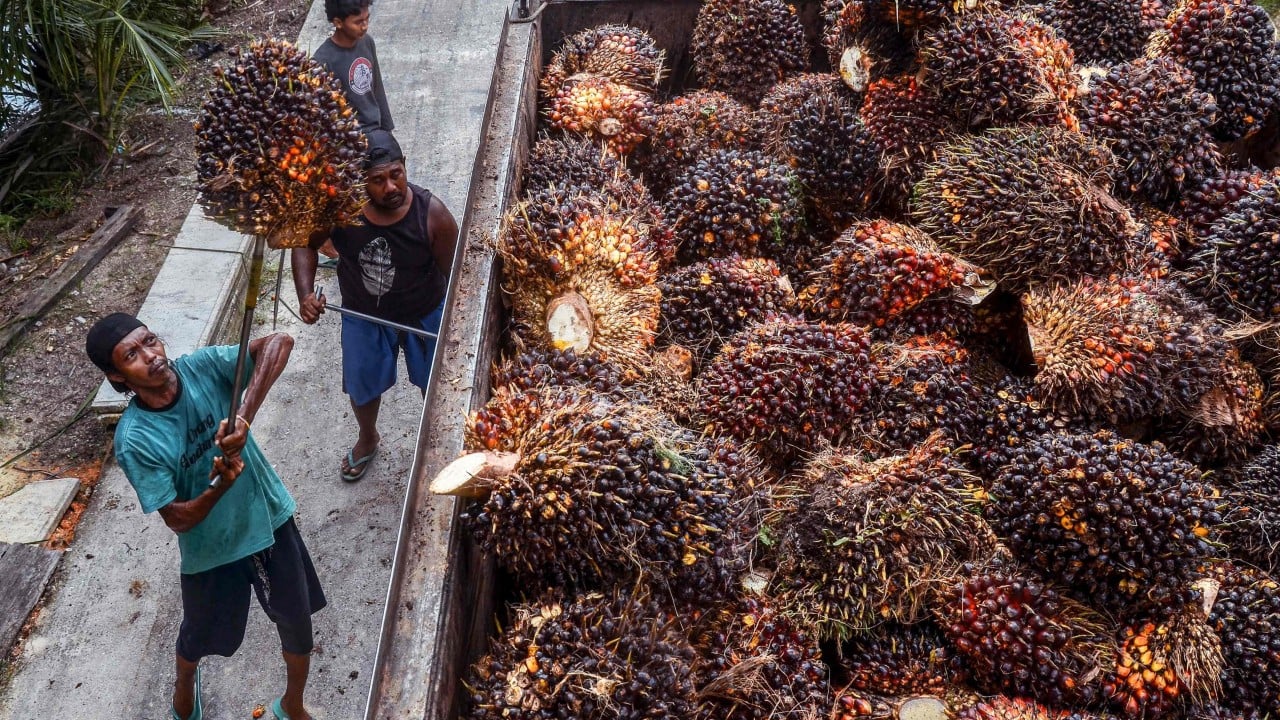
Jakarta and Kuala Lumpur are locked in a quiet economic war over who gets to dictate the global price of palm oil. Indonesia and Malaysia control roughly eighty-five percent of the world's supply of this ubiquitous vegetable oil, found in everything from commercial lipstick to supermarket margarine. For decades, both nations functioned as an unwritten cartel, setting production quotas and steering international trade terms through benchmark pricing exchanges in Kuala Lumpur and Jakarta.
That informal alliance has fractured. Don't miss our previous coverage on this related article.
Indonesia, commanding the lion's share of production volume, wants to break free from Malaysian price discovery mechanisms entirely. Jakarta argues that its massive output demands its own sovereign pricing authority, stripping Malaysia of its historical role as the clearinghouse for Southeast Asian commodities. Kuala Lumpur views this maneuver as a direct threat to its financial services sector and its long-standing influence over regional trade flows.
This friction goes far beyond national pride. It exposes deep structural weaknesses in how agricultural commodities are valued, traded, and weaponized in emerging economies. The real fight is not merely about who sets the daily trading ticker. It is about market dominance, export taxes, sovereign independence, and the survival of two nations tethered to a single cash crop that the rest of the world increasingly scrutinizes. If you want more about the history here, Business Insider offers an excellent breakdown.
The Anatomy of a Fractured Cartel
For a long time, the relationship between Indonesia and Malaysia resembled a tense marriage of convenience. Malaysia built the infrastructure, refined the trading rules, and established Bursa Malaysia as the definitive benchmark for crude palm oil futures. Traders in Rotterdam, Mumbai, and Shanghai looked to Kuala Lumpur to see what the commodity was worth.
Indonesia played the role of the quiet giant. Indonesian planters dug the trenches, cleared the peatlands, and pumped out raw tonnage that routinely eclipsed Malaysian output by a factor of two. Yet, Indonesian producers were forced to price their shipments against a benchmark controlled by their neighbor and primary rival.
Resentment festered in Jakarta. Why should Malaysian financial institutions dictate the financial ceiling for Indonesian sweat and acreage?
When Indonesia introduced its domestic market obligation policies and intermittent export bans to stabilize local cooking oil prices, the fault lines cracked wide open. Jakarta realized that controlling physical supply meant nothing if external pricing mechanisms could still undermine local policy goals.
Establishing domestic futures exchanges was the logical next step. Indonesia rolled out its own crude palm oil benchmark contracts designed to wrest pricing power away from Kuala Lumpur. Jakarta wants international buyers to price shipments based on Indonesian port deliveries rather than Malaysian electronic boards.
Malaysia countered by defending the depth and liquidity of its established market. Institutional traders prefer history, liquidity, and regulatory transparency. Bursa Malaysia offered decades of risk management tools that a newly minted exchange in Jakarta could not instantly replicate.
Liquidity attracts liquidity. Buyers do not move billions of dollars into unproven markets simply because a government decrees it. Indonesia has the physical volume, but Malaysia still holds the historical trust of international commodity houses.
The Cost of Fragmented Benchmarks
When two dominant producers split their pricing benchmarks, the market does not become more democratic. It becomes chaotic.
International buyers, ranging from multinational food conglomerates to biodiesel refiners in Europe, now face a fragmented pricing landscape. Arbitrageurs step into the void, exploiting tiny price discrepancies between Jakarta and Kuala Lumpur quotes. This administrative friction introduces unnecessary transaction costs, eating into margins for producers and inflating retail prices for consumers worldwide.
Consider the hypothetical plight of a major consumer goods manufacturer in Europe sourcing thousands of tons of vegetable oil monthly. Previously, hedging price risk meant taking positions on a single dominant exchange. Now, risk managers must navigate competing sovereign indices, each influenced by distinct domestic political pressures, export tax maneuvers, and currency fluctuations.
Politicians in both capitals ignore these commercial realities at their peril. By treating commodity pricing as an instrument of nationalist posturing, Indonesia and Malaysia risk driving major buyers toward alternative edible oils. Soybean oil from South America and sunflower oil from the Black Sea region watch this neighborhood squabble with quiet satisfaction. Every percentage point that palm oil prices fluctuate wildly due to regulatory crossfire is a victory for competing agricultural lobbies.
Furthermore, domestic producers bear the brunt of this rivalry. Smallholders, who cultivate a significant portion of both countries' palm plantations, find themselves caught in regulatory crosshairs. When Jakarta adjusts export taxes to favor domestic refiners, local farmgate prices plunge, leaving smallholders unable to cover fertilizer and labor costs. When Kuala Lumpur responds with its own tax adjustments to stay competitive, market confusion deepens.
The cartel is dead. What replaced it is a zero-sum game of attrition.
The Global Scrutiny Trap
While Jakarta and Kuala Lumpur trade blows over benchmark supremacy, a much larger existential threat looms over the entire sector. Western consumer markets, armed with strict environmental regulations like the European Union Deforestation Regulation, are actively seeking ways to phase out palm oil entirely.
Environmental audits demand traceability down to the specific plot of land where a palm fruit was harvested. Importers want proof that no primary forest was cleared to make room for plantations.
Neither Indonesia nor Malaysia has fully solved the compliance puzzle. Both nations possess complex supply chains tangled with thousands of independent smallholders who lack the technological tools for granular mapping and digital record-keeping.
Instead of pooling resources to build a unified, airtight sustainability narrative that satisfies international buyers, the two governments are busy trying to undercut each other's financial markets. It is the corporate equivalent of arguing over seating arrangements on a sinking ship.
Indonesian ambitions for downstream processing, compelling companies to refine oil domestically rather than exporting crude, are commendable from a value-addition standpoint. Malaysia’s push toward higher-end oleochemicals and certified sustainable palm oil standards represents a mature response to market pressures.
Yet, these individual strategies fail to address the collective vulnerability of the industry. When the primary narrative surrounding palm oil remains dominated by deforestation narratives and labor rights controversies, bickering over pricing indices looks short-sighted.
An international buyer sitting in London or Amsterdam does not care whether the daily futures contract is settled in Ringgit or Rupiah if the entire shipment risks being blocked at the border for environmental non-compliance.
The Zero-Sum Horizon
The structural divergence between Indonesia and Malaysia is now irreversible. Jakarta will not surrender its ambition to become the sovereign master of its own commodity wealth. Kuala Lumpur will not willingly yield its financial infrastructure and historical status as the trading capital of tropical oils.
Both countries are trapped by their own economic reliance on the crop. Palm oil generates billions in export revenue, funds rural development, and employs millions of workers. Neither government can afford a prolonged price slump, yet their competitive posturing invites precisely that outcome.
As new digital trading platforms emerge and regional exchanges attempt to assert independence, the old rules of commodity cartels vanish into history. The market will eventually settle the dispute, crowning whichever exchange offers deeper liquidity, superior transparency, and lower friction for global traders.
Until that verdict arrives, the battle lines remain drawn across the Strait of Malacca. Two nations possessing the same fruit, chasing the same buyers, and fighting over the same ticker symbols while the ground shifts beneath their feet.