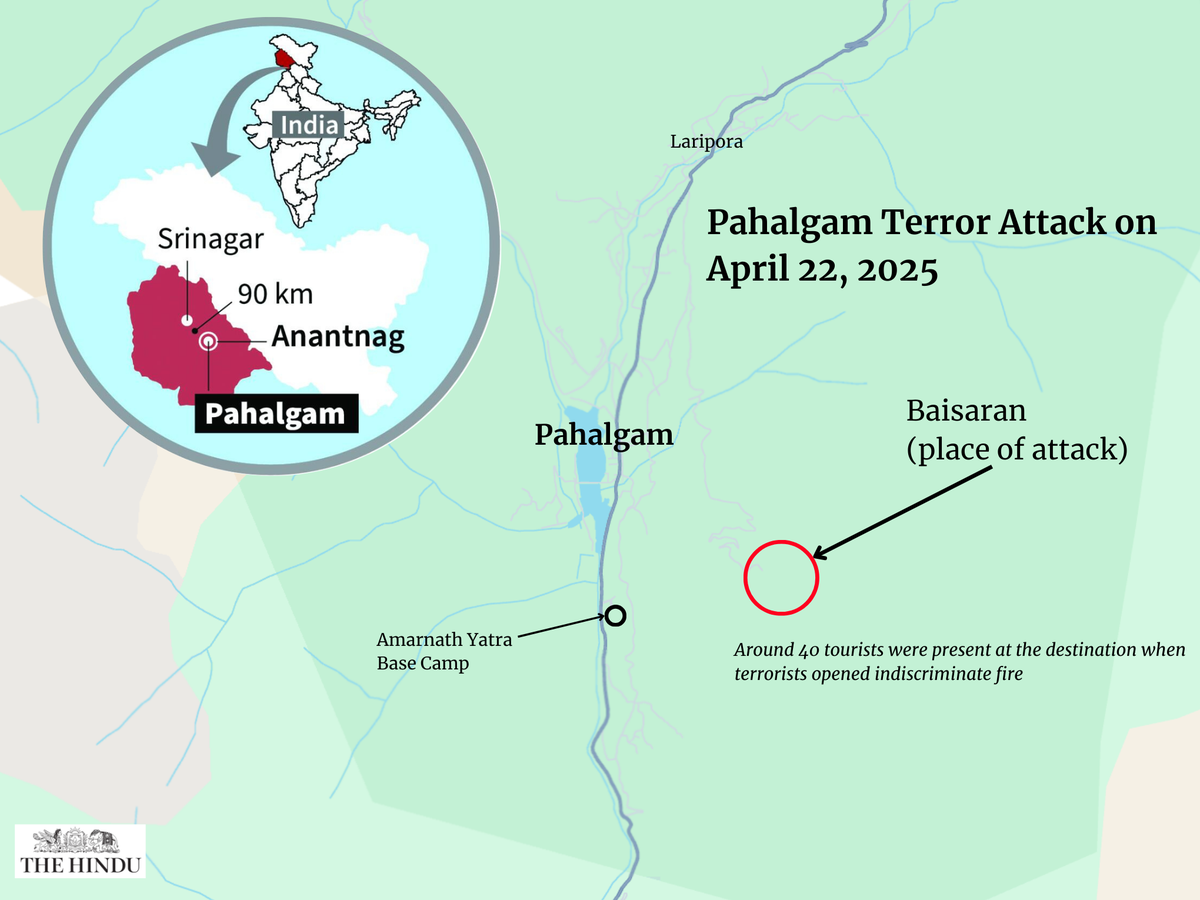
The massacre in the Baisaran Valley was not a random act of a desperate insurgency. On April 22, 2025, when gunmen emerged from the tree line in Pahalgam to kill 26 people, they didn't just fire into a crowd. Survivors and investigators have since confirmed a much darker protocol: the attackers filtered the tourists, checking identification and religious markers to ensure their victims were specifically Hindu. This wasn't just murder; it was a surgical strike against the very possibility of a pluralistic, stable Kashmir. By selecting targets based on faith, the Resistance Front (TRF) aimed to shatter the fragile "normalcy" that had seen record-breaking tourist numbers and high voter turnout in the previous year.
The "why" behind this shift in tactics is chillingly logical from a militant perspective. For decades, the conflict in Jammu and Kashmir focused on security forces and high-profile political targets. But as the Indian government ramped up its security grid and integrated the region more deeply into the national economy, traditional targets became harder to hit. Soft targets—unarmed civilians in picturesque meadows—offered a high-impact, low-risk alternative to project power and internationalize the dispute.
The Engineering of Religious Friction
The tactical shift toward identity-based targeting represents a calculated gamble by Pakistan-based proxy groups like the TRF. By slaughtering Hindu tourists, the intent is to provoke a reactionary wave of communal tension across mainland India. Militant strategists bank on the hope that a harsh, discriminatory state response or civilian backlash will alienate Kashmiri Muslims further, effectively doing the recruitment work for the insurgency.
It is a trap designed to be impossible to ignore. If the state does nothing, it looks weak. If it reacts with overwhelming force—as seen in the subsequent "Operation Sindoor"—it risks international condemnation and local resentment. The April 22 attack was the deadliest strike on civilians in the region in twenty-five years, purposely timed to disrupt the momentum of the 23.5 million tourists who visited in 2024. The logic is simple: if the valley isn't safe for "outsiders," the narrative of peace is dead.
The Failure of the Normalcy Assumption
For years, the administrative mantra in Srinagar was that tourism equals peace. This led to the opening of nearly 75 high-altitude destinations across the Pir Panjal range, many of which were historically used as infiltration corridors. Security agencies assumed that the decline in urban gunfights meant the insurgency was gasping its last breath.
They were wrong. The Pahalgam attack exposed a massive intelligence gap in the higher reaches. While the security grid was focused on holding roads and urban centers, the ridges remained porous.
Tactical Evolution of the Insurgency
- The Hybrid Module: Smaller, mobile groups that don't maintain a permanent presence, making them nearly impossible to track with traditional signals intelligence.
- Target Selection: Moving away from "hard" military targets to "symbolic" civilian targets that command global headlines.
- Digital Financing: The use of e-wallets and virtual assets to fund operations, bypassing traditional banking monitoring.
Operation Mahadev and the Ridge Shift
The response from the Indian security establishment was a total overhaul of the mountain warfare doctrine. Following the tragedy, the military moved from "holding the road" to "holding the ridge." This involved the establishment of 43 Temporary Operating Bases (TOBs) at altitudes between 3,000 and 9,000 feet. The goal was to deny the high ground to the TRF and Lashkar-e-Taiba (LeT) splinter groups.
Operation Mahadev eventually tracked and eliminated the three-member module responsible for the Pahalgam killings in the Harwan heights. However, the victory was bittersweet. The scale of the retaliation—including the reported destruction of air bases and the suspension of the Indus Waters Treaty—pushed the two nuclear-armed neighbors to the brink of a full-scale war.
The Cost of the Counter Strike
While the military success in neutralizing the attackers was swift, the internal fallout remains a point of intense friction. Following the attack, authorities detained approximately 2,800 individuals under the Public Safety Act (PSA) and the Unlawful Activities (Prevention) Act (UAPA). Critics, including United Nations experts, have raised alarms over what they call "collective punishment."
Reports of house demolitions and communication blackouts suggest that the state's reflex remains rooted in broad-spectrum suppression. This creates a dangerous cycle. When the state treats an entire community as a suspect pool in response to targeted terror, it inadvertently validates the "identity-based" battleground the terrorists wanted to create.
High Stakes in a Nuclear Neighborhood
The geopolitical ripples of the Pahalgam attack have reached far beyond the meadows of Baisaran. The United States’ designation of the TRF as a Foreign Terrorist Organization in July 2025 was a rare moment of diplomatic alignment, yet the region remains a tinderbox. New experiments in militancy, including the reported formation of women's wings like Jamaat-ul-Mominaat and maritime training by LeT, suggest that the infrastructure of terror is not shrinking; it is diversifying.
The real tragedy is that Pahalgam was not just an attack on people, but an attack on a future where a Kashmiri could sell a pashmina to a tourist without a soldier standing between them. The perpetrators knew exactly who they were killing, and they knew exactly what the reaction would be.
The security grid can hold every ridge from Srinagar to Leh, but as long as the strategy of the adversary is to weaponize identity, the quiet of the valley will remain a fragile illusion. The shift from terrain dominance to truly effective intelligence requires a level of local trust that is currently being eroded by the very security measures meant to protect it.