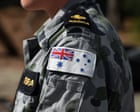
The headlines practically wrote themselves. Freedom of information documents drop, revealing that transgender and gender-diverse Royal Australian Navy personnel face deployment restrictions aboard American Virginia-class submarines under the AUKUS security pact. Immediately, the predictable chorus of outrage erupted. Commentators framed it as a betrayal of modern defense values. Politicians scrambled for talking points. Activists called it a discriminatory bottleneck that threatens the future of allied interoperability.
They are all looking at the wrong problem.
When you strip away the performative outrage and examine the brutal mechanics of nuclear submarine operations, the friction isn't driven by ideological malice. It is driven by three non-negotiable realities of undersea warfare—extreme spatial engineering, rigid medical logistics, and the absolute supremacy of host-nation command sovereignty. Treating a 7,800-ton nuclear-powered fast-attack submarine like a standard corporate office environment isn't just naive. It is dangerous.
If defense analysts keep framing this as a human resources dispute, they will miss the actual strategic crisis brewing beneath the surface of the AUKUS agreement.
The Myth of Seamless Allied Integration
Public commentary surrounding the AUKUS pact relies heavily on a comforting fiction—that allied militaries operate as interchangeable parts. People hear "joint training" and "technology sharing" and assume an Australian sailor can simply step onto a US Navy vessel, drop their gear in a rack, and stand watch without a hitch.
Anyone who has actually spent time around defense procurement and naval operations knows this is pure fantasy.
Even between the closest intelligence partners on earth—the Five Eyes alliance—interoperability hits a brick wall the moment you cross the hatch of a nuclear submarine. Every piece of equipment, every security clearance protocol, and every medical standard is governed by the sovereign law of the flag flying over that hull. When Australian sailors embed on a US Virginia-class boat, they are not co-owners. They are guests operating under the United States Uniform Code of Military Justice and Department of Defense medical readiness standards.
In the US military, medical readiness for submarine duty is notoriously unforgiving. You don't get disqualified just for complex conditions; you get disqualified for needing a specific brand of allergy medication that isn't stocked in the corpsman's limited supply locker, or for having dental work that might fail under prolonged atmospheric pressure changes.
Under current US Department of Defense policies—which have shifted repeatedly across administrations—individuals undergoing active gender transition, requiring ongoing hormone therapy stabilization, or needing specialized medical monitoring face strict deployment hurdles. On a surface ship, a medical evacuation involves a helicopter lift to a nearby carrier or land base. On a fast-attack submarine running silent in contested waters, surfacing to evacuate a crew member compromises the mission, exposes a multi-billion-dollar strategic asset, and puts 130 lives at risk.
Critics argue that hormone therapy is no different from any other daily maintenance medication. On paper, that sounds reasonable. In practice, submarine medical officers operate on a zero-margin-for-error doctrine. If a supply chain disruption or an extended deployment stretches a 90-day patrol into 150 days, any medical regimen requiring strict endocrinological monitoring or specific storage conditions becomes a liability. The Navy doesn't care about your politics. It cares about whether a physiological variable will force a nuclear reactor to surface in the middle of the South China Sea.
Steel Tubes Do Not Negotiate With Social Policy
To understand why the US Navy enforces rigid bunking and berthing rules, you have to understand the physical geometry of a Virginia-class submarine.
These vessels are 377 feet long and 34 feet wide. Inside that steel cylinder, you are packing a nuclear reactor, vertical launch tubes for Tomahawk missiles, torpedo rooms, sonar arrays, and enough food and oxygen scrubbing equipment to keep over a hundred humans alive underwater for months. Space isn't just at a premium; it is measured in millimeters.
- Hot-racking is still a reality. Junior sailors frequently share bunks in shifts—one sleeps while the other stands watch.
- Sanitation facilities are communal and microscopic. There are no private stalls or flexible floor plans to reconfigure on the fly.
- Privacy does not exist. You are living inches away from your shipmates in a high-stress, recycled-air environment where minor friction quickly escalates into psychological fatigue.
When the US Navy integrated women onto submarines starting in 2010, it didn't happen overnight with a memo. Naval architects had to physically redesign berthing compartments and washrooms on Ohio-class and Virginia-class boats, spending millions per hull to create segregated living and hygiene spaces. Even today, older hulls lacking those structural modifications cannot deploy mixed-gender crews without severe operational compromises.
When a sailor's legal gender marker, biological sex, and medical transition status intersect with these rigid physical constraints, naval planners face a logistical puzzle that steel bulkheads simply cannot accommodate. Australian Defense Force policies allow personnel to serve and deploy based on their affirmed gender, with flexible administrative accommodations. The US Navy, bound by congressional oversight and strict physical berthing mandates, relies on binary biological and medical classifications to assign racks and heads.
Expecting the Pentagon to rewrite its submarine berthing regulations to accommodate a handful of foreign exchange personnel misunderstands how military bureaucracy functions. The US Navy barely modifies its rules for its own personnel; it certainly isn't going to overhaul submarine fleet architecture for an ally's onboarding pipeline.
Why Critics Are Asking the Wrong Question Entirely
If you look at the public debate, everyone is asking: Why is the US forcing its restrictive policies onto progressive Australian sailors?
That is the wrong question. It assumes the US is actively trying to police Australian social norms.
The real question defense planners should be asking is: Why did Canberra sign a multi-hundred-billion-dollar nuclear submarine pact without negotiating a clear Status of Forces medical and personnel annex first?
I have watched defense contractors and government ministries burn hundreds of millions of dollars on joint venture programs because diplomats signed the headline agreement while leaving the operational fine print to mid-level bureaucrats three years later. AUKUS is the ultimate case study in diplomatic cart-before-the-horse syndrome.
When Australia, the UK, and the US announced AUKUS in 2021, the political leadership focused entirely on the grand strategic vision—countering naval expansion in the Indo-Pacific, transferring nuclear propulsion technology, and revitalizing industrial bases. Nobody in those high-level briefings was talking about the granular incompatibilities between Australian anti-discrimination law and US Navy Bureau of Medicine and Surgery (BUMED) waiver protocols.
Yet those exact incompatibilities are what actually govern human beings on deployment.
By failing to establish clear bilateral standards upfront, Australian defense officials set their own sailors up for disillusionment. Imagine a scenario where a highly skilled Australian sonar technician spends two years preparing for nuclear pipeline training, only to be told at the eleventh hour that US medical clearance rules bar them from stepping aboard a Virginia-class boat. That isn't a failure of the submarine's design. That is a failure of leadership in Canberra to manage expectations and align personnel pipelines with the reality of the host nation's rules.
What Everyone Gets Wrong About Military Readiness
Whenever a story like this breaks, two predictable camps form, and both of them get military readiness completely wrong.
The Progressive Critique argues that excluding any qualified specialist from a submarine crew weakens the force by shrinking an already desperate recruiting pool. It is true that both the US Navy and the Royal Australian Navy are facing severe recruitment and retention crises. Submariner billets are notoriously hard to fill. Turning away capable engineers or technicians hurts. However, readiness isn't just headcount; it is unit cohesion and predictable medical sustainability under extreme isolation. Introducing friction into a closed ecosystem—whether that friction comes from medical vulnerability, administrative ambiguity, or crew tension over berthing—degrades the unit's collective focus.
The Traditionalist Critique argues that diversity initiatives have ruined military standards and that the US Navy is simply holding the line against "woke" policies. This is equally lazy. The US submarine force has successfully integrated thousands of women over the past fifteen years, proving that demographic expansion does not degrade combat effectiveness when backed by proper engineering and clear rules. The issue here isn't cultural decay; it is regulatory collision between two sovereign militaries operating at different speeds on social policy.
The hard truth—the one neither side wants to admit—is that sovereign militaries are not democracies, and allied interoperability has hard ceilings.
When you step onto a foreign warship, your domestic labor protections stay on the pier. Australian workplace laws do not apply in Groton, Connecticut, or Pearl Harbor, Hawaii. If the host nation dictates that every sailor breathing recycled air 800 feet below the ocean surface must meet a specific, uncompromising medical and administrative profile, then that profile is the law.
The Hidden Bottleneck Threatening AUKUS
While the media obsesses over gender policies, a much larger personnel crisis is quietly threatening to derail the entire AUKUS timeline—and it follows the exact same pattern of regulatory friction.
Look at the broader workforce requirements for AUKUS:
- Security Clearances and ITAR Restrictions: The US International Traffic in Arms Regulations (ITAR) treats nuclear propulsion data like the crown jewels. Even with recent legislative reforms aimed at easing trade barriers between the three nations, background checks for Australian personnel entering US nuclear training pipelines are grueling. Dual citizens, individuals with foreign family ties, or anyone with complex financial histories face months or years of vetting delays.
- Nuclear Certification Standards: The US Naval Reactors program, established under the legendary Admiral Hyman Rickover, operates with an almost religious devotion to zero-defect safety. Every operator must pass ruthless technical interviews and psychological evaluations. If an Australian officer fails a single check-ride under US standards, they are out—regardless of how highly the Royal Australian Navy rates them.
- Industrial Base Cannibalization: The US submarine industrial base is already struggling to build two Virginia-class boats a year while simultaneously ramping up production for the Columbia-class ballistic missile submarine. Pulling experienced US instructors and dockyard workers away to train Australian crews creates a zero-sum drain on American fleet readiness.
The restrictions affecting gender-diverse sailors are simply the most visible symptom of a much deeper truth: Australia is buying into an American system, and the American system does not bend.
How Canberra Must Fix Its Personnel Pipeline
If the Australian Department of Defence wants to stop walking into avoidable public relations ambushes while keeping its submarine training pipeline intact, it needs to abandon wishful thinking and implement three ruthless operational fixes immediately.
1. Pre-Screen Against US Standards at Day One
Stop recruiting and training personnel for the nuclear submarine stream using Australian domestic medical and administrative criteria, only to subject them to US Navy vetting two years later. Canberra must embed US BUMED medical standards and Department of Defense deployment criteria directly into the initial Australian recruitment screening for AUKUS billets. If a candidate cannot legally deploy on a US boat under current Pentagon rules, route them to surface fleet or domestic shore-based technical roles immediately. Transparency at the recruiting office prevents career devastation down the line.
2. Decouple Domestic Training From US Sea Duty
Not every sailor in the AUKUS enterprise needs to ride a US Virginia-class submarine out of Pearl Harbor. Australia is building massive domestic infrastructure at HMAS Stirling in Western Australia and expanding shipyards in Osborne, South Australia. Defense planners should create a dual-track career architecture:
- Track A (Sea-Going Exchange): Strictly filtered to meet 100% of current US Navy deployment, medical, and berthing regulations without waivers.
- Track B (Sovereign Sustainment & Engineering): Open to all personnel under Australian Defence Force standards, focusing on shore-based reactor maintenance, shore command, simulation training, and domestic submarine construction.
3. Stop Pretending Sovereign Parity Exists Yet
Until Australia takes possession of its first sovereign Virginia-class hulls in the 2030s—and eventually builds its own SSN-AUKUS boats—the Royal Australian Navy is an apprentice inside an American master-class program. Once Australia owns the hulls and flies the Australian White Ensign over them, Canberra sets the rules. If the Australian government wants to configure its future sovereign submarines with flexible berthing and administer them under Australian medical and gender policies, nobody in Washington will stop them. Until that day comes, pretending that a guest crew member can dictate host-nation submarine regulations is a waste of political capital.
The Uncomfortable Reality of Undersea Warfare
The downside to accepting this pragmatic approach is obvious: it feels unfair. In a modern society that values equal opportunity across every profession, telling a dedicated, capable sailor that they cannot serve aboard an allied submarine because of medical bureaucracy or steel bulkhead geometry grates against every instinct of contemporary fairness. It creates a two-tiered reality within the Australian military—one set of rules for the surface fleet, and a stricter, unforgiving set of rules for the silent service.
Warfare does not grade on a curve for fairness.
A submarine is the most unforgiving machine human beings have ever built. Every rule governing who steps aboard—from dental X-rays to psychological profiles, from security clearances to berthing assignments—exists because somewhere in the past century, an overlooked variable caused a catastrophe beneath the waves.
Canberra does not have a discrimination problem on its hands. It has a realism problem. Until defense leaders stop selling AUKUS as a frictionless partnership and start preparing their people for the uncompromising realities of US nuclear naval doctrine, these headlines will keep surfacing—and the real work of building a credible deterrent will keep getting buried beneath the noise.