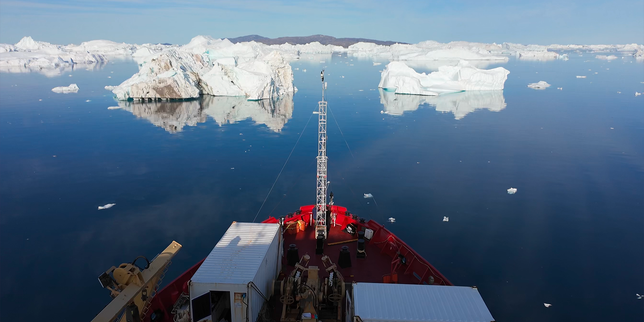
Marine navigation in high-latitude environments operates under constraints that invalidate standard maritime logistics models. When a vessel enters polar waters, the primary variable shifts from hydrodynamic drag in open water to structural crushing mechanics against multi-year pack ice. A four-week deployment aboard a heavy icebreaker exposes the friction points between theoretical vessel specifications and operational realities in sub-zero theatres. Understanding this operational domain requires decomposing the mechanics of ice-hull interaction, thermal management systems in extreme environments, and the human factors governing prolonged isolation at high latitudes.
The physics of polar transit dictate that hull design is a compromise between open-water fuel efficiency and ice-breaking capacity. Traditional displacement hulls optimize for laminar flow and minimal wake generation. Icebreakers invert these priorities. The bow geometry features a rake angle typically between twenty and thirty degrees, designed to ride up onto the ice sheet. Once the vertical load of the vessel exceeds the flexural strength of the ice, the sheet fails in bending rather than compression. This mechanical advantage reduces total energy expenditure compared to direct horizontal shattering, yet it introduces severe motion penalties for personnel on board. The vessel pitches continuously as it breaks ice, transforming propulsion energy into vertical acceleration and structural vibration.
Mechanical failure rates escalate predictably under continuous thermal cycling. Steel brittleness increases exponentially as ambient temperatures drop below minus twenty degrees Celsius. Standard hull alloys lose Charpy V-notch impact toughness, necessitating the use of specialized low-carbon, micro-alloyed steels that retain ductility in extreme cold. Propulsion systems face parallel challenges. Azimuth thrusters and fixed shafts experience severe torsional stress when encountering consolidated ridges blocks of ice cemented together by refrozen slush that can exceed five meters in thickness. Power management systems must dynamically shift torque to prevent cavitation damage while maintaining sufficient propeller blade integrity against glancing impacts with ice keels.
The Operational Cost Function of Polar Transit
Fuel consumption profiles in ice-covered waters do not scale linearly with distance. Transit cost functions are a multi-variable equation balancing ice concentration, ridge frequency, hull friction coefficients, and propulsion power output. In open water, specific fuel consumption per nautical mile remains relatively constant. In marginal ice zones with concentrations ranging from seven to nine tenths, resistance fluctuates wildly. A vessel may advance at eighteen knots in open leads, only to drop to two knots or stall entirely upon encountering a multi-year pressure ridge.
The thermal load on auxiliary systems represents a hidden operational cost. Engine cooling water intakes ingest slush ice, threatening raw-water pump impellers and requiring continuous high-pressure backflushing with heated seawater. Crew comfort systems draw significant electrical load for trace heating on potable water lines and ventilation pre-heaters designed to prevent intake icing. Consequently, daily bunker consumption rates can triple during active ice management operations compared to transit phases in open seas.
Communication latency and navigational telemetry degrade as latitude increases. Geostationary satellites drop below the horizon north of seventy-five degrees latitude, forcing reliance on low-earth orbit constellations or high-frequency radio systems susceptible to ionospheric scintillation. Autonomy in route selection becomes paramount. Watch officers cannot rely solely on real-time shore-based routing advice; they must interpret synthetic aperture radar imagery and onboard downward-looking sonar data to map sub-surface ice keels before the vessel commits to a channel.
Physiological and Psychological Pressures of Confinement
Extended deployment in polar regions induces predictable stressors on human performance. The absence of a diurnal solar cycle during polar winter or continuous daylight during polar summer disrupts circadian rhythms, suppressing melatonin production and altering sleep architecture. Sensory deprivation compounds this physiological stress. The external environment offers a monochromatic palette of white, grey, and black, broken only by the orange hull of the vessel and occasional atmospheric phenomena such as parhelia or ice fog.
Decision fatigue accelerates among bridge crews due to the cognitive load of sustained vigilance. Navigating through heavy pack ice demands constant micro-corrections and rapid risk assessment. A misjudged wedge between two converging floes can wedge the vessel, requiring ballasting maneuvers or assistance from sister ships. Mitigation strategies rely on strict work-rest schedules, rotational shift designs, and mandatory physical activity protocols to offset the sedentary nature of watchkeeping in confined spaces.
Nutritional logistics present another operational boundary. Fresh produce degrades rapidly in long-duration voyages, forcing reliance on freeze-dried, frozen, or heavily preserved provisions. Culinary operations must adapt to these constraints while maintaining caloric density standards for crew members expending excess energy simply to maintain core body temperature during deck operations. Waste management protocols are equally stringent; international polar codes prohibit the discharge of untreated sewage, food waste, or oily bilge water within designated high-latitude zones, requiring onboard compaction, incineration, and storage systems capable of holding weeks of accumulated refuse.
Strategic Resource Allocation for High-Latitude Missions
Deploying capital-intensive maritime assets into polar regions requires a zero-tolerance approach to maintenance downtime. Because drydock facilities are virtually non-existent above the Arctic Circle or along Antarctic coasts, preventive maintenance schedules are absolute. Every mechanical subsystem, from auxiliary generators to hydraulic steering rams, operates under redundant architecture. If a primary hydraulic pump fails in a remote sound, remote troubleshooting via satellite link and onboard spares inventory must suffice; external rescue or towage can take days or weeks depending on meteorological conditions and ice cover severity.
Supply chain integrity dictates mission scope. A vessel operating independently must carry its own contingency stores, including specialized emergency rations, survival suits rated for immersion in sub-zero water, and medical supplies capable of handling trauma injuries remote from definitive surgical care. Evacuation protocols depend entirely on weather windows; rotary-wing aircraft have limited range and payload capacity in icing conditions, making the ship itself the primary treatment and survival platform for weeks at a time.
Deploying specialized vessels into ice-dominated waters requires a fundamental shift from traditional open-ocean navigation paradigms. Success depends on treating the vessel, the ice environment, and the human crew as a single integrated thermodynamic and mechanical system. Organizations that fail to account for the non-linear relationship between ice resistance, mechanical fatigue, and human endurance will encounter operational paralysis, regardless of capital investment in hull reinforcement or propulsion power. Future maritime expansion into high-latitude corridors will reward operators who prioritize rigorous system redundancy, real-time environmental data processing, and disciplined operational pacing over raw propulsion muscle.