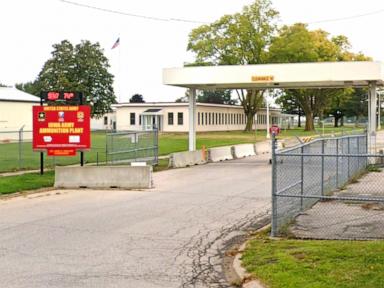
Postponing the open-air detonation of nearly 10,000 pounds of lead azide is not an administrative delay; it is a mandatory thermodynamic and acoustic risk-mitigation protocol governed by atmospheric physics and explosive sensitivity thresholds. When military ordnance disposal teams halt a scheduled demolition of primary explosives at this scale, the decision stems from a strict evaluation of meteorological boundary layers, blast overpressure propagation, and the extreme mechanical instability of the compound itself.
Standard news coverage treats a military schedule shift from the weekend to a Monday as a routine logistical adjustment. That framing misses the underlying engineering reality. Lead azide is a primary explosive, meaning it transitions from deflagration to detonation almost instantaneously upon minimal stimulus. Managing nearly five short tons of this material requires aligning environmental variables to prevent catastrophic structural damage to surrounding infrastructure, uncontained toxic dispersion, and accidental premature initiation during final rigging.
The Chemical and Physical Profile of Lead Azide
To understand why a multi-ton disposal operation cannot proceed under marginal conditions, one must separate primary explosives from secondary explosives like TNT or C-4. Secondary explosives require a high-velocity shockwave to initiate, allowing operators to transport, stack, and wire large quantities with a wide safety margin. Lead azide ($\text{Pb(N}_3)_2$) operates on the opposite end of the stability spectrum.
Lead azide is the standard initiating compound used in military detonators and percussion caps. In microscopic quantities—typically milligrams—it provides the sharp, high-velocity shockwave necessary to trigger a larger, less sensitive booster charge. Accumulating nearly 10,000 pounds of bulk or demilitarized lead azide presents a nonlinear hazard profile. Unlike secondary explosives, where risk scales roughly linearly with mass, bulk primary explosives exhibit extreme sensitivity to friction, impact, static electricity, and rapid thermal shifts.
Mechanisms of Instability
- Crystal Fracture Sensitivity: Lead azide exists in multiple polymorphic forms, primarily alpha and beta phases. If large crystals form during storage or degradation, internal mechanical stress can cause spontaneous fracture. The energy released by a single crystal snapping is often sufficient to initiate the entire surrounding mass.
- Hydrolysis and Copper Contamination: In the presence of moisture and carbon dioxide, lead azide undergoes slow hydrolysis, liberating hydrazoic acid ($\text{HN}_3$). If this acid reacts with copper or brass components commonly found in munitions casings, it forms copper azide—a compound orders of magnitude more sensitive than lead azide itself, capable of detonating from the slightest air current or vibration.
- Electrostatic Discharge (ESD) Vulnerability: Dry lead azide requires minimal electrostatic energy to ignite. Low relative humidity environments elevate ambient static charges on personnel and equipment, turning routine handling into an acute initiation risk.
Because of these mechanisms, explosive ordnance disposal (EOD) teams do not simply "store" 10,000 pounds of aging lead azide indefinitely. Once the material is staged for open-detonation (OD) disposal, the window for safe execution narrows rapidly. However, the decision to detonate is subordinate to external containment variables.
The Four Pillars of Open-Detonation Go/No-Go Criteria
Military range control and EOD commanders rely on a rigid matrix of environmental and operational thresholds before authorizing a high-yield detonation. If any single variable falls outside acceptable tolerances, the operation is scrubbed until the next viable window.
1. Acoustic Focusing and Atmospheric Inversion
The primary driver behind sudden, short-notice postponements of large-scale detonations is upper-atmosphere meteorology, specifically temperature inversions and wind shear profiles.
Under standard atmospheric conditions, air temperature decreases with altitude. Sound waves and low-frequency blast overpressure generated by a 10,000-pound detonation refract upward, dissipating harmlessly into the upper atmosphere. During a temperature inversion—common during weekend morning transitions or shifting weather fronts—a layer of warm air traps cooler air near the surface.
This thermal boundary acts as an acoustic mirror. Instead of escaping upward, blast overpressure waves bend back toward the earth miles away from the detonation pit. This phenomenon, known as acoustic focusing, can concentrate shockwaves onto civilian structures well outside the installation's established safety arc. The result is shattered windows, cracked foundations, and structural drywall damage in neighboring municipalities, alongside severe noise complaints that jeopardize the installation's environmental operating permits. Range meteorologists launch weather balloons hours prior to a scheduled shot to map these inversion layers; if the refraction models predict overpressure spikes exceeding strict decibel or pounds-per-square-inch (psi) limits at the installation boundary, the shot is immediately postponed.
2. Particulate Plume Dispersion and Heavy Metal Toxicology
Detonating 10,000 pounds of lead azide is not merely a kinetic event; it is a chemical dispersion event. The detonation reaction decomposes lead azide into nitrogen gas and elemental lead vapor:
$$\text{Pb(N}_3)_2 \rightarrow \text{Pb} + 3\text{N}_2$$
At the extreme temperatures of a detonation fireball, the resulting lead vaporizes and subsequently condenses into fine particulate matter ($\text{PM}{2.5}$ and $\text{PM}{10}$) and lead oxide aerosols. Environmental compliance under the Clean Air Act and Resource Conservation and Recovery Act (RCRA) dictates that the resulting toxic plume must disperse within designated military airspace and settle within controlled range boundaries.
Surface wind speed and direction govern this dispersion.
- Insufficient Wind: Stagnant air causes the heavy metal plume to linger over the detonation site, creating severe acute inhalation hazards for range personnel re-entering the area and exceeding localized air quality thresholds.
- Excessive or Misaligned Wind: High winds blowing toward populated areas or watershed boundaries risk carrying lead particulates off-post, triggering regulatory violations and environmental remediation liabilities.
Shifting the operation from a weekend to a Monday frequently reflects a forecast showing favorable mixing heights and directional wind vectors that push the plume safely over uninhabited buffer zones.
3. Seismic Coupling and Ground Vibration Limits
When nearly five tons of high-brisance explosive detonate at or near ground level, a significant fraction of the energy couples directly into the earth as seismic waves (Rayleigh and body waves). Soil moisture content drastically alters how efficiently this energy travels.
Saturated soil—resulting from recent rainfall—acts as a near-incompressible medium, transmitting seismic energy with far greater efficiency than dry, aerated soil. If heavy precipitation precedes the scheduled detonation, the peak particle velocity (PPV) measured at off-site seismic monitoring stations can exceed structural safety thresholds for nearby utilities, pipelines, or residential foundations. Waiting 24 to 48 hours allows surface water to drain and soil compaction dynamics to stabilize, reducing ground-shock transmission.
4. Personnel Availability and Emergency Response Bandwidth
Operational risk management extends beyond the detonation pit to the surrounding infrastructure. Executing a disposal operation of this magnitude requires full staffing across multiple support functions:
- Range control officers and radar/airspace monitors to maintain a sterile Temporary Flight Restriction (TFR) zone.
- Dedicated on-site fire suppression and hazardous materials (HAZMAT) response teams.
- Environmental monitoring technicians operating perimeter air-sampling stations.
- Local law enforcement and emergency medical services (EMS) placed on standby.
Weekend schedules routinely operate with skeleton crews across civilian regulatory agencies, environmental monitoring contractors, and municipal emergency services. Postponing to a Monday aligns the detonation with peak institutional bandwidth, ensuring that full telemetry, medical support, and regulatory oversight are active without incurring overtime bottlenecks or communication delays between military range control and civilian authorities.
The Cost Function of Delay vs. Execution
Every hour that 10,000 pounds of unstable primary explosive remains rigged or staged on a demolition range carries an escalating operational cost. EOD commanders must balance the risk of leaving the material in place against the risk of initiating it under suboptimal conditions.
The Risk of Premature Initiation During Hold Periods
Once bulk lead azide is removed from climate-controlled storage bunkers, transported to an open-detonation range, and unpacked for wiring, it is exposed to ambient thermal cycling. Day-to-night temperature swings cause expansion and contraction within the explosive containers. If moisture enters the staging area, the risk of hydrazoic acid formation increases. Furthermore, extended hold times require continuous perimeter security to prevent unauthorized access or wildlife interference with detonation cord and blasting caps.
The Risk of Uncontrolled Overpressure and Liability
Conversely, proceeding with the detonation during an atmospheric inversion or unfavorable wind pattern creates immediate, quantifiable liabilities:
- Direct Financial Liability: The military bears direct financial responsibility for validated structural damage claims from surrounding property owners.
- Regulatory Sanctions: Exceeding particulate emission limits or violating noise ordinances can result in state environmental agencies revoking or suspending the facility's open-burning/open-detonation (OB/OD) permit. Losing an OB/OD permit forces an installation to halt all demilitarization operations, creating massive logistical backlogs of aging munitions that pose an even greater long-term storage hazard.
The postponement to Monday demonstrates that the immediate risk of a 24-to-48-hour hold in a secured, cordoned range environment is lower than the high probability of acoustic focusing or off-site lead dispersion during weekend weather conditions.
Limitations of Open-Detonation Disposal
While open detonation remains the standard method for disposing of bulk primary explosives due to the extreme danger of mechanical processing, the practice faces severe structural and environmental constraints.
- Zero Material Recovery: Unlike closed-chamber detonation systems equipped with scrubbers and plasma arcs, open-air detonation releases 100% of the reaction byproducts—specifically elemental lead—directly into the local ecosystem. Over decades, detonation ranges accumulate heavy metal contamination in the topsoil, requiring expensive soil washing or stabilization remediation.
- Weather Dependency: Open-detonation schedules are entirely hostage to micro-meteorology. A facility can spend weeks preparing a single shot, only to face repeated 24-hour rolling delays due to shifting upper-level winds.
- Community Encroachment: Many military proving grounds and ammunition plants were established in remote areas decades ago. Suburban expansion has pushed residential developments closer to installation boundaries, shrinking the acoustic buffer zones and tightening the meteorological windows during which large shots can be legally executed.
Closed detonation chambers (such as static detonation chambers) eliminate weather dependency and capture heavy metal emissions through filtration systems. However, current chamber technology is typically rated for net explosive weights (NEW) measured in tens or hundreds of pounds—not 10,000 pounds of high-brisance primary explosive. Attempting to break down 10,000 pounds of unstable lead azide into small batches for chamber processing introduces unacceptable handling risks to technicians, making a single, bulk open-detonation event the safer engineering choice despite its environmental trade-offs.
Strategic Forecast and Operational Protocol
For range managers, municipal planners, and defense logistics analysts tracking demilitarization operations, a Monday rescheduling following a weekend scrub signals a specific operational sequence:
- Acoustic Re-modeling at T-Minus 6 Hours: Range meteorologists will execute rawinsonde weather balloon launches early Monday morning to confirm the dissipation of surface temperature inversions before authorizing final arming procedures.
- Strict TFR Enforcement: Expect a temporary airspace restriction extending several thousand feet above ground level over the range complex to protect transient aircraft from both the shockwave and the thermal plume.
- Post-Detonation Perimeter Sweep: Following the detonation, range safety officers will enforce a mandatory cooling and plume-settling period before EOD teams re-enter the crater zone to verify complete consumption of the lead azide—ensuring no unexploded, hyper-sensitive fragments remain scattered across the range floor.
Installations managing legacy primary explosive stockpiles must accelerate capital investment in high-capacity contained detonation vessels and automated remote-handling robotics. Until contained systems can safely absorb multi-ton net explosive weights without manual batching, bulk open-detonation operations will remain strictly dictated by upper-atmosphere physics rather than fixed calendar schedules.