Try finding the housing platform of a third-place city council candidate in Mississauga or London on a Tuesday night. You'll end up clicking through three broken PDF links, an abandoned Facebook page from 2022, and a local newspaper site locked behind a paywall.
That frustration is the real reason Ontario voters turned to AI chatbots for 2026 municipal elections. It wasn't blind faith in Silicon Valley. People were simply exhausted by the information vacuum that plagues local politics across the province.
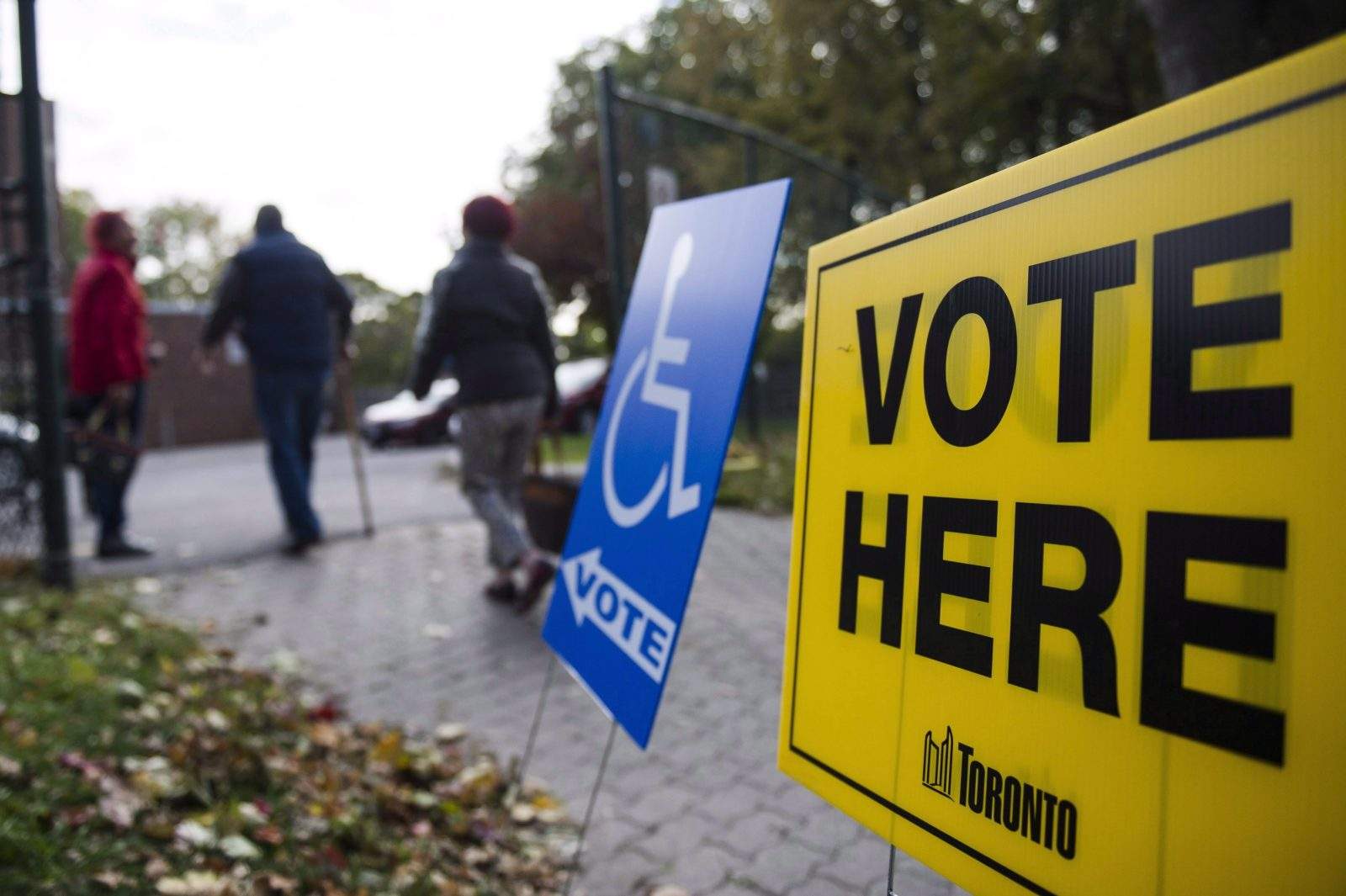
Municipal elections in Ontario have always suffered from an attention deficit. Unlike federal or provincial races—where party banners, televised debates, and wall-to-wall CBC or CTV coverage do the heavy lifting—local ballots hand you a list of names with zero party affiliations attached. In October 2026, millions of Ontarians walked into voting booths or logged onto municipal portals facing dozens of candidates for mayor, city council, and school board trustee, armed with almost no easy way to compare them.
So they opened ChatGPT, Claude, Perplexity, and Google's AI tools instead.
The Local News Desert Made Chatbots the Default Research Assistant
To understand why voters leaned on large language models during the 2026 cycle, you have to look at what happened to Ontario's media ecosystem over the last decade. Dozens of community newspapers shuttered or hollowed out their newsrooms. Metroland Media Group's restructuring back in 2023 wiped out print editions across dozens of Ontario communities, and local political reporting never truly recovered.
When nobody is covering the Ward 4 all-candidates meeting in Brampton or the school board debate in Kitchener, voters have to fend for themselves.
Traditionally, a diligent voter had to manually hunt down every candidate's personal website, read lengthy PDF platform documents, watch two-hour YouTube recordings of poorly lit community centre debates, and cross-reference voting records on municipal clerk websites. Almost nobody has time for that.
AI chatbots offered an immediate shortcut. Instead of spending four hours digging through council minutes, a voter could paste three candidate platforms into a chat window and ask for a side-by-side breakdown on property taxes, zoning reform, and transit funding. Tools with live web search capabilities became instant research assistants, pulling snippets from candidate websites, LinkedIn profiles, and whatever local coverage still existed.
It felt efficient. Honestly, for basic summarization, it worked pretty well.
How Ontario Voters Actually Used AI Before Casting Ballots
If you think people just typed "Who should I vote for in Toronto?" and blindly obeyed the screen, you're underestimating voters. Most people used AI in much more specific, practical ways during the 2026 municipal race.
Translating Municipal Jargon Into Plain English
Local government runs on impenetrable bureaucracy. Terms like inclusionary zoning, development charges, strong mayor powers, and MPAC assessments dominate municipal campaigns, yet most candidates throw these phrases around without explaining what they actually mean for a homeowner's tax bill or a renter's lease.
Voters used chatbots as live translators. Someone reading a candidate's pledge to "freeze development charges to spur purpose-built rentals" could ask an AI tool to explain the trade-offs—specifically, how freezing those fees shifts infrastructure costs onto existing property taxpayers. That kind of instant context made dense policy debates accessible to regular people.
Decoding School Board Trustee Races
Ask ten Ontario voters what a school board trustee actually does, and seven of them won't be able to give you a straight answer. Yet trustee races became intense ideological battlegrounds across Ontario in both 2022 and 2026.
Because local media rarely profiles trustee candidates in depth, voters turned to AI tools to scrape candidate social media histories, public statements, and endorsements. People wanted to know whether a candidate was focused on special education funding and busing shortages, or whether they were running primarily on culture-war grievances. Chatbots helped surface patterns in how candidates talked about education policy when traditional voter guides came up empty.
Comparing Incumbent Voting Records Against Campaign Promises
Incumbents love to campaign on fresh promises while hoping you forgot how they voted two years ago. In larger Ontario cities like Ottawa, Hamilton, and Toronto, council voting records are technically public, buried inside massive PDF agendas and clerk databases.
Tech-savvy voters fed council minutes and budget vote breakdowns directly into AI tools to fact-check incumbent claims. When a councillor claimed to be a champion of affordable housing, voters checked whether that same councillor had voted against mid-rise zoning approvals in their own ward.
Where AI Chatbots Failed Ontario Voters Badly
Here's the problem. Generative AI is fundamentally bad at the exact thing municipal elections require most—hyper-local, up-to-the-minute accuracy on obscure subjects.
Large language models thrive on volume. They know everything about Justin Trudeau, Doug Ford, or the U.S. presidential race because millions of articles exist in their training data and live search indexes. A first-time city council candidate in Barrie or Sudbury? There might be three web pages about them on the entire internet.
When data is thin, AI models don't always say "I don't know." Often, they guess.
The Name-Mixing and Hallucination Trap
One of the most common failures during the 2026 Ontario municipal cycle involved candidate conflation. Municipal ballots are packed with common names, and local candidates rarely have prominent digital footprints. When asked about a lesser-known challenger, chatbots frequently merged their biography with someone else sharing the same name—attributing a business owner's LinkedIn history to a retired teacher, or inventing committee memberships that never existed.
Even worse, some models pulled outdated platforms from the 2022 Ontario municipal election and presented them as current 2026 positions. If a councillor shifted their stance on bike lanes or transit expansion over four years, an AI summary relying on older indexed articles fed voters completely stale information.
Built-In Sycophancy and Confirmation Bias
AI chatbots are trained to be helpful and agreeable. That's a dangerous trait in a political research tool.
If a voter typed, "Give me reasons why Candidate X's transit plan is terrible," the chatbot happily complied, cherry-picking criticisms and framing them persuasively. If the next voter asked, "Why is Candidate X's transit plan the smartest choice for the city?" the exact same model generated an equally compelling defense.
Instead of challenging assumptions, chatbots often acted as sophisticated confirmation-bias engines, reinforcing whatever angle the user nudged them toward.
Missing the Offline Reality of Local Politics
Municipal politics in Ontario still happens heavily offline. Lawn signs, door-knocking conversations, endorsements from local labour councils, ratepayers' associations, and neighborhood groups carry massive weight—and huge chunks of that activity never get indexed cleanly on the open web.
An AI chatbot scraping text from a polished campaign website couldn't tell you that a candidate hadn't shown up to three consecutive community debates, or that their campaign was being bankrolled entirely by out-of-town developers whose names only appeared on post-election financial disclosures. Relying solely on a chatbot meant missing the texture of local accountability.
Ontario Election Rules Weren't Built for AI Gatekeepers
Provincial regulations governing Ontario municipal elections—primarily the Municipal Elections Act, 1996—were written long before algorithmic intermediaries started summarizing candidates for voters.
While Ontario has rules around campaign advertising, third-party advertisers, and financial disclosures, there is zero regulatory framework governing how private AI companies summarize, rank, or characterize municipal candidates. The Association of Municipalities of Ontario (AMO) and election integrity researchers have repeatedly flagged how digital information gaps affect local democracy, yet municipal clerks have neither the budget nor the legal mandate to audit what commercial chatbots say about local races.
Candidates quickly caught on to this. During the 2026 campaign, smarter local campaigns began optimizing their websites specifically for AI crawlers—publishing clean, structured FAQ pages, clear bulleted policy stances, and plain-text press releases rather than trapping their platforms inside unreadable graphic flyers. They realized they weren't just writing for human eyeballs anymore; they were writing for the bots summarizing them.
How to Use AI for Local Elections Without Getting Misled
AI isn't going away before the next Ontario municipal election in 2030. In fact, by then, AI summaries will likely be baked directly into every search engine and social feed voters touch. Using these tools wisely comes down to treating them like an intern rather than an authority.
If you're using an AI chatbot to research local candidates, follow a strict verification routine:
- Supply your own source documents. Don't rely on the chatbot's general memory or blind web search. Download the candidates' actual platform text, copy-paste it directly into the chat, and instruct the model to summarize only based on the text provided.
- Demand source links for every factual claim. If a chatbot tells you a candidate voted against a shelter or supported a tax hike, force it to provide the exact URL or council meeting date. If it can't produce a verifiable link, treat the claim as fabricated.
- Ask neutral, two-sided prompts. Never ask a leading question. Instead of asking why a candidate is good or bad, ask for the strongest arguments for and against a specific municipal policy proposal.
- Cross-check with municipal clerk portals and local nonprofits. Every Ontario municipality maintains official candidate lists and financial disclosures. Pair your AI summaries with non-partisan local voter guides—like those produced by local chambers of commerce, labour councils, or community associations—to catch what the algorithms miss.
Use AI to cut through bureaucratic jargon and organize messy information, then verify every single detail against primary local sources before you mark your ballot.