The headlines are writing themselves again. Analysts in glass-walled offices across London and Washington are buzzing about an imminent shipping security agreement between Tehran and Muscat in the Strait of Hormuz. The lazy consensus is predictable: Oman is acting as the ultimate diplomatic bridge, coaxing Iran into a regional security framework, while Washington sits on the outside waiting for conditions to be met.
It sounds sophisticated. It sounds like traditional geopolitics at work. It is also fundamentally wrong.
I have spent the better part of two decades watching western risk assessment desks fall for the exact same regional performance art. Every few years, a minor bilateral memorandum or transit understanding gets dressed up by weary foreign ministry spokespeople as a major breakthrough.
The reality on the water is entirely disconnected from the ink drying on diplomatic parchment. Iran does not need a formal shipping pact with Oman to control the Strait of Hormuz, and Oman has zero appetite to underwrite western naval security under the guise of bilateral maritime cooperation.
Let us tear apart the comfortable fiction currently dominating financial news feeds and look at the brutal, unvarnished mechanics of Gulf shipping politics.
The Geography Myth
To understand why the supposed Hormuz deal is an empty shell, you have to look past the press releases and stare at a nautical chart.
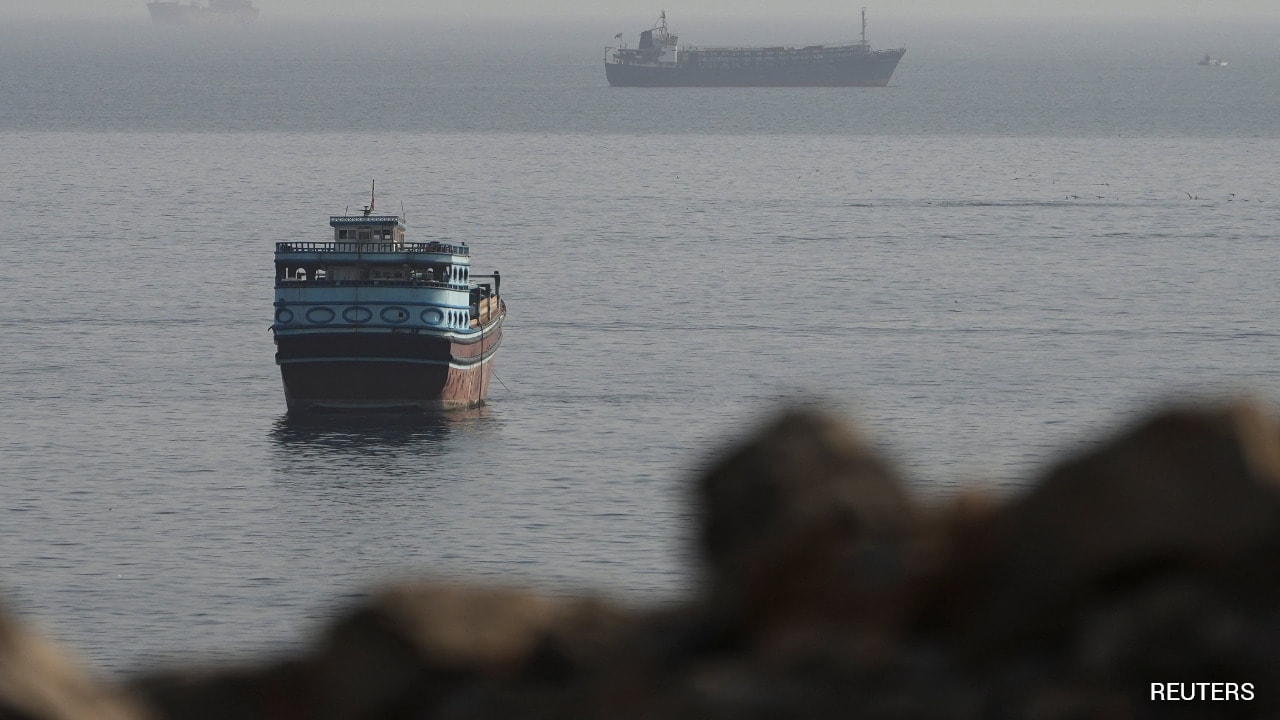
The Strait of Hormuz is roughly twenty-one miles wide at its narrowest point. The inbound and outbound shipping lanes are each two miles wide, separated by a two-mile buffer zone. That leaves very little margin for error. Crucially, the deepest and most navigable channels of these lanes fall almost entirely within the territorial waters of Oman or Iran, with the primary deep-water transit routes passing through the Omani side of the traffic separation scheme.
For decades, shipping conglomerates and insurance underwriters operated on a comforting assumption: Oman controls the southern half, Iran controls the northern half, and international law guarantees transit passage through international straits.
That legal theory is nice on paper. In practice, international maritime law is only as strong as the nearest corvette or anti-ship missile battery.
When Tehran wants to squeeze commercial traffic, it does not need Omani permission, nor does it care about Omani mediation. Iranian fast attack craft and Islamic Revolutionary Guard Corps naval units operate with complete tactical impunity inside their own littoral zones. A piece of paper signed in Muscat does not alter the radar cross-section of a drone sitting in Bandar Abbas.
By pretending that a bilateral understanding between Iran and Oman can stabilize commercial shipping, analysts are treating a structural military choke point like a routine traffic management problem. It is not. It is a persistent geopolitical hostage situation, and no amount of Omani diplomacy changes the leverage dynamic.
The Omani Calculus Everyone Ignores
Let us talk about Oman, because western commentators love to cast the Sultanate as the Switzerland of the Middle East—a neutral, benevolent mediator that only wants peace, harmony, and low insurance premiums for oil tankers.
That is a caricature.
Oman's foreign policy is not driven by altruism or a passion for regional stability. It is driven by existential survival. Sandwiched between Saudi Arabia to the west, Yemen to the southwest, and Iran across the water, Muscat practices a doctrine of hyper-pragmatism. They maintain open channels with everyone precisely because they cannot afford to make a permanent enemy of anyone.
Imagine a scenario where a major carrier tests the limits of this new transit understanding, running a crude tanker through the strait under the assumption that Omani guarantees protect them from Iranian harassment. An IRGC patrol boat approaches, issues a mandatory query, and demands an inspection. Oman is not going to dispatch its tiny naval force to challenge the Revolutionary Guard. Muscat will issue a polite statement calling for calm, while the tanker captain frantically weighs whether to comply or risk a multi-million-dollar seizure.
Oman values its quiet relationship with Tehran far too much to jeopardize it over a western-centric desire for secure crude flows. Tehran knows this. Washington knows this. Only the desk analysts seem confused.
When Muscat engages in talks with Iran regarding maritime transit, they are negotiating local port access, customs harmonization, and minor border clarifications. They are not signing up to be the sheriff of the Persian Gulf. To frame an Omani-Iranian administrative chat as a precursor to a grand regional security architecture is pure fantasy.
The US Conditions Fallacy
Then we have the second half of the standard narrative: Iran keeping conditions for the United States.
The baseline assumption here is that Tehran is waiting for specific American concessions—sanctions relief, asset unfreezing, or a reduction of naval posture in the region—before it blesses commercial transit through Hormuz. This frames Iran as a reactive actor holding out for a better deal at the negotiating table.
This completely misreads the strategic utility of instability for the Iranian state.
Control over the Strait of Hormuz is Iran's primary asymmetric deterrent. It is the economic equivalent of a dead-man's switch. If you remove the threat of disruption, you strip Tehran of its most potent diplomatic leverage against western sanctions pressure. Why would any rational security planner in Tehran permanently surrender their primary source of geopolitical coercion in exchange for temporary sanctions relief that the next American administration could revoke with the stroke of a pen?
They wouldn't.
The conditions Iran sets for the United States are deliberately designed to be moving targets. Every time Washington meets a benchmark, Tehran shifts the goalposts. It is a classic negotiation stall designed to project strength domestically while maintaining maximum disruption potential internationally.
Pretending that a regional deal with a third party like Oman somehow bypasses this fundamental reality is intellectual laziness. The threat of maritime interdiction is not a bug in Iran's foreign policy software; it is the core operating system.
What Shipping Executives Get Wrong
I have watched maritime logistics firms blow millions of dollars on bespoke risk-mitigation consultancies that promise predictive clarity in the Gulf. They buy satellite tracking upgrades, hire private security teams, and draft elaborate contingency plans based on the latest diplomatic whisper out of Geneva or Muscat.
It is all wasted capital if you misunderstand the baseline volatility.
If you are moving crude, LNG, or dry bulk through the Persian Gulf, you are participating in a high-stakes poker game where the dealer changes the rules between hands. Omani mediation will not stop a GPS spoofing attack off the coast of Qeshm Island. A transit memorandum will not prevent insurance underwriters from slapping exorbitant war-risk premiums on every bill of lading the moment regional rhetoric heats up.
Stop looking for diplomatic silver bullets in the Middle East. They do not exist.
Instead of building operational models around hypothetical shipping deals that exist only in press releases, treat the Strait of Hormuz as an active high-risk zone 365 days a year. Factor the baseline cost of Iranian deterrence directly into your supply chain economics. Build redundancy into your logistics pipelines that does not rely on the goodwill of Tehran or the diplomatic gymnastics of Muscat.
The journalists can keep writing their romantic dispatches about Omani diplomacy bridging the divide. Let them. While they are busy celebrating a mirage, smart operators are pricing in the chaos and keeping their tonnage out of harm's way.
The strait remains what it has always been: a narrow ditch controlled by whoever has the most guns pointed at the water, not whoever signs the friendliest letter in the capital.
:max_bytes(150000):strip_icc()/ar-American-Cheese-taste-test-horizon-4x3-54cc339550cd44b9a818c17bdfd5428d.jpg)