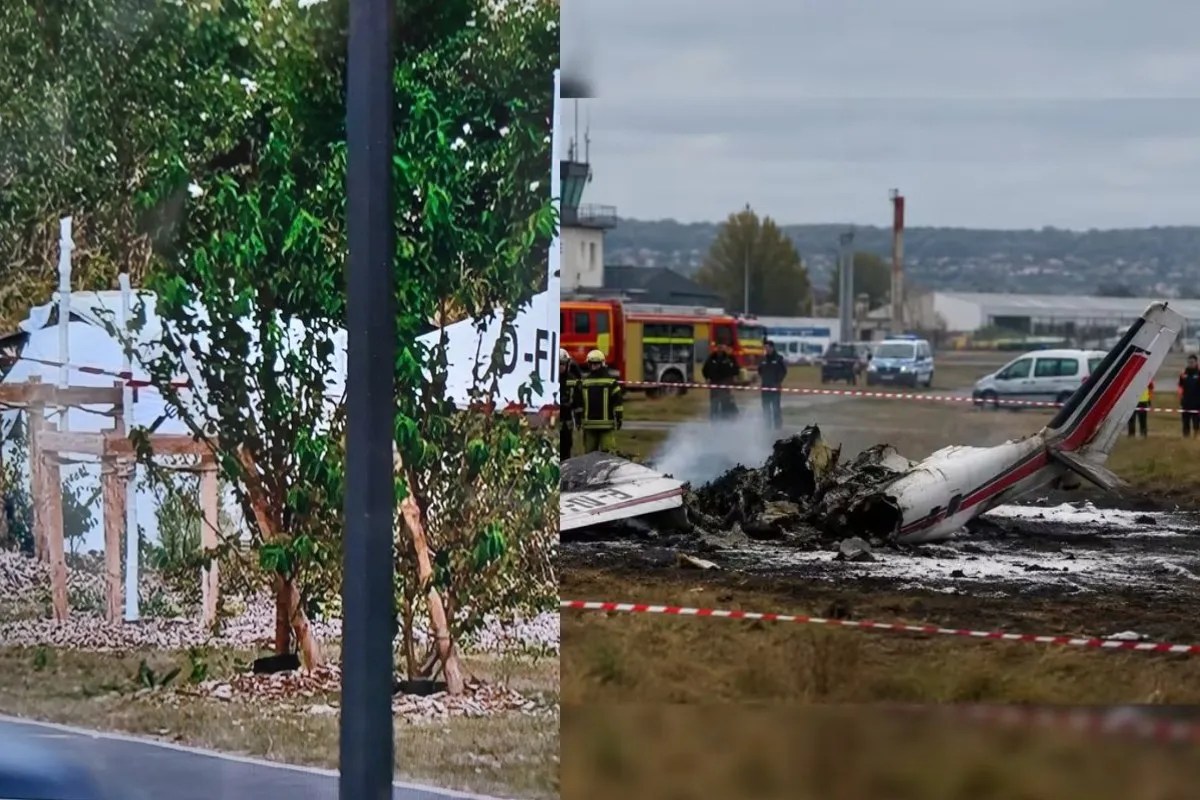
The headlines always follow the exact same script. A light aircraft goes down in the French Alps or the countryside, emergency services rush to the scene, and the media immediately pumps out breaking news alerts flashing the tragic body count. The latest coverage of a civilian plane crash in France claiming 11 lives is a prime example. The collective gasp from the public is predictable. People start questioning the safety of the skies, wondering if aviation standards are slipping, and looking for a systemic failure where none exists.
This reaction is fundamentally flawed. It misses the entire mechanics of risk.
Mainstream media treats every aviation incident as if it belongs to the same bucket. It does not. Lumping a small, privately operated civilian flight or a localized charter accident into the same mental category as commercial airline safety is a massive logical error. It creates a false panic that distorts how we view travel risk, regulatory oversight, and actual survival probabilities.
The Fatal Flaw in How We Measure Air Safety
When a tragic incident like the one in France occurs, the immediate reaction is emotional. The "lazy consensus" dictates that flying is inherently high-risk and that every crash demands a sweeping overhaul of civilian aviation rules.
Let's look at the actual data.
According to annual safety reports from the European Union Aviation Safety Agency (EASA) and the National Transportation Safety Board (NTSB), the accident rate for general aviation (private pilots, small pleasure craft, minor commercial charters) is completely detached from the safety record of commercial air transport. Commercial aviation is a marvel of redundant engineering and strict institutional discipline. General aviation, by contrast, relies heavily on individual proficiency, varying maintenance standards, and visual flight rules (VFR) that leave pilots highly vulnerable to sudden weather shifts.
Imagine a scenario where we judged the safety of interstate highway infrastructure based entirely on the statistics of amateur dirt-track racing. That is exactly what happens when the media sounds the alarm over a civilian light aircraft accident.
- Commercial Aviation: Operates under stringent multi-pilot crew resource management, automated flight envelopes, and mandatory continuous training.
- General Civilian Aviation: Often involves single pilots, older airframes, and vastly lower thresholds for weather dispatch.
By panicking over a small plane crash, the public conflates two entirely different ecosystems. The real danger isn't that commercial skies are unsafe; it’s that the public does not understand that general aviation carries an inherent risk profile closer to riding a motorcycle than boarding a Boeing or an Airbus.
Dismantling the "Fix General Aviation" Narrative
Whenever a high-profile crash happens, armchair experts scream for more regulation. They demand that the state ground older planes, mandate commercial-grade avionics for every hobbyist, and choke the industry with red tape.
I have spent years analyzing transit metrics and looking at how regulatory overreach chokes out viable industries without moving the safety needle. Pushing commercial-level mandates onto private civilian aviation does not make it safer. It simply kills the sector.
If you mandate that every small twin-engine plane or turboprop feature the exact redundant systems found on an A320, you price out the very training grounds where the next generation of commercial pilots learn their craft. The cost of entry skyrockets, pilot hours drop, and you end up with a worse problem: an acute shortage of experienced captains in the commercial sector.
The downside to acknowledging this reality is uncomfortable. To be brutally honest, general aviation will never be perfectly safe. It cannot be. When you choose to fly in a light aircraft, you are trading the bureaucratic safety blanket of commercial travel for utility, speed, or recreation. You are accepting a higher baseline of risk. Trying to engineer that risk down to zero through aggressive legislation is a fool's errand that ignores human error, which remains the primary catalyst in over 80% of general aviation accidents.
The Psychology of the Wrong Question
People always ask: "Is it safe to fly in a small plane?"
That is the wrong question. It frames safety as a binary toggle switch—either it is safe or it is dangerous. A more accurate, brutal assessment requires looking at the specific variables of the flight.
Was the pilot instrument-rated? Was the aircraft equipped for known icing conditions? Did the pilot push into deteriorating weather due to "get-there-itis"—the psychological trap of forcing a landing because of a self-imposed schedule?
In the case of many localized European civilian crashes, geography plays a massive role. Mountainous terrain, rapid micro-climate shifts, and sudden loss of visual references turn a routine flight into a catastrophe in seconds. When the media focuses purely on the tragedy of the 11 lives lost without breaking down the mechanical and environmental realities, they leave the public in the dark. They feed a generic fear of flying rather than educating people on the specific hazards of terrain avoidance and pilot specialization.
Stop looking at these incidents as warnings about the state of global aviation. They are tragic, isolated reminders of physics, human limitation, and the unforgiving nature of the atmosphere.
Stop expecting a inherently volatile segment of transport to mirror the sterilized, hyper-regulated world of major international airports. The sky does not forgive ignorance, and rewriting safety policies in a state of emotional panic will not change the laws of aerodynamics.