Wall Street analysts love a tidy narrative. A founder hits a PR wall, a quarterly earnings report beats consensus estimates by a few pennies, and suddenly the financial press declares the machine runs itself.
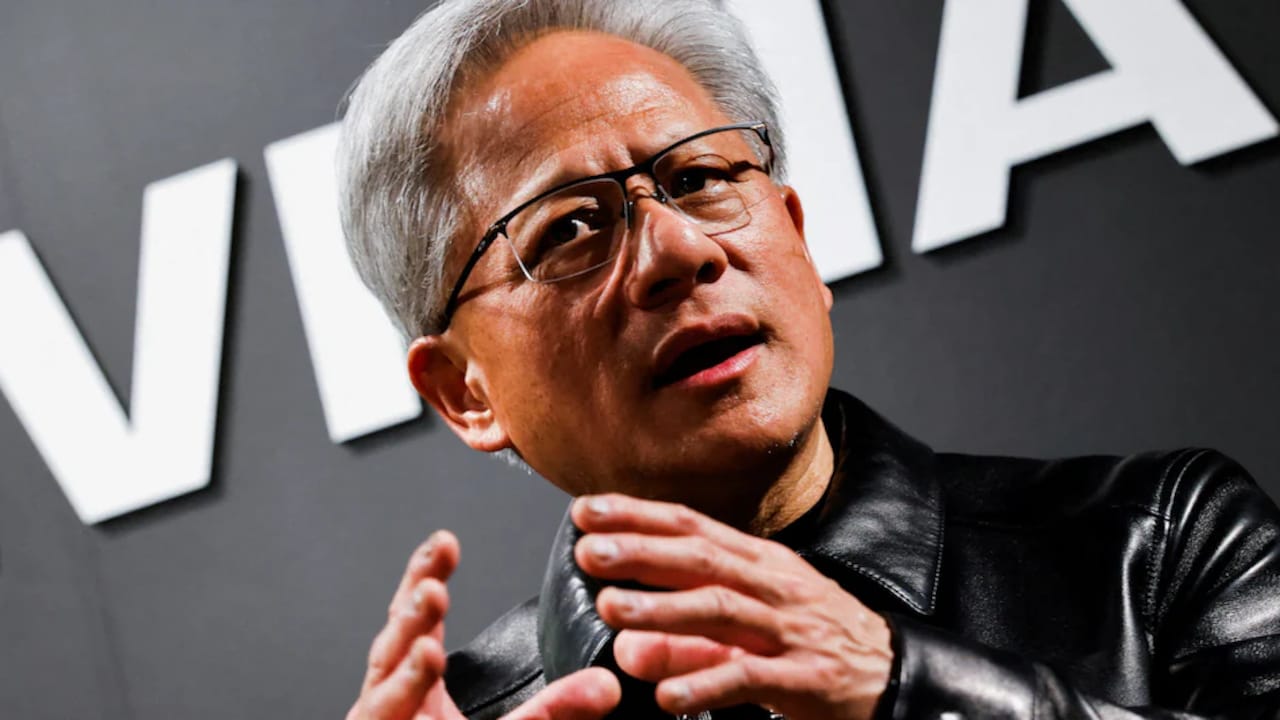
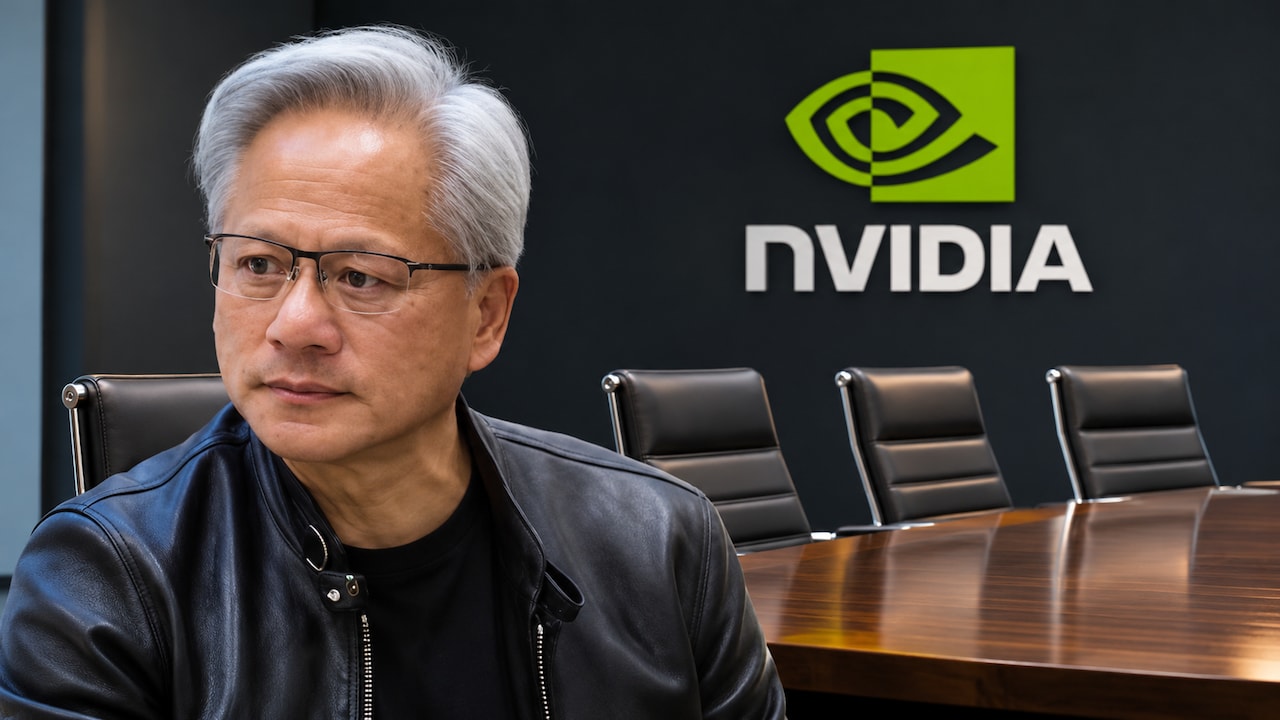
That is the exact delusion driving the current victory lap around Nvidia. Following the company's first earnings call since the controversy surrounding Jensen Huang, commentators have rushed to announce that the semiconductor giant is bulletproof. They point to bulging data center backlogs, insatiable hyperscaler demand, and a deep bench of engineering lieutenants as proof that the company has outgrown its co-founder. For another perspective, check out: this related article.
They are confusing momentum with permanence.
When a company controls the vast majority of the AI accelerator market, inertia alone can carry quarterly numbers for a year or two. Orders for next-generation architectures are locked in months in advance. Hyperscalers like Microsoft, Meta, and Alphabet cannot rip out tens of thousands of GPUs overnight just because the guy in the leather jacket has a headache. To look at a single quarter of supply-constrained revenue and conclude that Nvidia doesn't need Jensen Huang is like watching a freight train coast after the conductor steps off and declaring brakes obsolete. Related coverage on the subject has been shared by ZDNet.
The Lie of the Self-Sustaining Tech Monopoly
Silicon Valley has a long, expensive graveyard filled with companies that believed their market dominance was structural rather than founder-driven. Look at Intel after Andy Grove. Look at Microsoft under Steve Ballmer. Look at Apple in the decade after Steve Jobs was pushed out in 1985. In every single case, the immediate financial reports looked great. The existing product lines printed cash. The middle management boasted about operational discipline and deep engineering benches.
Then the market shifted, and the institutional rot became impossible to hide.
Founder-led hardware companies operate on a fundamentally different physics than traditional software firms. Software can be patched on a Tuesday afternoon. Silicon requires multi-billion-dollar bets placed three to five years before a single chip generates a dollar of revenue. If you misjudge the architectural direction of compute by eighteen months, you do not just lose market share—you get wiped off the board.
I have sat in executive briefings where brilliant VPs of engineering argued themselves into paralysis over a $500 million tape-out decision. Committees optimize for safety. Committees hedge their bets. A committee will never bet the entire balance sheet on a nascent compute architecture ten years before the market proves it works.
Jensen Huang did that with CUDA in 2006. Wall Street hated it. Margins compressed, the stock languished for years, and analysts demanded he abandon the money pit of general-purpose GPU computing to focus on PC gaming graphics. Only a founder with absolute moral and operational authority could survive that pressure. Had Nvidia been run by a hired-gun CEO answering to quarterly institutional shareholders, CUDA would have been strangled in the crib, and Nvidia today would be a mid-tier gaming component vendor fighting AMD for scraps.
Why The "Deep Bench" Argument Falls Apart
The standard rebuttal from financial commentators is that Nvidia possesses an elite executive team—names like Colette Kress, Ian Buck, and Jonah Alben—who actually run the day-to-day operations.
This is true, and it completely misses the point.
Elite lieutenants execute the vision; they do not supply the gravitational pull that keeps sixty-plus direct reports aligned without traditional corporate bureaucracy. Nvidia famously operates with a flat organizational structure. Huang avoids one-on-one meetings, prefers group problem-solving where failures are dissected in front of peers, and rejects traditional five-year corporate planning in favor of constant, real-time adaptation to the "speed of light"—his term for the theoretical physical limit of how fast a task can be completed.
Remove the founder from a flat hierarchy, and it does not stay flat. It collapses into fiefdoms.
Without a singular, unquestioned authority at the top to break ties, senior vice presidents start protecting their own budgets, hoarding engineering talent, and optimizing for internal politics rather than external threats. I have watched this exact decay happen inside three different Fortune 500 tech firms after a dominant leader stepped back. Within eighteen months, product roadmaps bloated, release cycles slipped from twelve months to twenty-four, and the sharpest principal engineers quietly left for startups where decisions didn't require four layers of sign-off.
The Architecture Rhythm Is Fragile
Nvidia recently compressed its product release cadence from a two-year cycle to a brutal one-year rhythm. Moving from Hopper to Blackwell to Rubin on an annual schedule requires synchronized miracles across silicon design, advanced packaging at TSMC, high-bandwidth memory supply chains, networking interconnects, and software stack optimization.
That cadence is unnatural. It breaks normal engineering teams. It only functions because Huang personally enforces a culture of extreme urgency while simultaneously absorbing the political risk when an aggressive timeline hits a snag—such as the early packaging yield issues on the Blackwell B200 chips. A standard corporate executive facing a multi-billion-dollar mask redesign slows down the roadmap to protect their career. A founder doubles down.
The Real Moat Isn't Hardware—It's Ecosystem Diplomacy
When analysts claim Nvidia is fine without Huang, they treat the company like a simple component supplier. They assume customers buy GPUs the way they buy DRAM or storage drives: based purely on price-to-performance spreadsheets.
In reality, Nvidia sits at the center of a delicate, high-stakes geopolitical and commercial web.
Consider the dynamic with Nvidia's largest customers. Microsoft, Google, Amazon, and Meta account for a massive percentage of Nvidia's data center revenue. Every single one of those companies is actively spending billions to design their own custom AI ASICs—TPUs, Trainium, Maia, MTIA—explicitly to break free from Nvidia's gross margins. They are simultaneously Nvidia's biggest buyers and its most existential competitors.
Managing that tension is not an accounting exercise. It is high-wire diplomacy.
Huang personally negotiates allocations, co-designs cluster architectures with rival CEOs, and convinces sovereign nations to build domestic AI infrastructure on Nvidia's stack rather than waiting for custom hyperscaler chips. When supply is tight, who gets the first shipment of next-generation racks? That allocation decision can make or break a cloud provider's quarterly growth. A CFO cannot make that call. A head of sales cannot make that call. Only a founder-CEO with peer-level standing alongside Satya Nadella, Sundar Pichai, and Mark Zuckerberg can navigate that minefield without triggering an all-out rebellion by the hyperscalers.
The TSMC Bottleneck
The same principle applies upstream. Nvidia is a fabless designer. It manufactures nothing. Its entire existence depends on Taiwan Semiconductor Manufacturing Company (TSMC) and its advanced CoWoS packaging capacity.
Huang's three-decade personal relationship with TSMC founder Morris Chang and current leadership has repeatedly secured Nvidia priority wafer allocations when competitors were left begging for capacity. In the semiconductor industry, supply chain agreements are written on paper, but wafer allocations during a shortage are decided on trust and shared history. You cannot transfer thirty years of personal capital to a successor via a corporate memo.
What Investors Are Actually Pricing In
If you look closely at institutional trading behavior rather than financial headlines, the market is far less sanguine than the pundits suggest.
The narrative that "Nvidia doesn't need Jensen" is a classic institutional coping mechanism. Fund managers who are heavily overweight in semiconductor equities need a comforting story to justify holding massive positions through a period of reputational turbulence. Admitting that a $3 trillion enterprise carries acute key-person risk forces uncomfortable portfolio rebalancing.
Let us be completely transparent about the flip side of this argument. Relying so heavily on a single individual is a massive structural vulnerability for any public company. Critics who point out that no trillion-dollar enterprise should be this dependent on one person are entirely right from a corporate governance standpoint. A healthy board demands succession planning, distributed authority, and institutional resilience.
The mistake is confusing what should be true with what is true.
Nvidia is not a normal corporation. It is an extension of one man's obsessive, decades-long thesis on accelerated computing. That concentration of vision is the exact reason Nvidia created trillions in shareholder value while legacy chipmakers stumbled. You do not get the upside of a generational founder without accepting the catastrophic downside risk if that founder is sidelined, distracted, or diminished.
Dismantling the Common Misconceptions
If you are trying to evaluate Nvidia's durability right now, you are probably asking the wrong questions. Most market commentary focuses on backward-looking metrics that tell you nothing about where the company will be in three years.
Does strong quarterly earnings prove a company has outgrown its founder?
No. Semiconductor financials are lagging indicators of decisions made three to five years earlier. Today's revenue reflects architectural bets locked in before the current AI boom even started. You will not see the financial impact of leadership fractures in this quarter's balance sheet; you will see it in the competitiveness of the 2028 architecture.
Isn't CUDA's software moat enough to protect Nvidia regardless of leadership?
CUDA is a formidable moat, but moats require constant dredging. Open-source alternatives like OpenAI's Triton, PyTorch's native compiler improvements, and AMD's steady progress with ROCm are steadily abstracting away the hardware layer. If developers no longer write raw CUDA kernels and instead code in high-level Python frameworks that compile cleanly to rival chips, the software lock-in weakens rapidly. Maintaining CUDA's dominance requires relentless, founder-level aggression in developer relations and software reinvestment—not coasting on past adoption.
Can't a professional operations CEO run Nvidia more efficiently?
Efficiency is the enemy of innovation in a rapidly shifting hardware market. A traditional operational CEO will optimize supply chains, trim R&D programs that lack immediate ROI, and smooth out earnings predictability. That works brilliantly in mature industries like consumer staples or enterprise SaaS. In AI infrastructure, where the underlying math of model training and inference changes every six months, optimizing for efficiency is how you get disrupted.
How to Actually Evaluate Tech Leadership Risk
Stop reading press releases and earnings call transcripts for clues about corporate resilience. Executives are paid to project calm, and analysts are incentivized to maintain access. Instead, watch the structural signals that reveal whether a founder-led company is genuinely thriving or quietly hollowing out:
- Track Principal Engineer Attrition, Not VP Promotions. When a company tries to prove it has a "deep bench," it hands out inflated titles to middle managers. Ignore the press releases. Watch LinkedIn and GitHub for the quiet departure of distinguished engineers and chief architects—the people who actually write the compilers and design the interconnects. If the technical core starts migrating to rival startups, the leadership transition is failing.
- Watch the R&D-to-Revenue Ratio During Booms. Weak leaders cut R&D percentages when revenue spikes to juice short-term operating margins. Founder-led juggernauts aggressively reinvest windfall profits into seemingly crazy, speculative architectures that won't pay off for five years.
- Monitor Hyperscaler Custom Silicon Deployment. Do not listen to what cloud CEOs say on Nvidia's earnings calls—they will always praise their partner publicly while supply is tight. Watch the capital expenditure breakdowns of AWS, Google, and Meta. When their internal chip deployments accelerate at the expense of merchant GPU clusters, Nvidia's pricing power is eroding.
- Look for Architectural Slippage, Not Revenue Misses. By the time revenue misses Wall Street estimates, the damage is already irreversible. Watch for subtle delays in next-generation networking switches, software SDK releases, or cooling specifications. Execution friction always shows up in the engineering timeline years before it hits the income statement.
Wall Street wants to believe that corporate greatness can be bottled, systematized, and handed off to a committee without losing its potency. History says otherwise. Nvidia's latest earnings report didn't prove the company is fine without Jensen Huang—it simply proved that a rocket keeps climbing for a while after the engine cuts out.