Money is pouring into a vacuum, and it isn't the one inside a tokamak.
The current venture capital obsession with nuclear fusion is a masterclass in "physics-washing." Investors are patting themselves on the back for funding the "ultimate clean energy," ignoring the brutal reality that the distance between a successful laboratory experiment and a functional power plant is measured in decades of material science failures, not just billions of dollars. We are witnessing a repeat of the dot-com bubble, but with more radioactive isotopes and less liquidity.
The lazy consensus says we are at a "tipping point" because of net energy gain. That is a lie of omission.
The Q-Value Shell Game
Every time a startup or a national lab screams about "Scientific Breakeven" or $Q > 1$, they are performing a magic trick. They are talking about $Q_{plasma}$—the ratio of energy out of the plasma to the energy actually absorbed by the plasma.
It sounds impressive until you look at the "wall plug" efficiency, or $Q_{total}$.
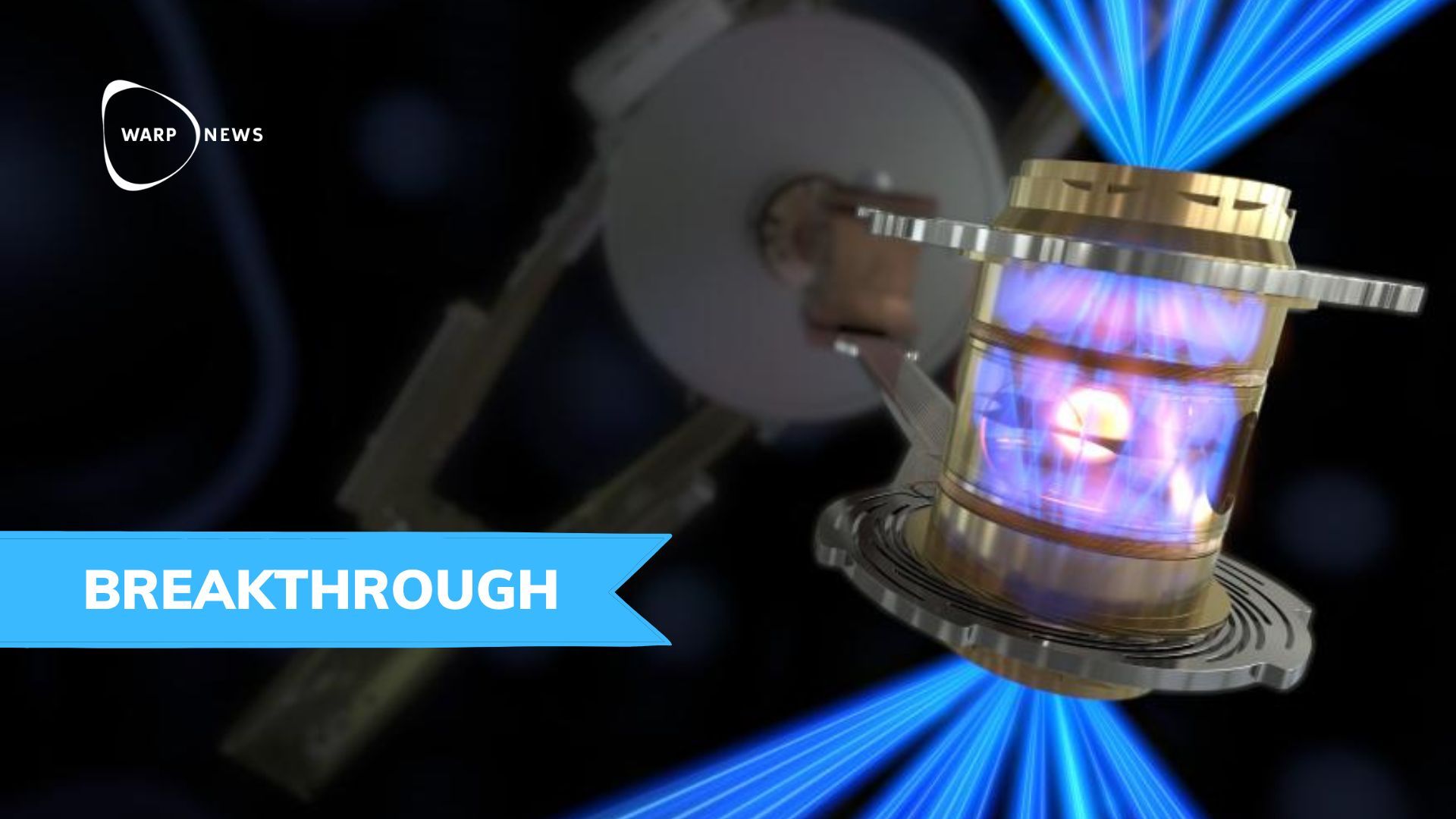
To get that "record-breaking" energy out, you have to power massive cryogenic cooling systems, gigawatt-scale magnets, and high-energy lasers. In the case of the National Ignition Facility (NIF) breakthrough, they used about 300 megajoules of electricity to fire lasers that delivered 2 megajoules of energy to a target, which then released about 3 megajoules.
The media reported a 50% gain. In reality, it was a 99% loss.
If you want to run a city, you don't need $Q > 1$. You need $Q > 30$. You need to account for the thermal-to-electric conversion losses, the recirculating power to keep the magnets cold, and the energy cost of breeding fuel. Investors are celebrating a toddler’s first step while betting on them winning an Olympic marathon next week.
The Tritium Scarcity Wall
Here is the dirty secret the pitch decks hide: We don't have the fuel.
Most "commercial" fusion designs rely on a Deuterium-Tritium (D-T) reaction. Deuterium is easy to get from seawater. Tritium is a nightmare. It has a half-life of 12.3 years. It doesn't exist in nature in any meaningful quantity. Currently, our primary source of tritium is CANDU nuclear fission reactors, which are being decommissioned.
The plan is to "breed" tritium inside the fusion reactor using a lithium blanket.
The Thought Experiment: Imagine trying to start a fire that requires a specific type of rare kindling to keep going, but you only have enough kindling to start the fire, and you hope the fire creates more kindling before it goes out. If the "breeding ratio" falls even slightly below 1.0, the entire global fusion industry shuts down within a decade due to fuel exhaustion.
We have never tested a tritium breeding blanket at scale. Not once. We are building multi-billion dollar "engines" without a guaranteed supply of gasoline or a proven way to refine it on the fly.
Material Science Is the Real Bottleneck
If you manage to stabilize a plasma at 150 million degrees Celsius—ten times hotter than the sun—you then have to deal with the neutrons.
In a D-T reaction, 80% of the energy is carried away by high-energy neutrons. These aren't friendly. They "activate" the metal walls of the reactor, making the structure itself radioactive. More importantly, they knock atoms out of their lattice positions, causing the metals to swell, embrittle, and eventually crumble.
Current materials cannot survive the neutron flux of a commercial fusion plant for more than a couple of years. Replacing the inner "first wall" of a tokamak isn't like changing a lightbulb. It requires robotic disassembly of a highly radioactive, vacuum-sealed, cryogenically cooled mega-structure.
The downtime alone would kill the Levelized Cost of Energy (LCOE).
The LCOE Fantasy
Energy isn't just about "can we do it?" It’s about "is it cheaper than a solar panel and a battery?"
By the time fusion is "ready"—let’s be generous and say 2045—the cost of solar, wind, and long-duration storage will have plummeted further. Fusion is an incredibly complex, centralized, high-CAPEX (Capital Expenditure) solution. It is the antithesis of the decentralized, modular energy trend that is actually winning.
A fusion plant is a bespoke cathedral of engineering. You cannot mass-produce tokamaks in a gigafactory. Each one will be a multi-billion dollar project prone to the same "megaproject" cost overruns that have crippled the modern fission industry. If a fission plant like Vogtle in Georgia takes 15 years and $30 billion to build, why does anyone think a more complex fusion plant will be cheaper or faster?
The "Star in a Jar" Marketing Problem
We need to stop using the sun as a metaphor. The sun uses gravity to contain its plasma. It is massive and inefficient. On a per-unit-volume basis, the core of the sun generates about the same amount of heat as a compost pile.
We are trying to do something much harder: magnetic or inertial confinement. We are trying to hold a sun-temperature plasma using magnets that must be kept near absolute zero, just centimeters away.
Stop Funding the Physics, Start Funding the Plumbing
If you are an investor who actually wants to see fusion happen, stop funding the 50th "new" tokamak configuration.
The physics of plasma is largely understood—we just can't keep it stable long enough. The real "alpha" is in the boring stuff:
- High-Temperature Superconductors (HTS): Companies like Commonwealth Fusion Systems are at least focusing on the magnet technology, which has applications outside of fusion.
- Robotic Maintenance: Systems that can swap out radioactive components without human intervention.
- Advanced Heat Exchangers: Moving heat out of a vacuum chamber efficiently.
If you aren't solving the material science or the tritium breeding ratio, you aren't building a power plant. You're building a very expensive science experiment.
The Nuclear Fission Pivot
The irony is that the people most excited about fusion often hate fission.
Fission works right now. It is carbon-free. It is reliable. We know how to build it (if we stop over-regulating it into oblivion). The obsession with fusion is often a form of procrastination—a way to support "nuclear" without having to defend the political baggage of the nuclear we already have.
We are waiting for a "miracle" 20 years away while ignoring the "workhorse" sitting right in front of us.
Fusion startups are selling "Energy Abundance." It’s a beautiful pitch. But thermodynamics is a cruel mistress. You don't get energy for free, and you certainly don't get it by ignoring the structural limits of the elements themselves.
The current fusion craze isn't the dawn of a new era. It’s the peak of the hype cycle. When the liquidity dries up and the first generation of "demonstration" reactors fail to breed enough tritium or melt their first walls, the "fusion winter" will be cold, dark, and extremely expensive.
Stop betting on the sun. Start betting on the materials that can actually survive it.