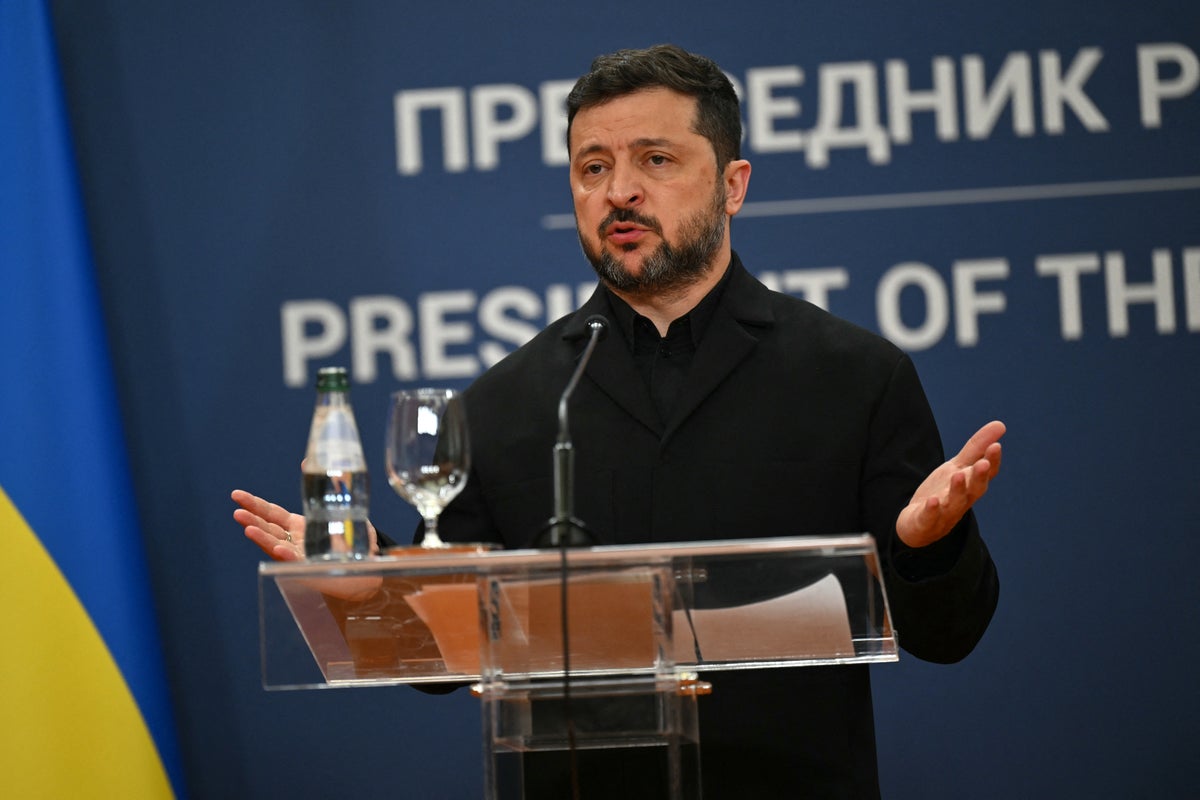
The war in Ukraine is no longer just a regional European conflict. It is rapidly turning into a laboratory for global military alignment. Ukrainian President Volodymyr Zelensky recently announced that between 30,000 and 50,000 North Korean soldiers are expected to deploy to Russian territory to reinforce Moscow's military efforts. That number dwarfs earlier estimates.
If you think this is just standard posturing, you're missing the bigger picture. Pyongyang isn't just sending cannon fodder. They're cashing in on a high-stakes partnership that gives Kim Jong Un's regime actual modern combat experience, advanced military technology, and Russian backing on the world stage.
How the Numbers Escalated So Fast
Let's look at the timeline. It started small. Back when North Korea first entered the fray, intelligence reports pointed to hundreds, then a few thousand troops. By late 2024, Pyongyang had already funneled roughly 14,000 soldiers into Russia's Kursk region to help push back against Ukrainian incursions. Thousands of those troops were reportedly killed or wounded.
Then came July's estimates, which hovered around 30,000. Now, that ceiling has been blown open to 50,000 personnel.
Moscow and Pyongyang formalized this dangerous partnership back in June 2024 when Vladimir Putin and Kim Jong Un signed a strategic mutual assistance treaty in Pyongyang. Under that pact, both nations committed to using all available means to provide military help if either faced aggression.
What North Korea Gets in Return
Nobody sends tens of thousands of troops halfway across the world for free. Kim Jong Un is getting a massive return on investment.
Ukraine's military intelligence has already confirmed finding North Korean ballistic missiles and artillery systems on the battlefield. Millions of artillery and mortar rounds have flowed from Pyongyang to Russian supply depots.
In exchange, Moscow is handing over critical tech that North Korea has spent decades trying to build on its own:
- Advanced air defense missiles
- Electronic warfare equipment and drones
- Space and satellite technology
This means North Korea's military isn't just getting bigger. It's getting smarter. They are studying drone warfare, electronic jamming, and combined arms tactics in real time against a battle-tested Ukrainian defense.
The Regional Threat to Asia
This escalation should terrify leaders in Seoul, Tokyo, and Washington. For decades, North Korea's conventional military doctrine relied on aging Soviet-era hardware and sheer manpower.
Now, their troops are learning how modern warfare actually works. When those soldiers eventually rotate back to the Korean Peninsula, they bring home battle scars, operational experience, and modern tactical knowledge. That shifts the balance of power in East Asia dramatically.
Zelensky has made it clear that Ukraine is paying a heavy price for this, pointing to brutal missile strikes on cities like Kharkiv that leave apartment blocks destroyed and civilians dead. But he's also looking across the globe for a counterweight.
Kyiv Turns Its Gaze Toward Seoul
With air defense interceptors running dangerously low, Ukraine is openly pushing for closer cooperation with South Korea. Kyiv wants high-end air defense systems. In exchange, Ukrainian officials are ready to deal in drone technology, where their forces have built world-class expertise through years of relentless combat.
South Korea finds itself in an impossible diplomatic box. Seoul has provided substantial humanitarian aid and joined international sanctions, but its domestic laws and policy stances have historically blocked direct lethal arms exports to active war zones.
Yet, watching thousands of North Korean troops train, fight, and upgrade their capabilities alongside Russia makes maintaining neutrality harder by the day. If Moscow keeps arming Pyongyang with advanced aerospace and missile tech, Seoul may eventually decide that standing on the sidelines carries a higher price than getting involved.
The war's geographic boundaries are blurring. What happens on the snowy fields of eastern Ukraine now echoes directly across the Pacific.
:max_bytes(150000):strip_icc()/ar-American-Cheese-taste-test-horizon-4x3-54cc339550cd44b9a818c17bdfd5428d.jpg)