Darkness on the English Channel does not arrive softly. It drops like an iron curtain.
For anyone who has stood on the chalk cliffs of Dover or the windswept shorelines near Calais when the autumn gale picks up, the water looks less like a sea and more like a void. It is a graveyard of restless currents, shipping lanes choked with container behemoths, and freezing, salt-stinging spray. On a calm night, the crossing is terrifying enough. On November 24, 2021, the night of the worst small boats disaster in modern Channel history, it was an executioner.
Twenty-seven souls—men, women, children, and an unborn baby—perished in the freezing blackness when a rubber dinghy, inflated beyond all sanity and carrying far too many passengers, began to buckle and surrender to the sea.
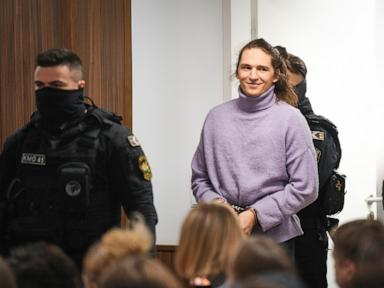
Years later, legal systems grind through their agonizingly slow gears. Six men were recently jailed for manslaughter, handed prison sentences by a French court for their roles in organizing that fatal voyage. Headlines call it justice. Grieving families call it a whisper against a storm of systemic failure. But behind the cold judicial language of verdicts, sentences, and criminal negligence lies a deeper, more harrowing reality: the machinery of desperation that turns human lives into disposable cargo.
The Economics of Desperation
To understand how twenty-seven people ended up in a failing inflatable raft on the coldest sea in Europe, you have to look past the courtroom benches and into the shadows of northern France.
Desperation is a lucrative commodity.
For the traffickers who run these operations, a rubber boat is not a vessel of hope. It is a profit margin. A flimsy, Chinese-made hull bought cheaply online, pumped full of air, and packed with thirty, forty, sometimes fifty terrified people who have already handed over life savings to middlemen. The math is brutal. In interviews with investigators and survivors, a grim pattern emerges. Passengers are told the boat is safe, that the engine is reliable, that the weather window is wide. They are lied to because the lie costs nothing, and the truth might mean losing a customer.
Consider the atmosphere on the beach in the dead of night. Mud squelching underfoot. The low, distant hum of police sirens somewhere on the coastal road. The shouting—hushed, frantic, in Arabic, Kurdish, Pashto. People are shoved into the freezing water up to their waists to board a craft that is already sagging under its own weight.
There are no life jackets worthy of the name. Often, what passengers wear are cheap, foam-filled knockoffs bought from local markets—vests that will absorb water and drag a drowning person under rather than keep them afloat. When a survivor later recounts the moment the boat’s floorboards gave way, the memory isn't just about water rushing in. It is about the sudden realization that the promises made on dry land were currency traded for their lives.
The Weight of Accountability
The legal battle that led to the conviction of those six smugglers was historic. Manslaughter charges in the context of migrant crossings are rare, complex, and difficult to prosecute across international borders. Prosecutors had to prove that the defendants—petty fixers, boat handlers, and logistical cogs in a larger trafficking syndicate—bore direct responsibility for the deaths, even if they were not physically in the boat when it sank.
The court heard evidence of ignored weather warnings, of punctured hulls patched with tape, of engines that leaked fuel before leaving the sand. The message from the bench was clear: you cannot wash your hands of a tragedy by staying on the shore.
Yet, as the courtroom doors closed and the defendants were led away to serve their time, a heavy silence lingered.
Who else bears the weight?
When legal frameworks focus entirely on the low-level operatives—the men who carried the petrol cans and pushed the boats into the surf—it addresses only the symptoms of a global sickness. The masterminds often operate far upstream, hidden behind encrypted messaging apps, shell companies, and transnational networks that span from the Middle East through Europe and right down to the northern French coast. They do not touch the rubber. They do not feel the freezing spray. They collect the wire transfers and watch from afar.
The Human Cost Behind the Statistics
Numbers sterilize tragedy. We read "twenty-seven dead" and our brains file it away as a geopolitical data point, a grim tally in an ongoing political debate about borders, asylum, and maritime security.
Strip away the politics, and you find names.
You find Maryam Nuri Mohamed Amin, a twenty-four-year-old aspiring teacher who wanted nothing more than safety and a chance to study. You find young children whose backpacks, washed ashore days later, still held colorful notebooks and half-eaten snacks. You find entire families who had survived the horrors of war, persecution, and grueling overland journeys across continents, only to drown within sight of their destination.
The tragedy of the English Channel is not just an immigration crisis. It is a human failure of imagination. It is the result of a world fractured so deeply by inequality that the only viable exit route for thousands of desperate people is a rubber raft in the middle of the night.
When legal systems hand down sentences, they offer a necessary measure of retribution. But they cannot resurrect the dead. They cannot give back the breath to lungs that filled with saltwater in the pitch black.
The tide rolls onto the beaches of Calais every single day. The waves wash away the footprints, the discarded life jackets, the traces of fear and hope left behind in the sand. But the water remembers. And long after the courtroom lights have dimmed and the headlines have faded, the sea keeps its secrets, whispering of a night when twenty-seven lives were traded for profit, and the world simply watched from the shore.