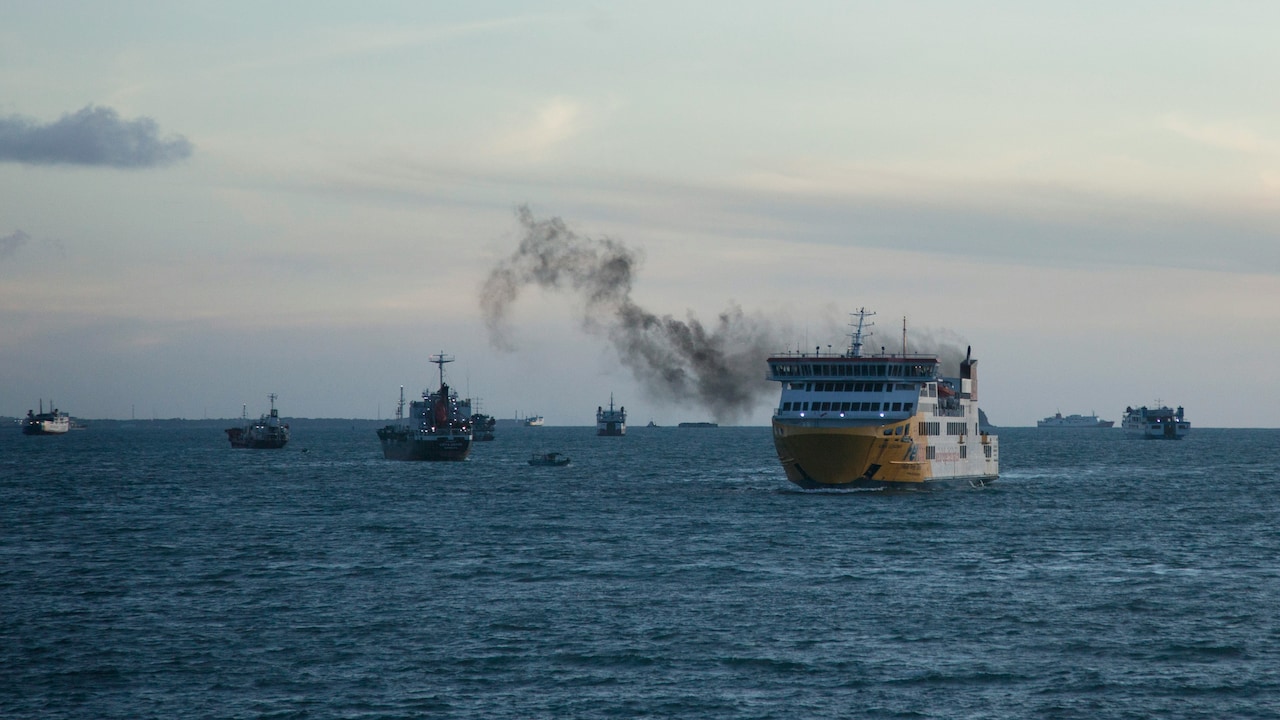
The steel hull of a massive oil tanker does not feel like a fragile thing until something invisible hits it.
To the crew aboard the Formosagas Falcon, a liquefied petroleum gas carrier flagged under the jurisdiction of Taiwan, the waters off the coast of Oman were supposed to be just another stretch of dark, monotonous highway. It was late at night. The sky and the Arabian Sea had bled into a single, seamless ink-black expanse. Underneath the bridge, thousands of tons of volatile cargo sat cradled in refrigerated tanks, a floating mountain of energy bound for a distant port.
Then came the shudder.
It was not the predictable, rhythmic thud of a heavy wave cracking against the bow. This was a sudden, violent vibration that rippled from the waterline up through the steel deck plating, rattling the coffee mugs in the galley and sending an instant spike of adrenaline through the watch officers.
An unknown object had collided with the vessel.
In the modern maritime world, "unknown" is the most terrifying word a captain can hear. On a highway, a stray piece of debris might pop a tire. At sea, near the choke points of global civilization, an unidentified impact is a ghost story that can cost millions of dollars—or dozens of lives.
The Choke Point
To understand what happened out there in the dark, you have to understand the geography of survival. Consider the Strait of Hormuz. It is a narrow bend of water separating Iran from the Arabian Peninsula. Through this single, heavily patrolled corridor passes roughly a fifth of the world’s petroleum consumption.
It is the jugular vein of the global economy.
When a ship approaches this area, the tension on the bridge changes. It becomes palpable. Crew members who were laughing over a meal an hour ago suddenly lock their eyes onto radar screens and AIS tracking monitors. They watch the tiny triangles representing other vessels, tracking their speed, their heading, their proximity.
Let us look at this through the eyes of a hypothetical second mate—we can call him Marcus. Marcus has spent ten years on the water. He knows that a ship like the Falcon is essentially a giant, floating thermos. It is designed to withstand immense pressure from the inside and rough weather from the outside. But it is not a warship. It possesses no armor plating. It has no defense systems. If something punctures the hull near the gas tanks, the result is not just a leak; it is a catastrophe.
When the impact occurred, Marcus would have felt his stomach drop. The immediate reaction is never panic; it is a cold, calculated checklist. Is the engine still running? Are we taking on water? Is there smoke?
The crew scrambled. Automated alarms began to chime, their high-pitched wails cutting through the steady hum of the diesel engines. Damage control teams rushed to the lower decks with flashlights, peering into the void spaces and ballast tanks, looking for the telltale hiss of rushing water or the smell of scorched metal.
Shadows in the Water
What actually hit the ship? The official reports remain frustratingly, chillingly vague. Initial assessments rule out a major torpedo or an anti-ship missile—the kind of kinetic strike that tears a vessel in half and leaves a burning pyre on the water.
But that leaves a dozen darker possibilities.
The ocean is no longer just a highway; it is a crowded, messy ecosystem of technology and tension. The object could have been a stray sea mine, a relic of past conflicts drifting blindly with the currents until its rusted spikes brushed against the Taiwan-owned hull. It could have been an unmanned underwater vehicle (UUV), a drone operating in the shadows of a quiet, undeclared electronic war. Or it could have been something as agonizingly mundane as a semi-submerged shipping container, lost by a cargo vessel weeks prior, floating like an iron iceberg just inches beneath the surface.
That is the true anxiety of modern seafaring. You are not just fighting the weather anymore. You are navigating the debris of human friction.
The maritime authorities in the region were notified immediately. The United Kingdom Maritime Trade Operations (UKMTO), which keeps a watchful eye on these treacherous lanes, noted the incident. Yet, because the ship maintained its integrity, it did not stop. It could not stop.
Imagine standing on that bridge, looking back into the wake, trying to see what just tried to sink you. There is nothing but foam and the reflection of the stars. You have to keep moving. The schedule demands it. The global supply chain demands it. If the Falcon stops, a refinery somewhere across the ocean misses its window, gas prices tick upward on a digital board in a city thousands of miles away, and the delicate equilibrium of global trade wobbles.
The Weight of the Invisible
We tend to think of our world as digital, connected, and weightless. We buy things with a tap on a glass screen. We turn on our stoves without wondering where the blue flame originates.
The incident with the Taiwan ship exposes the fragile physical reality beneath that illusion. Every luxury we enjoy is carried on the backs of merchant mariners navigating dark waters where things go bump in the night. They are the invisible workforce, operating in the blind spots of international geopolitics.
The Formosagas Falcon eventually cleared the area, continuing its journey past the Oman coastline, its hull scarred but intact. The investigation will drag on for months. Metal fragments will be analyzed, satellite tracks will be scrutinized, and intelligence agencies will whisper behind closed doors about whose drone or whose mine it might have been.
But for the men and women on board, the resolution is much simpler and much more haunting. They will patch the steel. They will reset the alarms. And tomorrow night, when the sky turns to ink and the water turns to glass, they will stand on the bridge, staring into the blackness, waiting for the next shudder.