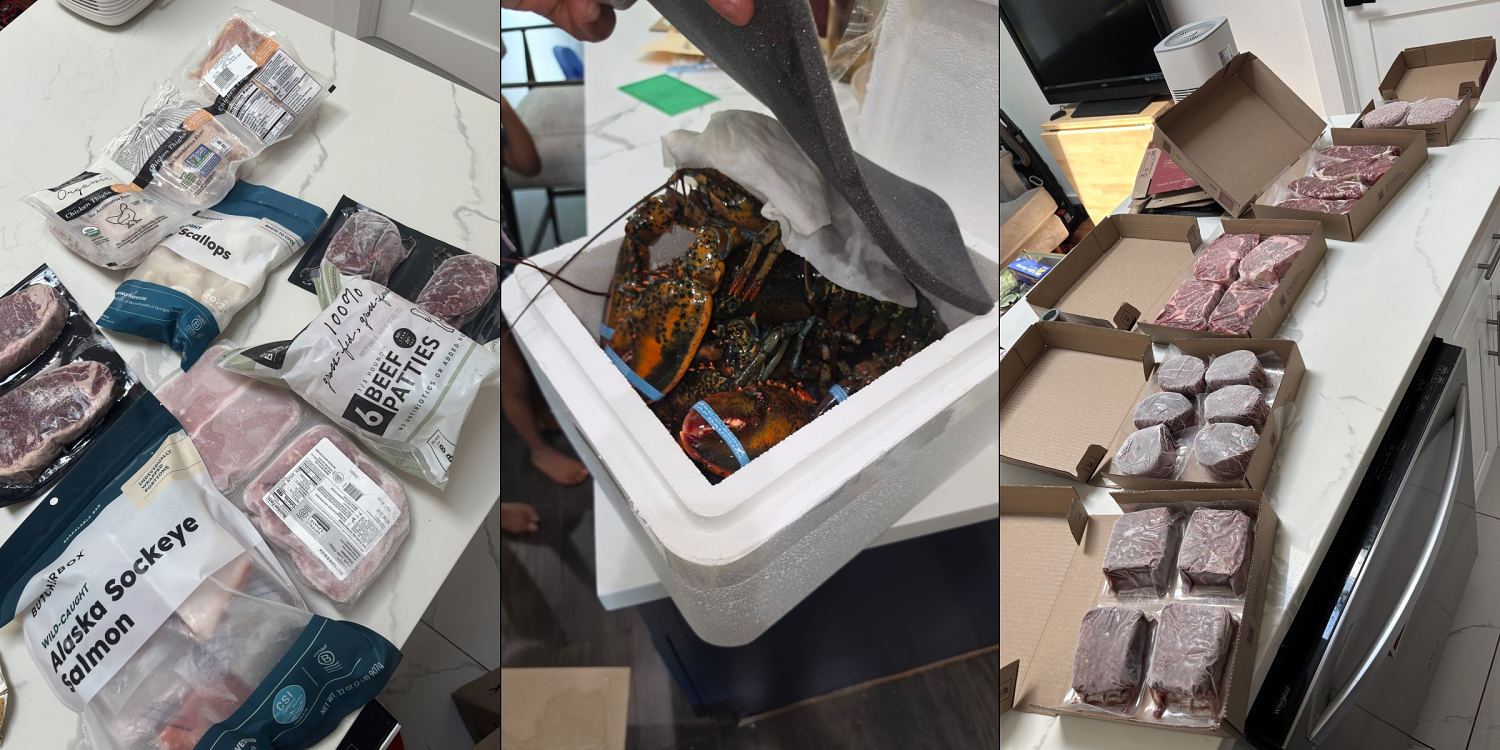
Chris ordered his steak medium-rare, the way he had done every Friday night for twenty years. It was a ritual to mark the end of the workweek—the sizzle of fat on a hot grill, the rich flavor of beef, the comfort of a routine. He ate at seven. He went to bed at ten, feeling perfectly fine.
At two in the morning, his life changed forever.
He woke up drenched in sweat, his skin on fire. When he flipped on the bathroom light, his reflection terrified him. Hives, angry and purple, choked his torso. His lips were swollen to twice their normal size, and a terrifying tightness restricted his throat. Every breath felt like inhaling wet cement. He gasped, reached for the counter, and collapsed.
This was not a standard food allergy reaction. When someone is allergic to peanuts or shellfish, the immune system strikes within minutes. The proximity between cause and effect is obvious. But Chris had eaten his dinner seven hours ago. The steak was long digested.
He didn’t know it yet, but weeks earlier, during a routine afternoon clearing brush in his suburban backyard, a creature smaller than a sesame seed had rewritten his body's biological code.
The Lone Star Saboteur
The culprit is Amblyomma americanum, commonly known as the Lone Star tick. It is identifiable by a solitary, silvery-white spot on the back of the adult female. For decades, this arachnid was a localized nuisance, primarily restricted to the warm, humid stretches of the American South.
Times change. Winters got milder. Ecosystems shifted. Today, the Lone Star tick has marched steadily northward and westward, establishing strongholds in New England, the Midwest, and parts of Canada.
To understand how a single bite can strip a human being of the ability to eat mammalian meat, you have to look at a sugar molecule called galactose-alpha-1,3-galactose. Scientists call it alpha-gal for short.
Alpha-gal is everywhere in the animal kingdom. It is coursing through the veins of cows, pigs, sheep, goats, and deer. It is in their meat, their fat, their milk, and the gelatin derived from their bones. Primates, including humans, are the evolutionary exception. Somewhere along our ancestral line, we lost the ability to produce alpha-gal. We don't have it. Under normal circumstances, our digestive tract processes it without a second thought.
But the Lone Star tick breaks the rules.
When a tick feeds on a mammal—a deer or a mouse—it ingests alpha-gal. When that same tick later bites a human, it injects its saliva, packed with that mammalian sugar, directly into the human bloodstream.
This direct entry bypasses the digestive system completely. The human immune system looks at this foreign molecule floating in the blood and sounds an code-red alarm. It manufactures a massive army of IgE antibodies specifically designed to hunt down and destroy alpha-gal.
The trap is now set. The body is primed. The next time you eat a burger, a pork chop, or even a spoonful of ice cream, the alpha-gal enters your system. The antibodies recognize it. They attack. The result is a massive, systemic allergic reaction known as Alpha-gal Syndrome, or AGS.
The Cruel Chronology of a Hidden Sickness
The most insidious weapon in the AGS arsenal is time.
If you eat a strawberry and your lips swell, you connect the dots instantly. AGS denies you that clarity. Because alpha-gal is bound to fats rather than proteins, it takes a long time to navigate the human digestive tract. The sugar molecule is embedded deep within complex lipid structures that require hours to break down.
Consider the psychological torture of this delay. You eat a slice of bacon at 8:00 AM. You feel fantastic all morning. You go for a run, attend meetings, and play with your kids. Then, at 3:00 PM, while sitting at your desk, your hands begin to itch. Your stomach cramps violently. You drop to your knees in pain, entirely disconnected from the breakfast you digested seven hours ago.
Doctors were baffled by this for years. Patients arrived in emergency rooms in full anaphylactic shock, insisting they hadn't eaten anything unusual or new. They were often dismissed, misdiagnosed with panic attacks, or told they had mysterious, idiopathic hives.
The medical community finally caught up thanks to researchers who noticed a bizarre trend: cancer patients in certain geographic regions were having violent reactions to a chemotherapy drug called cetuximab. The common denominator? The drug was manufactured using mouse cells that contained alpha-gal. When researchers mapped the patients' histories, they found a near-perfect geographical overlap with the habitat of the Lone Star tick.
The puzzle pieces snapped together, revealing a terrifying picture. This was not a rare anomaly. It was a burgeoning public health crisis.
The Invisible Minefield of Daily Life
Living with AGS means realizing that the modern world is fundamentally built on mammals.
We tend to think of a meat allergy as a simple lifestyle shift. You just become a vegetarian, right? You eat chicken and fish. Problem solved.
If only it were that simple.
The reality of severe AGS is an exhausting, hyper-vigilant existence. Alpha-gal isn't just on the grill. It is woven into the fabric of everyday consumer goods.
- The Pharmacy: Many common medications are encased in capsules made from bovine or porcine gelatin. Inactive ingredients often include magnesium stearate, a binding agent frequently derived from animal fats. For a highly sensitive AGS patient, a simple ibuprofen can trigger a trip to the ER.
- The Grocery Store: Refined white sugar is often processed through bone char to give it that pristine color. Lard hides in traditional tortillas. Natural flavorings on chip packets can contain dairy derivatives.
- The Bathroom: Soaps, lotions, shampoos, and cosmetics routinely utilize tallow, glycerin, and collagen sourced from cattle.
Imagine standing in an aisle, staring at a bottle of shampoo, trying to decipher whether a chemical compound will cause your skin to slough off because a tick bit you three months ago. The psychological burden is immense. Every meal becomes a game of Russian roulette. Eating at a restaurant transforms from a social pleasure into a high-stakes negotiation with a kitchen staff that likely has never heard of the condition.
"Is the chicken grilled on the same flat top as the burgers?"
"Does the gravy contain beef broth?"
"Was the vegetable oil used to fry the mozzarella sticks?"
One mistake by a distracted line cook can mean an epinephrine auto-injector to the thigh.
A Map in Constant Motion
There is a common misconception that this is a rural problem, a hazard reserved exclusively for deep-woods hikers, hunters, and farmers.
That comfort is an illusion.
The suburbanization of America has created the perfect storm for the Lone Star tick. As we build neighborhoods flanked by manicured greenbelts and fragments of forest, we eliminate large predators while creating ideal habitats for white-tailed deer and mice. These animals act as primary hosts for the ticks.
Your backyard is the new frontline. The edge where your manicured lawn meets the brush is where the ticks wait, perched on the tips of tall blades of grass in a behavior called "questing." They extend their front legs, waiting to brush against a passing host. A dog. A child. You, reaching down to pull a weed.
The numbers tell a sobering story. The Centers for Disease Control and Prevention (CDC) estimates that as many as 450,000 Americans may have been affected by alpha-gal syndrome since 2010. Because awareness remains low among general practitioners, hundreds of thousands of people are likely suffering from unexplained gastrointestinal distress, chronic hives, or fatigue without ever realizing their backyard is the root cause.
The Road Back to the Woods
There is no cure for alpha-gal syndrome. There is no pill to desensitize the immune system, no shot to erase the memory of the tick's saliva.
For some fortunate individuals, the antibody levels decline over several years, provided they are never bitten by another tick. The immune system, starved of the trigger, eventually forgets. But for many, the change is permanent, or at least a decades-long sentence of strict avoidance.
The only real defense is relentless, unsentimental prevention.
It means trading the casual freedom of a summer walk for a strict protocol. Treating outdoor gear and clothing with permethrin. Wearing long pants tucked into socks, turning yourself into a ridiculous but safe silhouette against the brush. Spraying exposed skin with DEET or picaridin.
And, most importantly, the ritual of the tick check.
Every time you come inside, you must inspect the landscape of your own skin. You look in the dark folds, behind the knees, around the waistline. You look for the tiny, dark speck that doesn't belong.
Chris still goes out to his backyard, but the casual relationship he had with nature is gone. He wears protective gear now. He checks his ankles before he steps across the threshold of his kitchen.
His Friday night grill still gets hot, but the menu has changed forever. He grills salmon now, or chicken breasts, seasoned with a quiet gratitude for the breath in his lungs, and a permanent respect for the tiny, spotted creature waiting silently in the grass just beyond the patio lights.