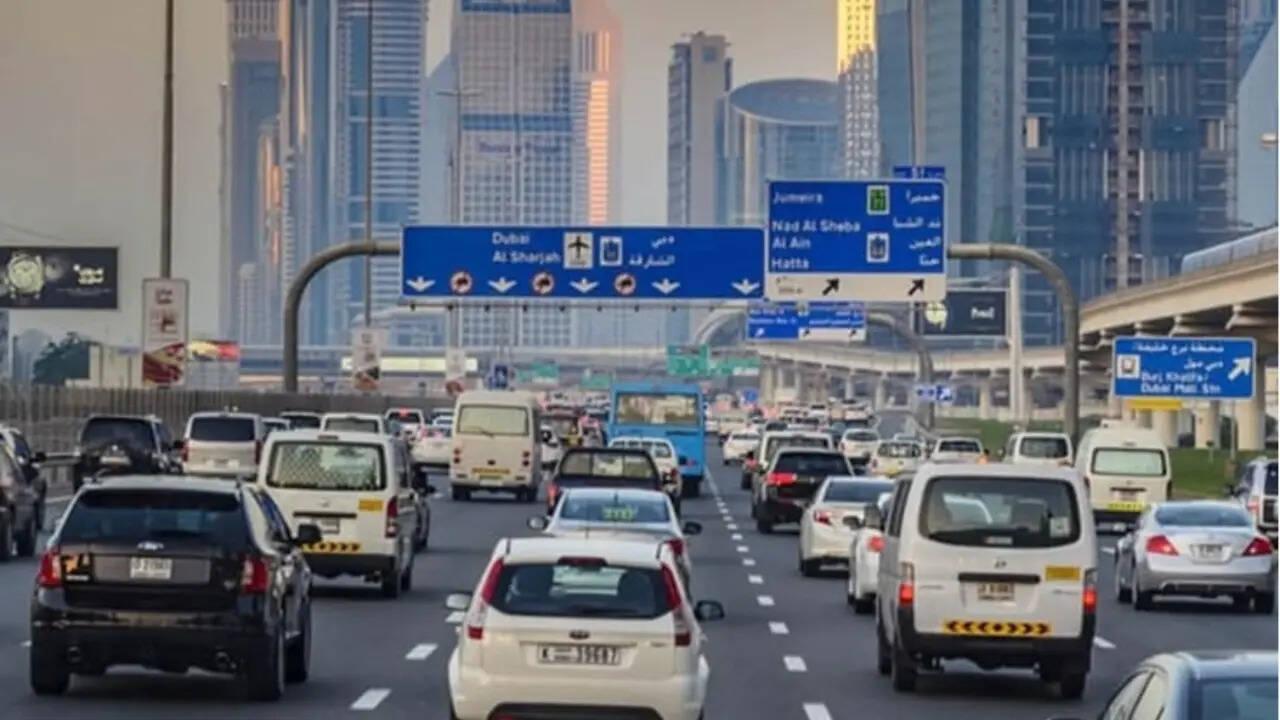
Driving in the UAE used to be about watching your speedometer to avoid a Dh600 flash from a radar. Those days are gone. If you haven’t brushed up on the Federal Decree-Law No. 14 of 2024, which took full effect in early 2025, you’re essentially gambling with your bank account and your freedom. We’re not talking about petty slap-on-the-wrist fines anymore. We’re talking about Dh50,000 release fees and mandatory jail time for offenses that people used to take lightly.
The government isn't just tweaking the rules; they’ve overhauled the entire philosophy of road safety. With AI cameras now tracking everything from seatbelts to lane discipline, the margin for "oops" has vanished. You need to know exactly what has changed before you get behind the wheel today.
The Dh50,000 Price Tag for Reckless Behavior
The number "50,000" is being thrown around a lot, and it’s not a typo. Under the updated regulations, certain high-risk violations carry a Dh50,000 impoundment release fee. This isn’t the "fine" in the traditional sense—it’s what you pay to get your car back after it’s been seized.
If you’re caught jumping a red light, racing on the streets, or driving a vehicle with a fake license plate, the authorities will impound your car immediately. To get it out of the lot, you’ll be writing a check for Dh50,000. For most people, that’s more than the value of the car itself. It’s a deliberate, heavy-handed deterrent designed to make you think twice before trying to beat a changing light.
The logic here is simple. The UAE aims to be the safest country in the world. High-speed collisions at intersections are the leading cause of fatalities, and the Ministry of Interior has decided that the only way to stop them is to make the financial stakes impossibly high.
Jail Time is No Longer a Rare Threat
While the fines are eye-watering, the threat of imprisonment is what’s really rattling seasoned drivers. The new law makes jail time mandatory or highly likely for several specific scenarios.
- Driving Under the Influence: This has always been a "zero tolerance" zone, but the penalties have sharpened. You’re looking at significant jail time and fines ranging from Dh20,000 to Dh100,000. If you cause an accident while impaired, the fine floor jumps to Dh100,000.
- Hit and Run: Fleeing the scene of an accident where someone was injured is now a fast track to a two-year prison sentence and a minimum Dh50,000 fine. The law is clear: you stop, you assist, and you wait for the police.
- Driving Without a License: This is where many residents get tripped up. If you’re caught driving without a valid UAE license (or a recognized foreign one if you’re a visitor), you face up to three months in jail and a fine of up to Dh50,000. Repeat offenders? The fine doubles to Dh100,000 and the jail time is a mandatory three-month minimum.
The AI Revolution in Traffic Enforcement
You might think you can get away with a quick text at a stoplight or shifting lanes without a blinker if there isn’t a patrol car in sight. You’re wrong. The UAE has integrated advanced AI into its "Smart City" infrastructure.
These aren’t just "speed cameras." They are sophisticated visual processors. They can detect if your seatbelt isn't fastened, if you’re holding a phone (even if you aren't talking), and if you’ve crossed a solid line during a lane change. In Dubai and Abu Dhabi, these systems are linked directly to your Emirates ID and vehicle registration. You’ll often get an SMS notification of your violation before you’ve even reached your destination.
One of the most effective—and frustrating for some—new AI implementations is "tailgating detection." If you don't leave a five-meter gap (or a safe distance relative to speed), the cameras will capture it. It’s an AED 400 fine and 4 black points every single time.
Lowering the Age but Raising the Bar
In a move that surprised many, the legal driving age was lowered from 18 to 17 years old. This wasn't done to put more reckless teenagers on the road; it was done to integrate them into a more rigorous training system earlier.
Young drivers are subject to much stricter probation periods. If a 17-year-old driver accumulates even a small number of black points, their license can be suspended indefinitely. The message to the youth is clear: we’ll let you drive early, but the first mistake might be your last for a long time.
Silence and Safety on the Streets
The new law also takes a swing at "noise pollution." If you’ve modified your exhaust to roar through residential areas at 2 AM, expect a Dh2,000 fine and 12 black points. The authorities have started using "noise-sensing radars" in areas like Jumeirah and Yas Island. If your car exceeds a certain decibel level, the camera snaps your plate.
Additionally, the rules for pedestrians have tightened. Jaywalking is no longer a "suggested" offense. Crossing a road with a speed limit over 80 km/h from an undesignated area is a criminal act under the new decree. If you cause an accident by jaywalking, you are legally and financially liable for the damages to the vehicle and any injuries involved.
How to Protect Your License and Your Savings
It sounds like a minefield, but staying safe is actually pretty straightforward if you change your habits. The "old way" of driving in the UAE—aggressive merging and treating speed limits as suggestions—will bankrupt you in 2026.
- Check Your Black Points: Use the Dubai Police or TAMM (Abu Dhabi) apps weekly. Sometimes points are added for minor infractions you didn't even realize you committed. If you hit 24 points, your license is gone for three to six months.
- Validate Your License: If you’re an expat, ensure your home country's license is actually transferable or recognized. If you’ve become a resident, you must have a UAE-issued license. Don't rely on an International Driving Permit once your residency is stamped.
- Hands Off the Tech: Buy a high-quality car mount or use Apple CarPlay/Android Auto. The AI cameras are specifically tuned to look for the "hand-to-ear" or "phone-in-lap" posture. Even holding your phone while using the speakerphone is a violation.
- Yield to Emergency Vehicles: This is a big one. Failing to give way to an ambulance or police car now carries a Dh3,000 fine and a 30-day impoundment. If you see lights, move over immediately, even if it feels inconvenient.
The UAE’s roads are becoming some of the most monitored environments on Earth. The goal isn't to collect revenue; it's to eliminate the 400+ road deaths that occur annually. Whether you agree with the severity of the fines or not, the cost of non-compliance is now high enough to ruin your year. Take your foot off the gas, put the phone in the glove box, and drive like everyone is watching—because they are.