Mass evacuation is a failure of imagination.
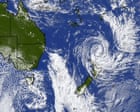
As Cyclone Vaianu barrels toward the North Island, the media is stuck in its favorite loop: terrifying maps, grainy footage of supermarket shelves being stripped of bread, and the inevitable, bureaucratic "get out now" orders. We treat these meteorological events like sudden, unpredictable gods. They aren't. They are data points in a recurring cycle of geography.
The current panic surrounding Vaianu reveals a deeper rot in how we handle disaster management. We’ve traded personal agency and structural engineering for a frantic, expensive scramble every time the barometer drops.
The Evacuation Industrial Complex
New Zealand is obsessed with the retreat. When emergency sirens wail across Hawke’s Bay or the Coromandel, the state’s default setting is to move thousands of people into gyms and community halls. On paper, it looks like "safety first." In reality, it is a logistical nightmare that creates a secondary crisis of displaced populations, broken supply chains, and massive mental health tolls.
We’ve seen this play out before. I’ve watched local councils spend millions on "emergency preparedness" that amounts to nothing more than a few high-vis vests and a megaphone. They focus on the event rather than the environment.
When you tell a whole town to leave, you aren't just moving bodies. You are abandoning the very infrastructure that needs monitoring. You are leaving homes to the mercy of power surges and blocked drains that could be cleared in minutes by a prepared resident but turn into catastrophic floods when left unattended for forty-eight hours.
Stop Treating Weather Like a Surprise
Cyclone Vaianu isn't a "once in a hundred years" event, regardless of what the headlines scream. The statistics of climate patterns have shifted. What was once extreme is now the baseline. If your home cannot survive a Category 3 or 4 storm without you fleeing to a neighboring province, you don't have a weather problem; you have a land-use problem.
The "lazy consensus" among urban planners is that we can keep building on floodplains and coastal fringes as long as we have a solid exit strategy. That is a lie. A solid exit strategy is a bandage on a sucking chest wound.
We need to talk about The Resiliency Gap.
Imagine a scenario where every dollar spent on temporary evacuation centers was instead diverted into local-grid micro-generation and hyper-local water management. Instead of thousands of cars clogging State Highway 1—creating a perfect trap if a landslide occurs—we should be seeing "Shelter in Place" as the gold standard.
Why aren't we? Because "Get Out" is a simpler political message than "We built your suburb in a bowl and the drainage is fifty years out of date."
The Myth of the Vulnerable Citizen
The media loves the narrative of the helpless citizen waiting for a helicopter. It sells. But it actively erodes the concept of the Resilient Unit.
True disaster expertise isn't found in a government briefing room; it's found in the households that have invested in decentralized power, independent water filtration, and structural reinforcement. By forcing mass evacuations, the state treats every citizen like they are equally unprepared. It penalizes the person who spent $10,000 on storm shutters and solar batteries by forcing them into a crowded hall because their neighbor didn't bother to buy a flashlight.
We are over-managing the movement of people and under-managing the durability of our assets.
The physics of a cyclone are simple:
$$P = \frac{1}{2} \rho v^3 C_p$$
Wind power increases with the cube of its speed. We know the math. We know the pressure gradients. Yet we act like these forces are mystical. If your roof isn't clipped to the frame to withstand 150 km/h gusts, that’s a failure of building code enforcement, not an act of God.
Why "Wait and See" is Actually the Rational Choice
The critics will say staying behind is dangerous. And for those in the direct path of a storm surge, it often is. But for the 80% of people currently under "precautionary" orders for Vaianu, the risk of the road is frequently higher than the risk of the roof.
Think about the variables:
- Traffic Congestion: Thousands of panicked drivers on wet, winding roads.
- Asset Loss: Looting and preventable fire/flood damage due to absence.
- Medical Strain: Concentrating thousands of people in cramped spaces during peak storm season.
We are told that "life is all that matters." It’s a nice sentiment, but it’s used to shut down any conversation about the economic and social suicide of constant displacement. When a region "braces" by shutting down every business and evacuating every worker, the recovery takes years, not weeks.
The cost of New Zealand’s "caution" is a slow-motion hollowing out of regional economies. Who wants to invest in a business in Northland or Tairāwhiti if the state mandates a total shutdown three times a year?
The Hard Truth About Managed Retreat
The elephant in the room isn't the wind; it's the land.
If we were serious about Cyclone Vaianu, we wouldn't be talking about evacuation routes. We would be talking about Managed Retreat. Not the kind where you run away for a weekend, but the kind where we admit certain postcodes are no longer viable.
The current system is a form of moral hazard. The government allows developers to build in high-risk zones, insurance companies collect premiums, and when the storm hits, the taxpayer picks up the bill for the emergency response and the inevitable cleanup.
We need to stop "bracing" and start "rebuilding."
- Abolish the precautionary evacuation for low-risk zones. Let people who have invested in resilience stay and protect their property.
- Mandate structural upgrades. If a house isn't storm-rated, the owner pays a "response levy" to fund their own eventual rescue.
- Decentralize everything. The reason a cyclone kills a city is because the city relies on a single pipe or a single wire.
Stop Asking if You Should Leave
People always ask: "Is it safe to stay?"
That’s the wrong question. The right question is: "Why is my environment so fragile that I have to run?"
If you are currently packing your car because Cyclone Vaianu is coming, you have already lost. You are a victim of a decades-long failure to prioritize engineering over optics. You are participating in a ritual of panic that does nothing to solve the underlying vulnerability of the North Island.
The bravest thing a government could do right now isn't ordering an evacuation. It’s admitting that they’ve spent forty years building a country that can’t handle a stiff breeze without falling apart.
Stop looking at the radar and start looking at your foundations. If you have to leave, your house was never a home; it was just a temporary shelter you overpaid for.
Get out if you must, but don't pretend it's a solution. It's a surrender.