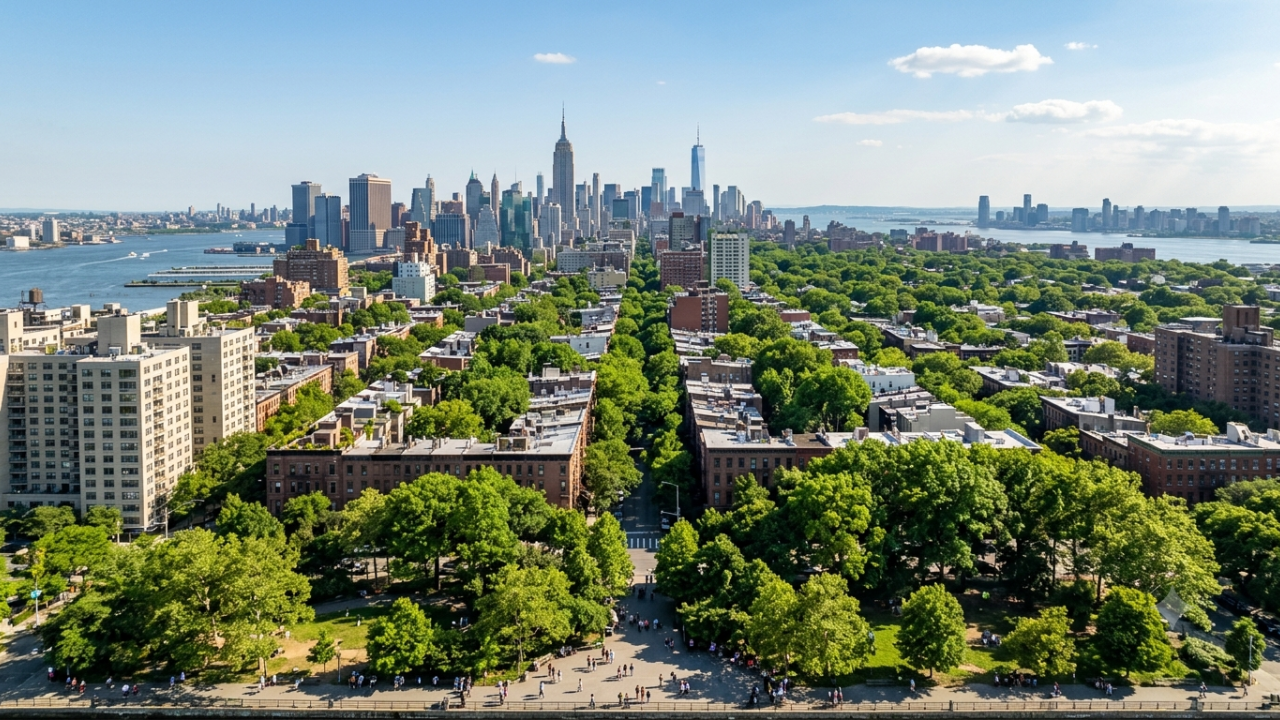
New York City reached its milestone of planting one million trees ahead of schedule, yet concrete continues to bake the five boroughs into an urban heat island. The municipal government is now targeting 30 percent tree cover by 2040, attempting a massive architectural and ecological shift to cool down neighborhoods that routinely see summer temperatures spike well past comfortable limits. This mandate goes far beyond simple beautification. It is an urgent public health intervention driven by the reality that asphalt and steel retain heat long after the sun goes down, creating lethal night-time conditions for vulnerable residents.
Walking through certain blocks in the South Bronx or central Brooklyn during a July heatwave reveals the core failure of past urban planning. The air sits heavy, trapped between brick walls, while asphalt radiates heat upward. Shade is a luxury distributed unevenly across zip codes based on income and historical infrastructure investment. Fixing this disparity requires more than dropping saplings into narrow sidewalk pits. It demands an overhaul of how the city allocates underground space, manages utility lines, and funds long-term maintenance.
The Anatomy of an Urban Heat Island
To understand why New York needs a 30 percent tree cover target, look at surface temperatures from a satellite view. Neighborhoods with dense canopy cover register ground temperatures up to twenty degrees cooler than adjacent areas dominated by parking lots and commercial rooftops. Dark roofing materials and miles of unshaded pavement absorb solar radiation during peak hours, turning entire communities into thermal storage units.
Older industrial districts suffer the most. Decades of redlining and industrial zoning concentrated concrete infrastructure in low-income areas while affluent neighborhoods retained leafy parks and wide, tree-lined avenues. When temperatures climb, these concrete-heavy zones lack the natural cooling mechanisms provided by evapotranspiration. Trees act as biological air conditioners, drawing water from the soil and releasing it into the atmosphere, a process that cools the surrounding air significantly. Without adequate canopy, residents face elevated risks of heatstroke, cardiovascular strain, and exacerbated respiratory illnesses.
Municipal officials spent years treating trees as aesthetic amenities rather than critical infrastructure. That perspective is finally shifting. When utility grids fail during peak summer demand because air conditioners are running at maximum capacity, the root cause traces back to the lack of passive cooling from mature trees.
Overcoming the Concrete Barrier
Planting a million trees sounds impressive on paper, but survival rates tell the real story. Thousands of young saplings planted during previous initiatives withered away within two years due to lack of water, road salt damage, soil compaction, and accidental strikes from maintenance equipment. Hitting the 2040 tree cover goal requires changing how trees are planted and protected from day one.
Underground conditions in New York present a hostile environment for root growth. Subsurface space is crowded with aging water mains, high-voltage electrical cables, gas lines, and subway tunnels. Roots struggle to find oxygen or moisture beneath compacted soils capped by heavy concrete sidewalks. Modern urban forestry demands engineered soil cells and expanded tree pits that give roots room to expand without destroying surrounding infrastructure.
Maintenance represents another massive hurdle. A newly planted sapling requires consistent watering for at least three years to establish a deep root system. Municipal budgets often fluctuate, leaving pruning and watering schedules vulnerable to sudden cuts. Community groups and volunteer programs help fill the gap, but grassroots efforts cannot replace a permanent, well-funded municipal workforce dedicated entirely to canopy management.
+-------------------------------------------------------------+
|               Urban Canopy Survival Factors                 |
+-------------------------------------------------------------+
|  Soil Volume   | Needs 2+ cubic feet of soil per square     |
|                | foot of projected canopy spread.           |
+-------------------------------------------------------------+
|  Water Access  | Requires regular deep watering for the     |
|                | first 36 months post-planting.             |
+-------------------------------------------------------------+
|  Protection    | Physical barriers against salt, snowplows, |
|                | and pedestrian compaction.                 |
+-------------------------------------------------------------+
Equity and the Canopy Gap
Environmental justice sits at the center of the 30 percent tree cover initiative. Tree distribution maps mirror wealth distribution maps with uncomfortable precision. Wealthier enclaves like the Upper West Side or Park Slope boast mature canopies that canopy over entire streets, while industrial edges and public housing complexes feature wide-open, unshaded expanses of concrete.
Addressing this disparity means prioritizing planting schedules in heat-vulnerable communities first. The city cannot afford to plant trees where it is easiest or cheapest; resources must flow directly to neighborhoods suffering the highest thermal stress. This requires close coordination with community boards, housing authorities, and local residents who know which blocks turn into ovens during summer afternoons.
Residents in underserved zones often express skepticism toward greening initiatives, and for valid reasons. Past beautification projects frequently preceded rapid gentrification, driving up property taxes and pushing long-term tenants out of their homes. City planners must pair canopy expansion with tenant protections and anti-displacement policies to ensure that cooling a neighborhood does not price out the people who survived the heat.
Species Selection for a Changing Climate
Planting trees for the year 2040 means looking ahead at how climate pests, diseases, and temperature shifts will impact regional flora. Standard urban street trees like the London plane or certain maples face increasing stress from prolonged droughts and invasive insects like the emerald ash borer or Asian longhorned beetle.
Forestry experts are diversifying the urban forest, introducing resilient native species capable of withstanding erratic weather patterns, heavy downpours, and warmer winters. Selecting the right mix of trees prevents catastrophic losses from species-specific blights. It also ensures that the canopy remains dense and functional even as individual trees reach the end of their lifespans.
Tree species must also be chosen with allergy seasons and infrastructure impact in mind. Female trees dropping excessive fruit can create slip-and-fall hazards on crowded sidewalks, while aggressive surface roots can lift concrete slabs and create trip hazards for pedestrians. Balancing ecological benefits with urban practicalities requires careful curation by arborists who understand the unique pressures of the New York streetscape.
Financing the Green Transition
Transforming New York into a greener, cooler metropolis carries a steep price tag. Funding cannot rely solely on standard municipal tax revenues, which fluctuate with economic cycles. Securing federal climate grants, private partnerships, and green bonds will be essential to sustain the funding stream over the next decade and a half.
Investing in urban canopy yields substantial financial returns that rarely appear on initial balance sheets. Lower summer temperatures reduce peak energy consumption, saving residents and businesses millions on electricity bills while decreasing strain on power grids. Enhanced shade reduces the degradation of asphalt roadways, lowering long-term paving costs. Public health expenditures drop as heat-related emergency room visits decline.
The real test of this initiative will not be how many trees go into the ground during press events, but how many survive to cast shade ten years from now. Bureaucratic silos must break down, uniting transportation departments, housing authorities, and environmental protection agencies under a single, cohesive strategy. Asphalt must give way to soil, and concrete jungles must learn to breathe before the next historic heatwave settles over the five boroughs