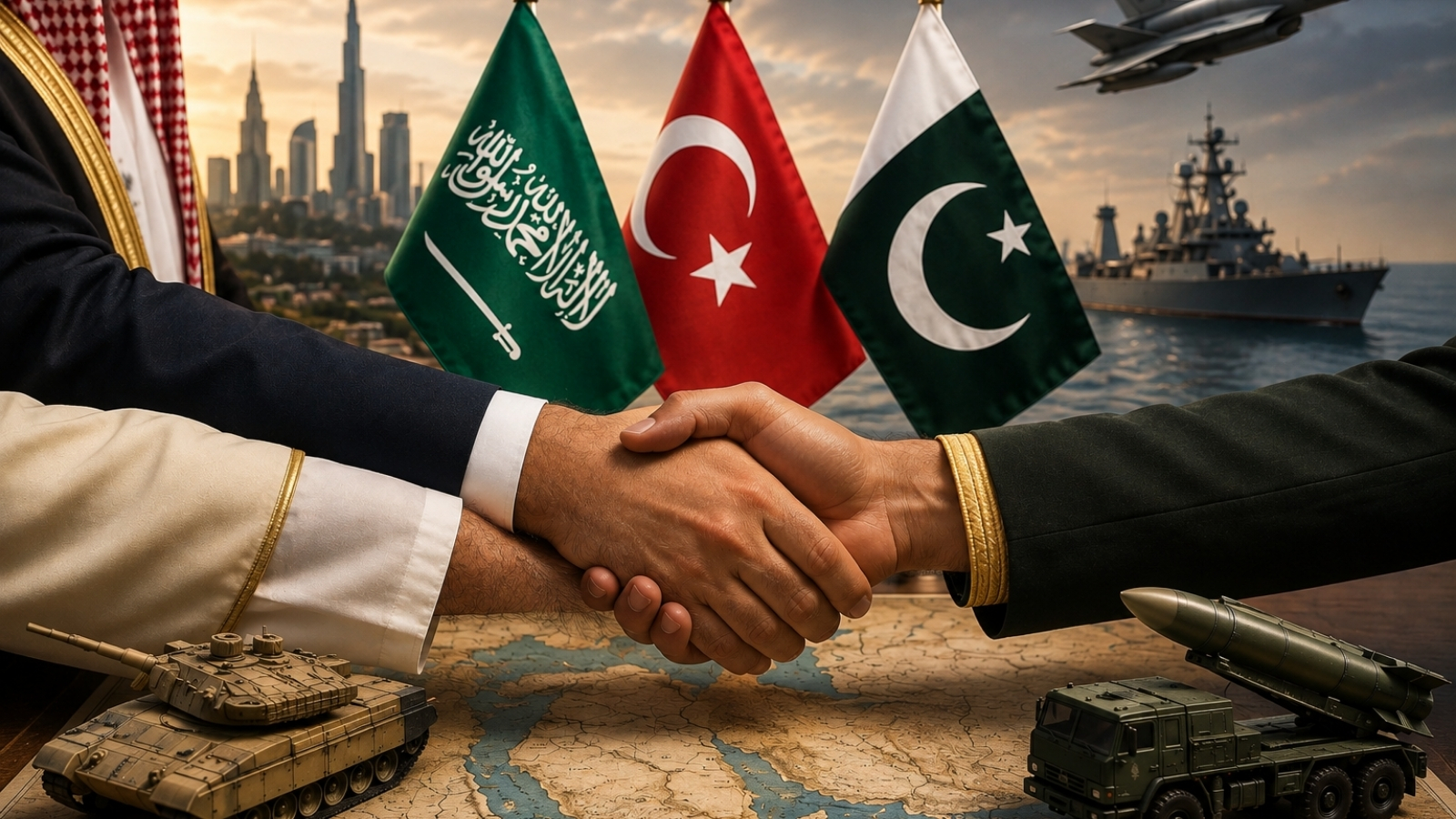
The defense analysts filling cable news slots and drafting think-tank white papers are getting it completely wrong. They look at the emerging trilateral military alignments between Islamabad, Riyadh, and Ankara and see a resurgent Islamic NATO. They see shared hardware, joint manufacturing, and a unified Sunni front against regional rivals. They are buying the press releases wholesale.
I have spent the better part of two decades watching sovereign debt crises swallow grand military ambitions whole. I have sat in backroom briefings where defense ministers sign multi-billion-dollar memoranda of understanding with the fiscal discipline of a teenager with a maxed-out credit card.
The lazy consensus says this pact changes the geopolitical balance of the Middle East and South Asia. The reality is far more fragile. This alignment is not a sign of rising strength. It is a desperate hedge against systemic weakness, held together by duct tape, short-term currency swaps, and shared anxiety over American security guarantees.
Let us dismantle the mythology piece by piece.
The Myth Of The Self-Sustaining Military Industrial Complex
The core argument of the mainstream narrative hinges on industrial complementarity. Turkey brings the drones and electronic warfare capabilities. Pakistan brings the combat-tested conventional forces and nuclear deterrent umbrella. Saudi Arabia brings the endless checkbook. On paper, it looks like a clean transaction.
It ignores the basic ledger.
Turkey's defense sector, while undeniably innovative in drone technology, is choking on inflation, currency devaluation, and strict Western component embargoes. Ankara cannot self-fund its advanced engine development programs, let alone underwrite a massive export-driven security architecture for foreign allies.
Pakistan's military apparatus is a state within a state, but the actual state is perpetually moments away from defaulting to the International Monetary Fund. You cannot project regional hegemony when your central bank foreign exchange reserves barely cover three weeks of import bills. Islamabad is not entering this pact to project power; it is entering it to secure emergency balance-of-payment support disguised as defense cooperation.
And Saudi Arabia? Riyadh has spent decades buying the most expensive hardware on earth, only to discover that military capability requires institutional depth, indigenous maintenance ecosystems, and an operator culture that cannot be drop-shipped from defense contractors in Virginia or Ankara.
When you combine two economies teetering on the edge of structural collapse with a third that views security through the lens of transactional real estate, you do not get an alliance. You get a mutual admiration society for bankrupt bureaucracies.
Follow The Money Or Watch It Disappear
Let us look at the actual mechanics of how these states finance military cooperation.
Imagine a scenario where a joint drone manufacturing facility is proposed between Turkish contractors and Pakistani state-owned defense conglomerates, funded by the Saudi Public Investment Fund. Sounds modern, efficient, and forward-looking.
Now look at the currency risk.
Turkish Lira volatility makes long-term fixed-price defense contracts a statistical nightmare. The Pakistani Rupee's downward trajectory means every imported component for that joint venture becomes exponentially more expensive month over month. Saudi capital is famously fickle when oil prices dip below fiscal break-even points. The moment Brent crude drops sustainably, Riyadh cuts off external discretionary spending.
Defense pacts that lack a stable, domestic, tax-based industrial financing model are nothing more than paper weights. They survive only as long as the bilateral loans keep rolling over. Once the music stops—and sovereign debt cycles dictate that it always stops—the joint commands dissolve faster than you can say memorandum of understanding.
The Geopolitical Illusion Of Strategic Autonomy
The narrative merchants love to push the idea that this pact represents a decisive pivot away from Washington. They argue that as the United States pulls back from the Middle East and pivots toward East Asia, regional powers are building their own security architectures.
This is a profound misunderstanding of how hard power actually functions.
None of these three nations possess the logistical reach, the blue-water navy, or the intelligence-gathering apparatus to project power independently of Western supply chains. Turkey is still a NATO member, tethered to Western command structures whether Ankara's political rhetoric admits it or not. Pakistan’s entire strategic elite has been financially and educationally integrated with Western institutions for generations. Saudi Arabia’s air defense, radar networks, and advanced combat aircraft are permanently dependent on American contractor support.
You cannot decouple from the global security hegemon by simply signing a trilateral defense pact. You are merely changing which middleman takes a cut of your procurement budget.
The Domestic Disconnect
There is another variable that Washington and regional capitals consistently ignore: the glaring gap between elite defense ambitions and domestic socioeconomic reality.
When a government spends forty percent of its national budget servicing debt while youth unemployment hovers at ruinous levels, splashing billions on joint defense exercises and cross-border missile development is an invitation for internal collapse.
Ask any mid-level procurement officer in Islamabad or Ankara about the state of their supply chain transparency. They will tell you horror stories of bureaucratic bloat, political interference in contract awards, and technology transfers that exist only as PowerPoint slides.
The elite wants the prestige of a regional security pact. The citizens footing the bill via inflation, tax hikes, and crumbling public infrastructure are footing a tab they never agreed to.
Why The Establishment Keeps Falling For It
Why do think tanks keep writing breathless reports about this alignment? Because complexity sells, and nuance does not get funded.
It is much easier to draw arrows on a map connecting Ankara, Riyadh, and Islamabad than it is to analyze the dreary, grinding reality of foreign exchange reserves, sovereign credit ratings, and supply chain bottlenecks. Analysts look at leaders shaking hands for the cameras and mistake theatrical diplomacy for structural alignment.
Real power is boring. It is built on deep capital markets, rule of law, institutional transparency, and resilient domestic manufacturing bases.
This trilateral pact has none of those things. It is an alliance of convenience born of mutual desperation, designed to send a diplomatic signal to Washington rather than to wage or deter a war.
Stop treating every handshake between cash-strapped generals as the birth of a new empire.
The next time you read about a groundbreaking defense agreement between middle powers facing structural insolvency, remember to check the balance sheet first. The guns are loud, but the credit is worthless.