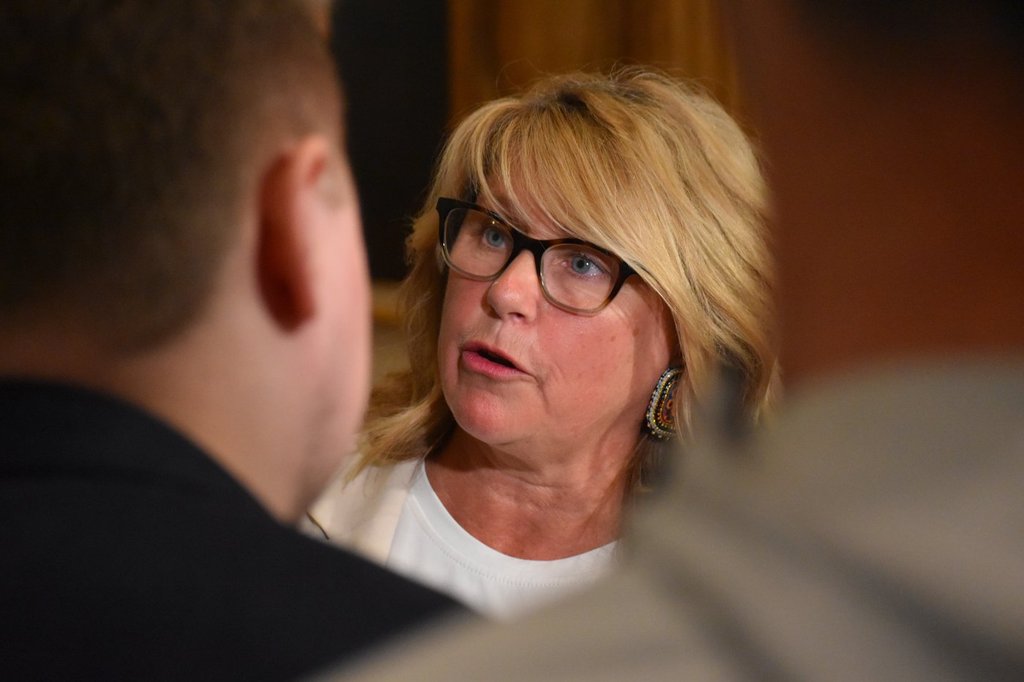
Apologies from government officials don't save lives, and New Brunswick's social services network is facing a harsh reality check. Social Development Minister Cindy Miles just promised sweeping modifications to how the province screens and serves vulnerable teenagers. This sudden urgency isn't a random act of bureaucratic goodwill. It comes immediately after a damning report from Kelly Lamrock, the province's child and youth advocate, who laid bare how the system failed a 16-year-old boy named Bobby before his fatal overdose.
The political spin says the system will move faster now. Frontline workers say the changes barely scratch the surface of a deeply broken operational culture.
The policy shift focuses heavily on the Youth Engagement Services (YES) program. Under the old rules, teenagers applying for independent youth assistance actually had to prove they had been out of their family homes for at least three months. It was a bizarre, dangerous prerequisite that essentially forced vulnerable kids to survive on the streets or in precarious situations before qualifying for government help. Minister Miles announced that this three-month waiting period is gone. Furthermore, the department claims that any youth turned away from direct provincial services will now get an immediate, mandatory referral to a community support organization.
On paper, it sounds like a swift correction. In practice, it highlights how detached executive decision-making has become from frontline reality.
The Deadly Cost of Bureaucratic Caution
The advocate's report, titled "Nobody's Problem," didn't hedge its words. Bobby died after the Department of Social Development received at least 15 distinct warnings regarding his safety and declining mental health. He was living homeless, bouncing through a network that Lamrock described as an environment where systems move at the speed of caution while children live at the speed of crisis.
Even worse, the government didn't bother to notify the youth advocate's office when Bobby died. Lamrock only found out because a local non-profit group stepped up to tell him. This lack of transparency points to a broader, systemic habit of hiding failures behind legislative delays. The province's child death review committee is legally required to evaluate cases where a minor dies within a year of receiving social services. Yet, the Department of Public Safety recently stopped sharing these vital public safety recommendations via standard news releases, slowing down public accountability.
The timeline of how these systemic cracks widened over recent months shows a clear pattern of warnings ignored.
A Systemic Breakdown
- November 2025: The advocate's office rolls out an updated Child Well-Being Assessment tool to help caseworkers spot high-risk cases earlier. The tool sees slow adoption across regional offices.
- February 2026: Public safety officials admit in a legislative committee that they ended the practice of automatically issuing public news releases for child death review findings, limiting public scrutiny.
- May 25, 2026: Lamrock tables his explosive report on the YES program, revealing that vulnerable teenagers are regularly turned away by a defensive bureaucratic structure.
- May 28, 2026: The specific investigation into Bobby's death is released, exposing 15 ignored warnings and an official failure to notify the advocate about the fatality.
- June 24, 2026: Social Development Minister Cindy Miles promises a third-party screening review, drops the three-month homelessness requirement, and pledges immediate community referrals.
Why Social Workers Think the New Plan Will Fail
If you talk to the people actually doing the work, the minister's new directives sound incredibly naive. The New Brunswick Association of Social Workers (NBASW) immediately pushed back on the announcement, pointing out that dropping a single policy rule won't fix an understaffed, exhausted system.
The biggest issue is a massive disconnect between central management in Fredericton and regional offices on the ground. Social Development lacks a single designated social worker within its executive management team. The people calling the shots, setting budgets, and designing these new referral pathways don't have clinical field experience. Frontline workers are trapped in a rigid hierarchy where they lack the authority to make immediate clinical funding decisions for a kid in crisis. They have to pass requests up through layers of non-clinical managers, wasting precious days while a teenager sleeps under a bridge.
Then there is the issue of the mandatory community referrals. Telling a caseworker to refer a youth to a local non-profit is an easy press-release win. But New Brunswick’s community sector is already drowning. These organizations don't have magical, unused resource pools. Without a massive injection of core funding and a surge in hiring for social work technicians to handle the administrative load, these referrals simply shift the burden of a failing state system onto overextended charities.
The Core Fixes New Brunswick Is Ignoring
Fixing child welfare requires structural reorganization, not just dropping a three-month waiting rule. If the government actually wants to prevent another tragedy like Bobby's, the operational framework needs to change immediately.
First, the province needs to establish a Chief Social Work Officer within the executive leadership team. This position must have the authority to override bureaucratic gridlock and ensure clinical expertise drives policy. Second, New Brunswick needs a mandatory notice provision written into law, forcing the government to automatically report any child death in care to the independent advocate's office within 24 hours. No more hidden numbers.
Finally, regional caseworkers must receive expanded decision-making authority over crisis funding. If a social worker identifies a youth at extreme risk, they shouldn't have to wait for an executive director three districts away to sign off on emergency housing or specialized mental health treatments.
If you are a community advocate, an educator, or a parent trying to navigate this system for a teenager in trouble, don't wait for the province's third-party review to wrap up. Document every single interaction with Social Development in writing. If a regional office denies support to a youth who clearly qualifies under the newly revised YES rules, bypass the local management layer entirely. Contact the Office of the Child and Youth Advocate directly at 1-888-465-1100 to initiate an independent file review. Hold the department strictly to Minister Miles' public promise that the system must learn to say yes first and apologize to the accountants later.