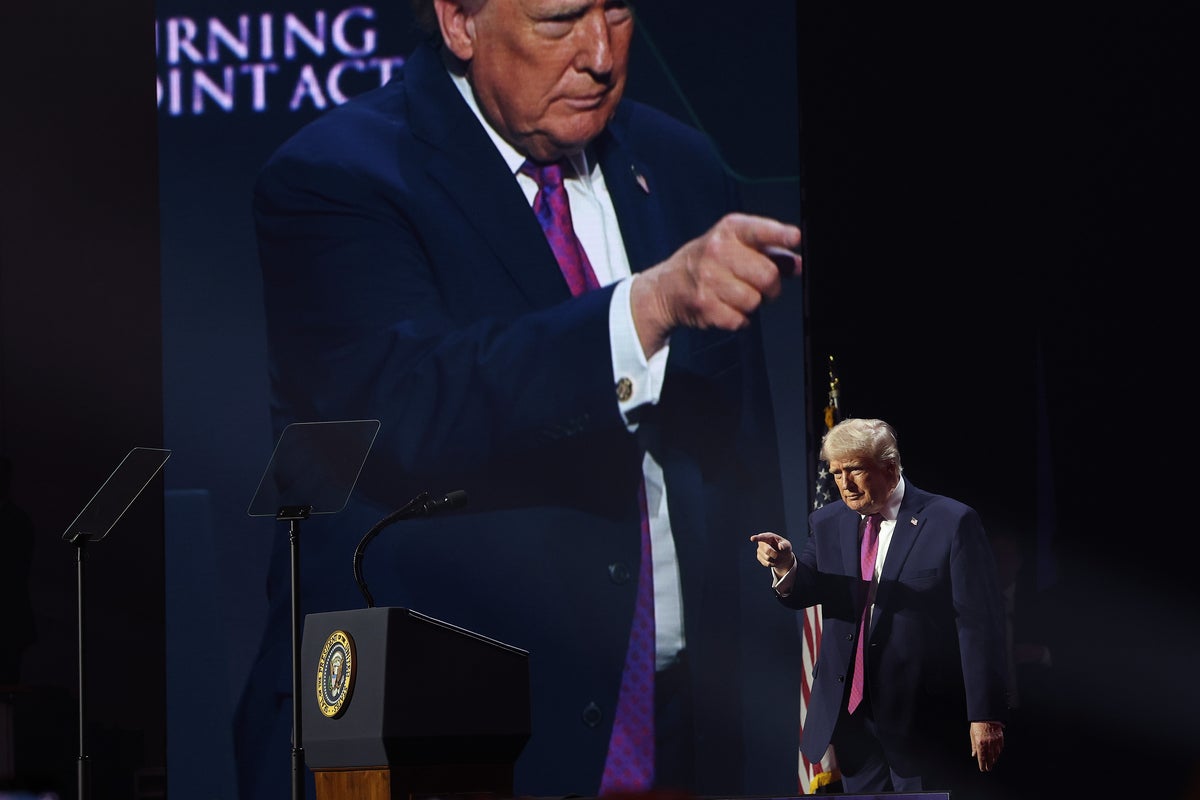
The media is obsessed with the optics of Donald Trump’s latest rhetorical grenade launched at NATO. They focus on the "slamming," the "clash," and the perceived disrespect to a 75-year-old alliance. They missed the actual story. When Trump claimed he turned down NATO’s offer to help clear the Strait of Hormuz because "we never needed them," the usual suspects in DC and Brussels cried foul. They cited collective security and the sanctity of the rules-based order.
They are wrong. They are looking at a 1949 solution for a 2026 reality.
The uncomfortable truth isn't that Trump is "anti-alliance." The truth is that NATO has transitioned from a military powerhouse into a high-end country club where the members expect the valet to fight their wars. The Strait of Hormuz incident isn't a gaffe; it is a clinical diagnosis of a dying partnership.
The Myth of Collective Capability
The "lazy consensus" suggests that NATO’s involvement in the Persian Gulf adds vital weight to maritime security. This is a mathematical fantasy.
Look at the actual naval inventories of the European member states. Beyond the United Kingdom and France, the ability of NATO members to project sustained power into the Strait of Hormuz—and stay there—is negligible. When a crisis breaks out in a choke point responsible for 20% of the world’s petroleum liquids, you don't need a committee meeting in Belgium. You need Tier 1 carrier strike groups and integrated missile defense.
Most NATO members have spent three decades gutting their blue-water navies to fund domestic social programs. They didn't just "cut costs." They outsourced their national security to the American taxpayer. When they "offer" to help in the Middle East, they aren't offering ships; they are offering a press release. They want the protection of the American umbrella without paying for the fabric.
Sovereignty is Not a Dirty Word
Foreign policy elites love to talk about "multilateralism" as if it’s a magic spell that makes problems disappear. It’s actually a recipe for paralysis.
In the Strait of Hormuz, speed is the only currency that matters. To clear a waterway threatened by asymmetric Iranian threats—fast-attack craft, sea mines, and shore-based ASCMs (Anti-Ship Cruise Missiles)—you need a unified command structure.
Introducing a NATO framework into that specific tactical environment adds layers of bureaucracy, restrictive Rules of Engagement (ROE), and the inevitable veto of a member state that is more worried about their trade deal with Tehran than the stability of global energy markets.
Trump’s "we never needed them" isn't an insult. It’s a recognition of friction. In a high-stakes kinetic environment, a partner who can’t keep up is just a liability you have to protect. I have seen military planners lose their minds trying to integrate "coalition partners" who arrive with ships that can't communicate on secure frequencies or, worse, aren't allowed to fire unless they call their home capital first.
The Hormuz Math
Let's look at the physics. The Strait of Hormuz is roughly 21 miles wide at its narrowest point. The shipping lanes are even tighter.
The threat model here is not a conventional naval battle. It is a swarm. To counter this, the United States has invested billions in the 5th Fleet’s integration of unmanned systems and AI-driven surveillance.
NATO, as a collective body, is years behind in this specific theater. When the US Navy operates in these waters, it operates with a level of technological density that most European navies cannot even interface with. Bringing in a "NATO mission" would effectively mean the US slowing down its kill chain to accommodate allies who are still figuring out how to secure their own borders in the Mediterranean.
The Cost of the "Free Rider" Era
The backlash to the "we never needed them" comment stems from a fear that the US is abandoning its role as the global guarantor of trade.
Good. It’s time to be afraid.
For too long, the "rules-based order" has functioned as a massive subsidy for global corporations and foreign governments. If Germany or Italy wants the Strait of Hormuz kept open for their energy needs, they should have the capability to contribute something more than a token frigate that requires US logistical support just to stay fueled.
The era of the strategic "participation trophy" is over. The US is currently the world’s largest producer of crude oil. While we still care about global prices, our physical reliance on that specific waterway has dropped significantly over the last decade. The leverage has shifted.
The Counter-Intuitive Reality of Alliances
A real alliance is built on shared sacrifice and compatible hardware.
- Interoperability is a Lie: Most NATO nations cannot talk to each other digitally during a high-intensity conflict without going through US systems.
- Maintenance is the Secret Killer: It doesn't matter if you have 10 ships if 8 are in dry dock because you didn't buy spare parts.
- Political Will is the Real Choke Point: Article 5 applies to the North Atlantic. It doesn't apply to a skirmish with the IRGC in the Gulf. NATO members know this, which is why their "offers" are always conditional.
The critics argue that by rejecting NATO's help, the US is "isolating" itself. This assumes that being surrounded by weak partners is better than being alone. It isn't. In the world of maritime security, a weak partner is a hostage waiting to happen. If an Iranian mine hits a small European corvette, the US is the one that has to go in, take the hits, and start a war to bail them out.
Stop Asking the Wrong Question
The media asks: "Is Trump destroying NATO?"
The real question is: "Does NATO even exist if the US isn't doing 90% of the work?"
If you remove the American spine, NATO is a collection of fragmented, underfunded, and politically timid bureaucracies. The Strait of Hormuz claims are a reminder that the US is tired of being the only one at the table with a checkbook and a gun.
Washington’s "experts" believe that maintaining the appearance of unity is more important than the reality of competence. They are wrong. A false sense of security is more dangerous than no security at all. When you tell a bully you have a "coalition" behind you, but that coalition is composed of people who won't fight, you invite the very attack you're trying to prevent.
The Strategy of Brutal Clarity
The move here isn't to "fix" NATO through more polite summits. It’s to force a hard pivot toward bilateralism.
The US should work with the UK. We should work with France. We should work with regional partners like the UAE who actually have skin in the game. But the idea that we need the "NATO" brand name stamped on a naval operation in the Middle East is a relic of 20th-century vanity.
We didn't need them in the Strait because "they" as a collective entity don't actually bring anything to the water that isn't a headache for a US commander.
The world is moving toward a "Pay-to-Play" security model. It’s cold. It’s transactional. It’s also the only way to ensure that when a crisis hits, the people standing next to you are actually capable of pulling the trigger.
The Strait of Hormuz is a narrow, dangerous, and unforgiving place. It is no place for an alliance that exists mostly on paper. If that hurts feelings in Brussels, let them build a navy that can reach the Indian Ocean without asking for a tow. Until then, the adults will handle the heavy lifting alone.
The era of the American janitor is closing. If you want the floor swept, pick up a broom or get out of the way.