The diamond trade does not care about sanctions. It does not care about swift bans, frozen central bank assets, or diplomatic expulsions delivered in hushed tones behind mahogany doors in Brussels and Washington. It cares about weight, clarity, cut, and the quiet movement of value across borders that maps refuse to acknowledge.
Mumbai and St Petersburg are approaching their diamond jubilee. In 2027, the sister-city agreement binding India's financial capital to Russia's cultural heart turns sixty years old. While state media in both nations prepares a predictable cycle of ballet exchanges, port authority delegations, and archival photo exhibitions, the real architecture of this relationship operates far below the surface of official communiques. This partnership survived the collapse of the Soviet Union, the shock therapy of the 1990s, and the severe financial isolating measures implemented by Western powers following the escalation in Ukraine.
To understand why this relationship persists, you must ignore the rhetoric of ideological alignment and look at the ledgers.
The Subterranean Economy of Sister Cities
Most municipal partnerships are bureaucratic fictions. Mayors sign parchment documents, plant trees in botanical gardens, and issue press releases about educational exchanges that quietly vanish when the municipal budget tightens. The connection between Mumbai and St Petersburg has always functioned differently because it was engineered during the Cold War not as a cultural exercise, but as a strategic corridor.
When the agreement was signed in 1967, New Delhi and Moscow were constructing an axis of mutual economic survival. Leningrad, as it was then known, represented heavy industry, maritime engineering, and scientific research. Mumbai, then Bombay, represented the commercial window to the non-aligned world, a deep-water port capable of absorbing machinery, crude, and raw materials.
Over the decades, the nature of the cargo shifted. Soviet machine tools gave way to pharmaceutical shipments, maritime logistics consulting, and the intricate, high-stakes trade in rough diamonds. Alrosa, the Russian state-controlled diamond mining giant headquartered in Mirny with major operational offices in St Petersburg, depends on the cutting and polishing hubs of Gujarat and Mumbai to process a vast share of its stones. When global payment networks severed Russian access, the trade did not halt. It mutated. Alternative currency settlements, bilateral shipping insurance arrangements, and private logistics networks stepped into the vacuum.
The Russian Consulate in Mumbai is currently planning scores of cultural celebrations leading up to the 2027 milestone, yet the diplomatic corps spends significantly more energy managing trade friction than booking theater troupes.
Cultural Diplomacy as a Pressure Valve
Culture is the lubricant of hard commerce. When governments cannot sign formal treaties due to secondary sanctions or multilateral pressure, they deploy the arts.
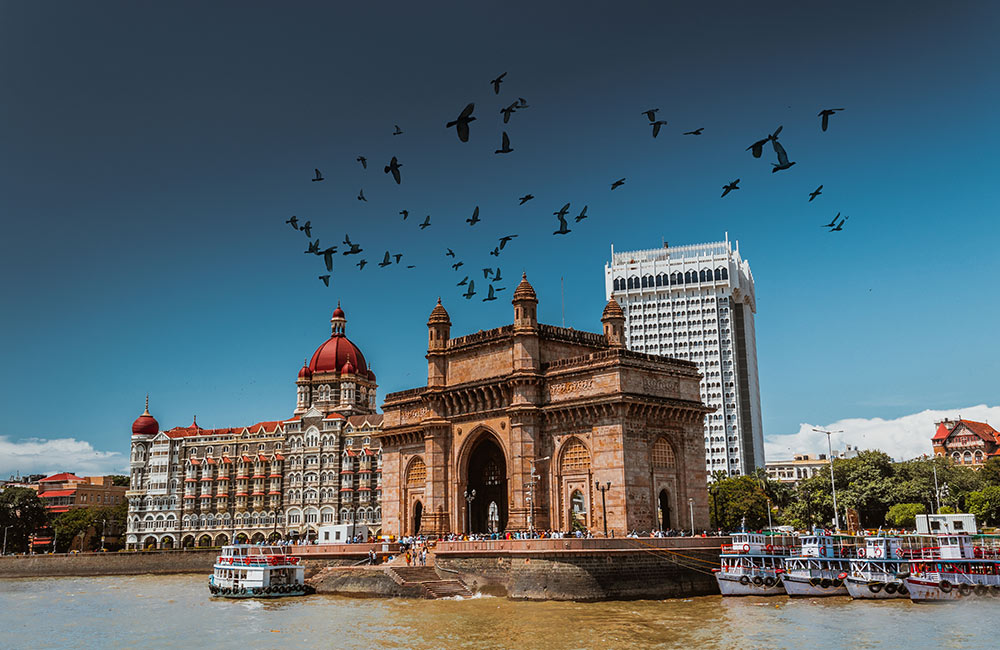
The upcoming diamond jubilee is an exercise in public relations insurance. By funding film festivals, academic exchanges between Mumbai University and St Petersburg State University, and joint maritime heritage exhibitions, both cities maintain a baseline of public familiarity. If an average citizen in Mumbai thinks of St Petersburg, they think of the Hermitage, classical literature, and historic architecture. If a citizen in St Petersburg thinks of Mumbai, they think of Bollywood, spices, and a bustling, warm-weather metropolis.
This mutual exoticism matters. It prevents public fatigue or hostility from taking root during geopolitical storms. Governments know that trade requires a permissive social environment. If the population views a partner nation with suspicion, commercial ties become politically toxic.
Yet, the cultural exchange masks a stark operational reality. The administrative machinery driving the 2027 celebrations is heavily staffed by trade attachés, logistics coordinators, and corporate sponsors whose primary business has nothing to do with art.
The Logistics Corridor Nobody Advertises
Look at a map of the International North-South Transport Corridor. The INSTC is the multi-modal network of ship, rail, and road route spanning 7,200 kilometers from St Petersburg to Mumbai, moving freight through Iran.
For years, this corridor was treated by Western analysts as a paper tiger—an ambitious pipe dream hobbled by sanctions, difficult terrain, and bureaucratic inertia. That dismissal was premature. The transit time between Russian Baltic ports and western Indian ports via this corridor has dropped significantly as investment poured into port facilities at Astrakhan and Chabahar.
Mumbai is the southern anchor of this trade route. St Petersburg is the northern crown.
When the Russian Consulate rolls out its diamond jubilee programs, it is projecting stability along a trade vector that bypasses Western maritime chokepoints entirely. Every container of fertilizers, chemical precursors, or metallurgical coal moving down this corridor represents a direct challenge to the unipolar economic order. The sister-city agreement provides the legal and municipal cover for regional chambers of commerce to negotiate deals that national ministries might find too politically volatile to handle directly.
The Friction Points of an Unequal Marriage
Diplomacy requires overlooking uncomfortable truths. The Mumbai-St Petersburg axis is not a partnership of equals; it is an arrangement dictated by stark asymmetries.
Russia needs India's immense consumer market, its pharmaceutical manufacturing capacity, and its diplomatic neutrality to absorb energy exports and supply chain goods. India needs discounted commodities, defense maintenance partnerships, and a hedge against a unipolar global economy that has historically weaponized financial infrastructure against developing nations.
However, the currency imbalance remains a severe operational headache. India runs a substantial trade deficit with Russia, fueled by massive oil imports. Finding productive ways for Russian exporters to spend accumulated Indian rupees without triggering capital control violations or violating international sanctions has forced banks in Mumbai to invent intricate, non-transparent clearing mechanisms.
Furthermore, local businesses in Mumbai report that obtaining visas and travel clearances for technical personnel traveling to St Petersburg remains bogged down by heavy bureaucracy on both ends. The romance of sister-city ties often crashes against the reality of consular backlogs and compliance checks.
What the Diamond Jubilee Actually Buys
Sixty years is an arbitrary milestone. Municipal authorities love round numbers because they justify marketing budgets and ministerial visits.
When the celebrations peak in 2027, expect grand speeches about centuries of shared friendship, despite the relationship actually being six decades old. Expect cultural troupes to dance in the heritage halls of South Mumbai, and expect Russian diplomats to toast the resilience of bilateral ties with imported Georgian wine or local spirits.
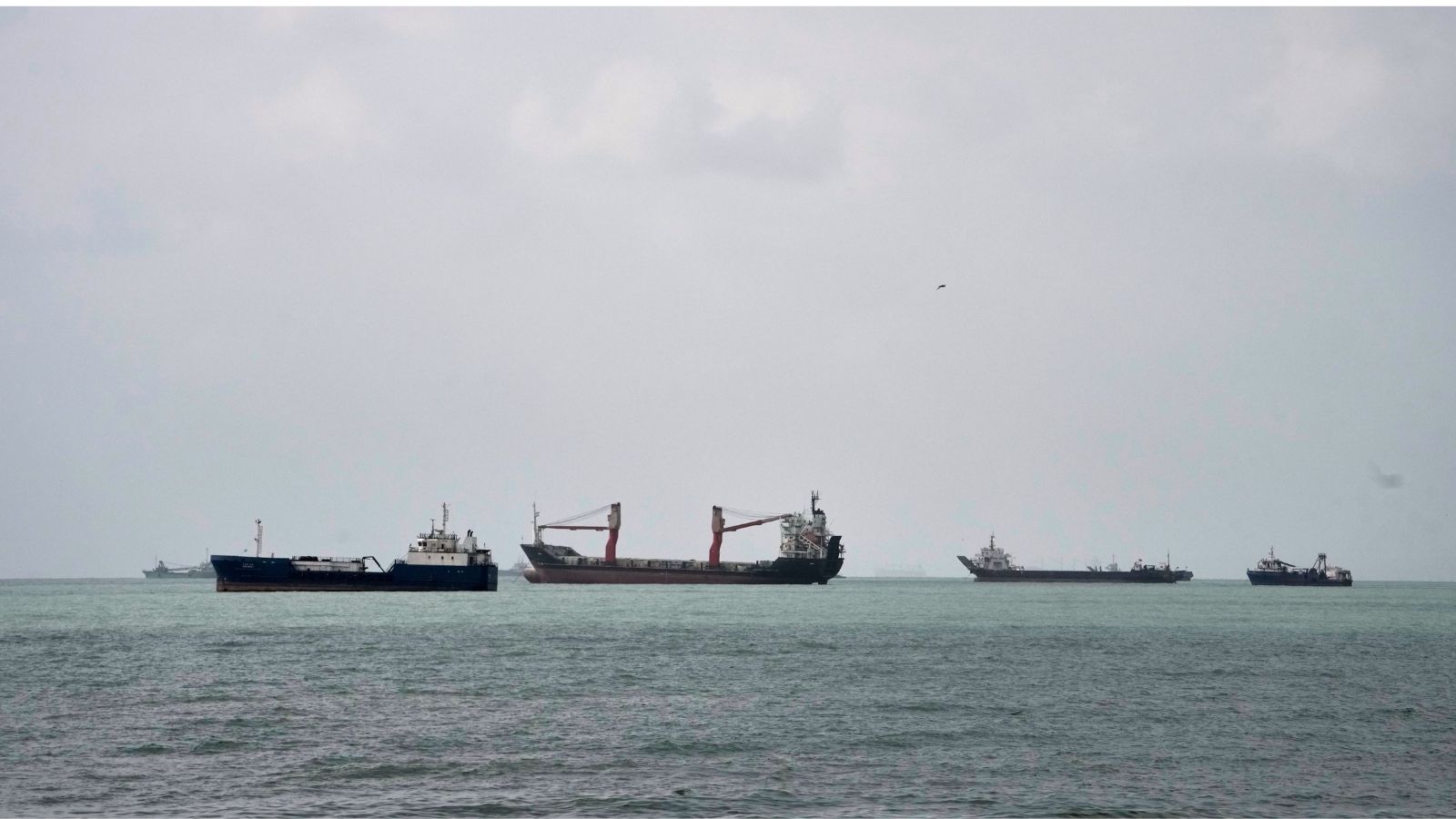
Do not mistake the pageantry for the substance. The real story of Mumbai and St Petersburg is written in the cargo manifests of container ships docking in the Arabian Sea after navigating through the Baltic and down through Eurasia. It is written in the ledger books of diamond merchants who learned decades ago that geopolitical weather changes overnight, but the demand for polished stones never stops.
The anniversary is simply a diplomatic screen, a high-gloss distraction designed to keep the cameras focused on ballet dancers while the real work of rewriting global trade corridors happens in the shadows just off the dock.