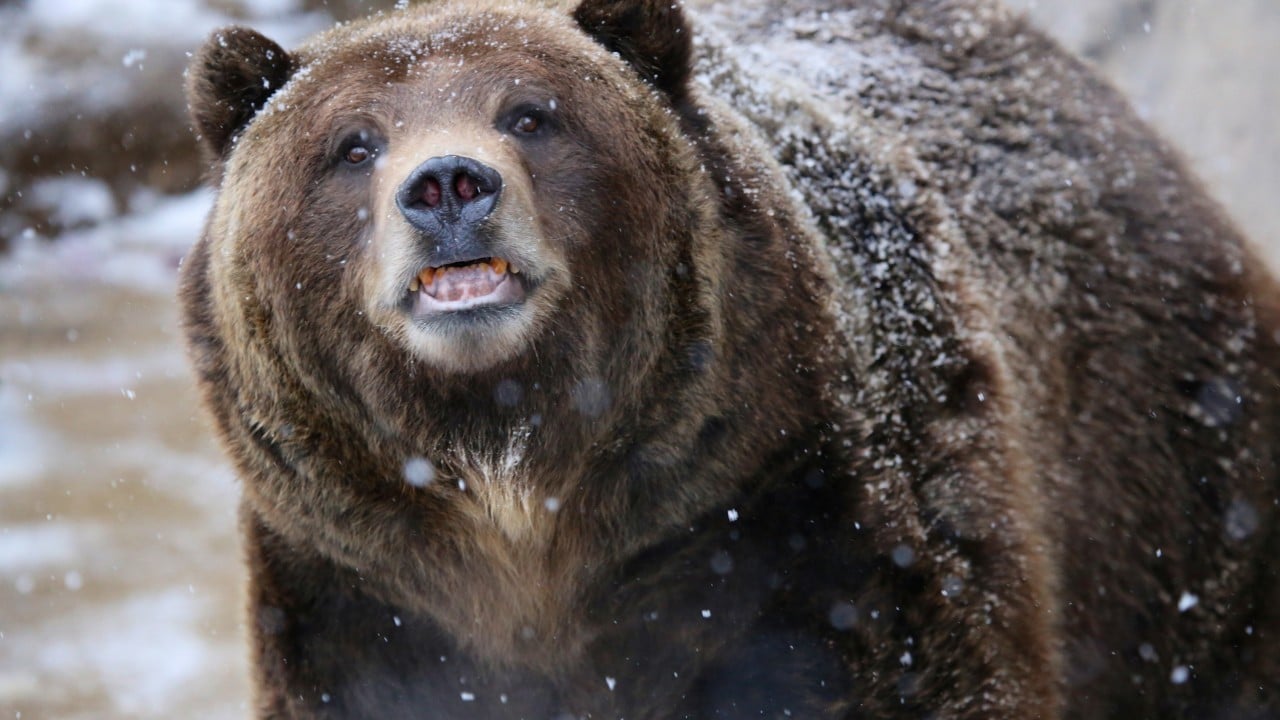
When Canadian conservation officers launch a hunt for multiple grizzly bears suspected of killing a mother and daughter, the operation is far more complex than a simple manhunt in the woods. It is an urgent, high-stakes forensic investigation designed to prevent repeat predation while avoiding the unnecessary destruction of innocent wildlife. Authorities must rapidly secure the attack site, extract biological evidence, set targeted live traps, and confirm genetic matches before the offending bears habituate to human food sources or wander deep into remote backcountry.
Most fatal bear encounters involve a single defensive animal startled at close range. A multi-bear fatality shifts the entire operational calculus for provincial wildlife agencies, signaling either a family group defending a shared carcass or a rare instance of coordinated predatory behavior.
The Anatomy of a Multi-Bear Fatality
Grizzly bears are solitary by nature. Adult males and lone females guard massive territories and generally avoid one another outside of the spring mating season or concentrated salmon runs. When investigators suspect multiple grizzlies in a single fatal attack on humans, two primary biological scenarios immediately move to the top of the behavioral profile.
The first and most common scenario involves a sow with subadult offspring. Female grizzlies keep their cubs for two to three years before driving them away. During that final year, the young bears are nearly as large as their mother, weighing hundreds of pounds, yet they still travel, forage, and react as a cohesive unit. If a hiker inadvertently steps between a mother and her subadults, or surprises them on a trail with poor visibility and loud ambient water noise, the mother initiates a defensive charge. The offspring, mimicking her behavior and driven by their own adrenaline, often join the assault.
The second scenario is far rarer and deeply concerning to wildlife managers—shared carcass defense or predatory conditioning. If two or three independent bears converge on a high-calorie food source, such as an ungulate kill or a human food cache, their tolerance for proximity increases temporarily while their aggression toward intruders spikes. If humans enter that immediate radius, multiple bears may react simultaneously to protect the prize.
Why Defensive Attacks Escalate
A defensive grizzly attack usually ends once the perceived threat stops moving. The bear neutralizes the danger and retreats. However, when multiple bears are involved, the dynamic changes.
The presence of other bears creates an arousal feedback loop. One bear's vocalizations, jaw-popping, and physical strikes stimulate the others to stay engaged longer than a solitary bear would. Furthermore, if the attack results in a fatality and the bears remain at the site, the encounter can cross a dangerous behavioral threshold from defensive aggression to food conditioning. Once a grizzly associates human remains or human gear with a calorie reward, wildlife agencies classify the animal as an extreme public safety threat that cannot be rehabilitated or relocated.
Inside the Conservation Officer Response
The moment a fatal attack is reported in Canadian wilderness—whether in the Rocky Mountain parks of Alberta, the interior valleys of British Columbia, or the northern territories—jurisdictional protocols lock into place. Conservation officers, park wardens, and RCMP officers establish a hard perimeter around the incident zone.
Speed is everything. Weather, scavengers, and natural decomposition degrade biological evidence within hours.
Securing the Perimeter and Area Closures
Authorities immediately issue emergency area closures spanning several kilometers around the attack site. These closures serve two distinct purposes:
- Public Safety: Bears that have killed humans often stay near the site for days, bedding down in thick timber within a few hundred meters to guard what they now perceive as territory or food.
- Scene Integrity: Foot traffic from searchers, media, or curious hikers contaminates track traps, destroys hair samples caught on brush, and pushes the target bears out of the drainage before capture teams can set snares.
Forensic Wildlife Investigation
Modern bear attack investigations mirror human homicide scenes. Conservation officers trained in wildlife human-attack response treat the immediate radius as a crime scene, documenting every broken branch, claw mark, and track impression before moving anything.
Investigators look for specific physical indicators to determine how many bears participated:
- Track Measurements: Officers measure front pad widths and claw-to-pad distances in mud or soft soil. A single adult female leaves one distinct set of dimensions, while accompanying yearlings or two-year-olds leave noticeably smaller, overlapping prints.
- Bite Radius and Wound Patterns: Forensic pathologists examine the spacing of canine punctures during post-mortem evaluations to distinguish between different jaw sizes.
- Scat and Hair Collection: Bears frequently defecate near a high-stress event or a feeding site. Officers collect scat samples and comb surrounding spruce boughs and deadfall for guard hairs complete with follicles.
The Capture and DNA Verification Protocol
Hunting down suspected bears in dense Canadian timber is grueling, methodical work. Officers do not simply hike into the bush and shoot the first grizzly they see. Killing the wrong bear leaves the actual offenders at large while needlessly removing a vital breeding animal from a threatened or sensitive ecosystem.
Culvert Traps and Aldrich Foot Snares
Capture teams rely on two primary tools deployed along game trails leading directly to the attack site.
Culvert traps are heavy-duty steel cylinders mounted on trailers or flown in by helicopter. Baited with strong-smelling attractants, they safely contain a bear without injuring it, allowing officers to tranquilize and examine the animal up close.
When terrain is too steep or wooded for bulky trailers, officers deploy Aldrich foot snares. These spring-activated cable loops are hidden in shallow dirt depressions along natural travel corridors and anchored to sturdy trees. When a bear steps into the set, the cable tightens around its lower leg, holding it securely until the response team arrives—usually within hours, monitored remotely via satellite trap transmitters.
Genetic Matching Under Pressure
Once a bear is captured, officers immobilize it with darted anesthetics and take blood, tissue, and hair samples. These samples are rushed to specialized wildlife genetics laboratories, often operated by provincial governments or partner universities.
Lab technicians extract DNA to build a genetic profile and compare it directly against biological material recovered from the victims' clothing, wounds, or the immediate attack scene.
This process creates an agonizing operational bottleneck. DNA extraction and profiling typically take 24 to 72 hours under emergency rush protocols. During that window, captured bears must be held safely in containment facilities or monitored closely. If the DNA matches the crime scene, the bear is euthanized immediately to eliminate the threat to the public. If the genetic profile comes back negative, the bear is fitted with an ear tag, sometimes a GPS collar, and released back into the wild far from populated trails.
The Structural Pressures Driving Backcountry Encounters
To understand why these devastating incidents occur across Canada, you have to look beyond the individual trail and examine broader ecological and demographic shifts. Fatal grizzly attacks remain statistically rare—averaging only a few cases per decade across North America—yet the friction points between humans and bears are expanding rapidly.
The Recreation Boom
Over the past decade, backcountry recreation in western Canada has surged. Trail running, mountain biking, backcountry skiing, and off-trail hiking bring millions of people into prime grizzly habitat every year.
Speed and silence are the primary culprits in surprise encounters. Unlike traditional hikers talking loudly at a slow pace, trail runners and mountain bikers move fast and quietly through dense brush. A bear resting near a creek bed has seconds to react when a human rounds a blind corner at fifteen miles per hour. When a sow with older cubs is startled at ten paces, her defensive instinct triggers before she has time to identify the intruder and retreat.
Habitat Compression and Food Scarcity
Grizzly bears operate on a strict caloric budget. They must consume massive quantities of calories between spring emergence and fall denning to survive winter hibernation and, for females, to sustain pregnancy and lactation.
In years when natural food crops fail—such as a late frost wiping out buffaloberry or huckleberry bushes, or a collapse in regional salmon runs—grizzlies become desperate. Hungry bears travel lower into valley bottoms, linger closer to campgrounds and hiking trails, and become far more defensive over whatever meager food sources they manage to find.
Simultaneously, expanding rural subdivisions, logging roads, and resource extraction networks carve up intact wilderness. Roads act as high-speed travel corridors for both bears and humans, funneling them into the exact same narrow valleys.
The Policy Debate Over Lethal Removal vs. Relocation
Every time Canadian authorities announce a hunt for a grizzly bear involved in a fatal attack, a predictable public debate erupts. Animal welfare advocates often plead for the bears to be relocated to remote wilderness rather than destroyed, arguing that the animals were simply acting on natural instincts in their own home.
Wildlife biologists and conservation officers almost universally reject relocation for bears involved in human fatalities, and their reasoning is grounded in decades of hard data.
Why Relocation Fails
Grizzly bears possess extraordinary homing instincts. Studies across Alberta, British Columbia, and Montana have repeatedly shown that translocated grizzlies frequently travel hundreds of kilometers across mountain ranges and rivers to return to their original home ranges within weeks.
More importantly, moving a bear that has already killed or fed on a human does not erase that learned behavior. It simply exports a high-risk animal into a new drainage where unsuspecting campers or hikers have no warning. Furthermore, prime grizzly habitat in Canada is already occupied by resident bears. Dropping a newly relocated bear into an established territory forces violent territorial fights, often pushing the displaced bear toward human settlements and farms in search of uncontested space.
The Nuance of Subadult Offspring
The sharpest ethical and scientific gray area arises when a mother grizzly with two-year-old cubs kills a human.
If DNA evidence proves the mother initiated the attack and fed on the victims, she is euthanized without question. The fate of her subadult offspring is far less clear-cut. Biologists must assess how deeply the young bears participated in the violence and whether they consumed human tissue.
- Active Participants: If forensic evidence shows the subadults actively mauled the victims or fed alongside the mother, agencies generally euthanize the entire family group, operating on the principle that the cubs have already learned that humans are a viable target.
- Passive Bystanders: If the cubs stayed back in the timber and played no role in the fatality, wildlife managers occasionally attempt to relocate them to deep backcountry or place them in accredited wildlife sanctuaries, though finding facilities equipped to house adult grizzlies for thirty years is notoriously difficult.
What Investigators Need From the Public
When a multi-bear hunt is underway, public cooperation directly determines whether officers catch the right animals before another tragedy occurs. Interfering with closed zones or withholding sighting reports delays trap placement and allows bears to disperse across vast mountain ranges.
Hikers and rural residents near an active investigation zone must follow strict protocols to assist response teams:
- Respect Hard Closures: Crossing yellow tape or bypassing trailhead barricades puts searchers at risk and forces officers to pull personnel off trap lines to conduct unnecessary rescues.
- Report All Bear Activity Immediately: Even a distant sighting of a sow with older cubs several valleys away helps biologists map travel corridors and adjust snare locations.
- Eliminate Attractants: Unsecured garbage, pet food, bird feeders, and livestock carcasses draw stressed or traveling bears toward rural homes, turning a backcountry investigation into a residential emergency.
Conservation officers operating in these situations carry the weight of preventing a second fatality while upholding strict scientific standards in the field. Until the traps spring and the laboratory confirms the genetic profiles, every drainage in the closure zone remains an active, unpredictable frontier where human error and wild instinct collide.