The Cold Case of the Seven AM Rush
Fluorescent lights hum a low, abrasive C-sharp before the sun even clears the brick storefronts of Main Street.
By six-thirty, the air inside the neighborhood deli smells of damp cardboard, sharp mustard seed, and the unmistakable, sweet iron tang of freshly sliced pastrami. It is an honest smell. It belongs to people who wake up in the dark so others can eat in the daylight.
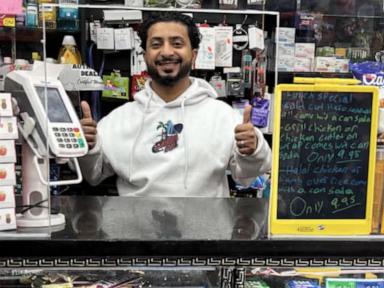
Behind the counter stands Arthur. He is fifty-four years old, built like a fire hydrant, with forearms crosshatched by faint white scars from errant slicer blades and hot oven racks. He has worked this glass case for nearly three decades. He knows the weight of a quarter-pound of turkey down to a single feather of meat. He knows which regular wants their rye toasted until it threatens to crumble.
More importantly, he knows the exact second the morning air turns sour.
It happens around seven-fifteen. That is when the heavy glass front door swings open to let in the first wave of teenagers. They trail in like stray cats, dragging heavy backpacks that look packed with lead weights and shattered dreams. Their eyes are glued to glowing rectangles of glass in their palms. They shuffle. They slouch. They carry the crushing, invisible weight of adolescence into a room that smells like cured pork.
Most adults ignore them. Business owners tap their watches or sigh when a kid takes thirty seconds to decide between a bottle of apple juice and chocolate milk. Time is money, after all. Inventory must move. The queue must flow.
Arthur does not look at his watch. He looks at their shoulders.
When a kid walks in with their chin tucked so deep into their hoodie collar that they seem to be searching for their own spine, Arthur stops wiping the stainless steel counter. He puts the rag down.
"Rough night in the trenches of algebra?" he asks.
The kid stops. Usually, they blink, surprised to find themselves perceived as human beings rather than walking obstacles to a morning coffee sale.
"Trigonometry," a sophomore named Leo mumbles one damp Tuesday morning, staring hard at the rubber mat beneath his sneakers. "I missed every single practice question. I'm going to fail the midterm."
Arthur reaches for a sheet of pink butcher paper. He does not grab the cheap kind that tears if you look at it wrong. He uses the heavy-duty stock, the kind meant to wrap a side of beef. With a black grease pencil, he writes in bold, slanting capital letters across the paper: THE TRIANGLE CANNOT DEFEAT YOU, LEO. YOU BUILT A LOG CABIN IN SCOUT CAMP. YOU CAN HANDLE A HYPOTENUSE.
He wraps a warm, grease-stained bacon-egg-and-cheese in that paper, slides it across the scarred laminate counter, and taps the top of the package twice with his knuckles.
"Eat up," Arthur says, his voice gravel rolling over smooth river stones. "And tell Mrs. Gable she’s wrong about your proofs. You just look at shapes differently."
Leo takes the sandwich. The corners of his mouth twitch upward, just an inch, fighting a smile he cannot quite suppress. The slouch vanishes. His spine remembers how to hold up a human head. He walks out the door into the gray morning not as a failure, but as someone who has just been seen.
The Anatomy of Small Encouragement
We spend billions of dollars on institutional education reforms. We debate curriculum standards, school funding formulas, screen time limits, and standardized testing metrics in air-conditioned boardrooms. We treat child development like an engineering problem, something that can be optimized with software or corrected with policy tweaks.
We forget about the butcher.
We forget about the crossing guard, the barista, the librarian, and the deli manager. We forget that human beings do not run on data points. They run on momentum. And momentum is often supplied by people who have no professional obligation to care.
Consider what happens next in a teenager's brain when an authority figure outside their immediate family or school system validates their existence. Neurologically, it triggers a disruption in the default mode network. The chronic, low-grade stress of teenage isolation—that pervasive, modern feeling of screaming into a void where nobody answers—hits a brick wall.
Psychologists call this developmental asset building. Arthur calls it doing his job.
"People think kids are fragile," Arthur tells me later, leaning against the slicer while the morning lull gives him five minutes to breathe. "They aren't fragile. They're brittle. There's a big difference. Brittle things snap because they're dry. They haven't had anything nourishing soak in for a while. You give them a little moisture, a little heat, and suddenly they bend again."
He is not a trained therapist. He dropped out of community college in his early twenties to help his uncle run this very shop. He reads history paperbacks behind the counter when the lunch rush clears, but his primary textbook has been human nature, observed one sandwich at a time across thirty years of counter service.
He has watched generations grow up. He has handed breakfast to terrified middle schoolers who later came back in tailored suits to buy catering platters for corporate law firms. He has watched kids whose parents were going through bitter divorces find an anchor in a ten-word note scrawled on a sheet of butcher paper.
One former customer, now a pediatric nurse in Chicago, still keeps a collection of Arthur’s old sandwich wrappers taped inside her kitchen cabinet. One of them, written during her senior year chemistry finals, reads: ELEMENTS CHANGE FORM UNDER HEAT, SARAH. SO DO YOU. KEEP COOKING.
The Invisible Stakes of the Morning Routine
We live in a culture obsessed with scale. If an act of kindness cannot be measured, monetized, or broadcast to millions of followers on a digital platform, we tend to dismiss it as a nice little hobby, a quaint footnote to the real business of living.
That is a catastrophic mistake.
The real business of living happens in the margins. It happens in the three minutes a teenager spends waiting for a toasted bagel. Those three minutes are a psychological crucible. In that brief window, a young person decides whether today is worth fighting for or whether they should just coast through the hours like a ghost.
Think back to your own high school mornings. Remember the specific brand of dread that came with walking through heavy double doors into a building full of social landmines, academic pressures, and the exhausting performance of simply figuring out who you are.
Now imagine stepping out of that house, walking into a local deli, and finding someone who doesn't grade you, doesn't judge your clothes, and doesn't care about your GPA—yet actively chooses to invest their attention in your success.
That is not just customer service. That is an intervention disguised as breakfast.
Arthur’s approach runs counter to almost every modern impulse of efficiency. In an era dominated by automated kiosks, app-based ordering, and frictionless, human-free retail transactions where you scan your own barcode and avoid eye contact with anyone, Arthur represents a radical resistance.
He introduces friction. Beautiful, messy, human friction.
When you order a turkey club from Arthur, you cannot hide behind a touchscreen. You have to speak. You have to look someone in the eye. You have to stand there while he sizes you up with affection and humor. And if you are lucky, if you are carrying something heavy that morning, you walk out with more than just breakfast. You walk out lighter.
The Weight We Carry
There is an economic argument to be made here, though it sounds cold when spoken aloud. Communities that retain local institutions—independent shops, corner stores, neighborhood gathering places—routinely report higher social trust indices. When kids interact regularly with working-class adults who know their names, juvenile delinquency rates drop. Civic engagement rises.
But numbers miss the poetry.
The poetry is in the grease pencil. It is in the way Arthur’s shoulders drop when he sees a kid’s face clear up after a well-placed joke about burnt toast or forgotten gym clothes.
We talk endlessly about mental health crises among the young, searching high and low for complex digital solutions to an epidemic of loneliness. Yet the remedy has always been sitting right there behind the glass case, wiping down the laminate, waiting for the bell above the door to ring.
The bell rings again.
It is a cold Thursday. A girl with damp hair and a blue marching band jacket steps inside, shivering from the autumn wind. She looks at the floor. She pulls her jacket tighter around her chest.
Arthur doesn't wait for her to speak. He reaches for the brown mustard, pulls a fresh sheet of butcher paper toward him, and uncaps his black grease pencil.