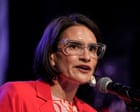
Minnesota Lieutenant Governor Peggy Flanagan secured a decisive victory in the state's Democratic primary for the United States Senate, sweeping past Representative Angie Craig by capitalizing on a white-hot wave of grassroots anger directed at federal immigration enforcement. The primary contest, necessitated by the retirement of Senator Tina Smith, exposed a deep ideological fault line within the Democratic Party. It pitted a stalwart progressive organizer against a battle-tested centrist in a battle that was decided less by traditional party machinery and more by the raw scars of a militarized federal intervention.
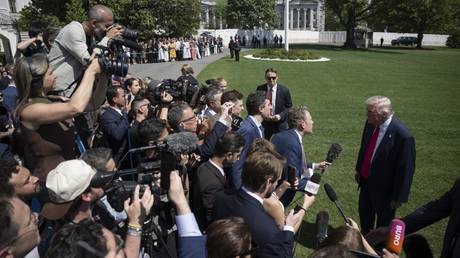
To understand how Flanagan turned a conventional primary into a blowout, one must look back at the early months of the year. Operation Metro Surge transformed the Twin Cities and surrounding regions into a staging ground for federal agents. Thousands of immigration enforcement officers flooded the state, executing a crackdown that left two residents dead, hundreds deported, and local communities in structural shock. The shockwaves of that operation did not dissipate; they hardened into political ammunition. Voters demanded accountability and a line in the sand, punishing candidates perceived as accommodating the apparatus that carried out the raids.
Craig, a four-term congresswoman representing a purple suburban district, found herself on the wrong side of that collective grief. Her past vote for the Laken Riley Act—a federal measure mandating the detention of undocumented immigrants accused of local crimes—became an insurmountable anchor around her campaign. Even though Craig publicly expressed regret for that vote, the damage was done. The electorate had no appetite for retroactive apologies. Flanagan seized the opening, framing the vote not as a simple legislative misstep, but as a symptom of a timid centrist establishment willing to compromise fundamental human rights for the sake of political triangulation.
The primary dynamic quickly devolved into an ideological proxy war. National progressive heavyweights, including Senators Bernie Sanders and Elizabeth Warren, threw their weight behind Flanagan, marshaling an anti-establishment coalition that argued the party needed fighters, not managers. On the other side, Craig amassed significant financial backing and support from moderate factions, attempting to paint Flanagan as vulnerable due to lingering fallout from state social service scandals that had previously hobbled Governor Tim Walz.
Yet, the traditional rules of political gravity failed to hold. Millions of dollars in outside spending poured into the state, attempting to blunt Flanagan's momentum with digital and television ad blitzes. It was not enough. When the ballots were tallied, Flanagan captured nearly fifty-nine percent of the vote, a margin that surprised even seasoned observers who expected a tighter race.
This outcome signals a broader tactical shift for the left. For years, conventional wisdom dictated that statewide candidates must tack hard to the center to survive a general election environment, treating progressive energy as a liability in suburban battlegrounds. Minnesota's primary flipped that script entirely. Flanagan ran openly as an organizer, leaning into systemic critiques rather than defensive posturing. She argued that Democratic consultants consistently misread the room by asking what they can safely win instead of what fights are worth picking.
The stakes now shift to November. Flanagan will face Republican nominee Michele Tafoya, a former network sports broadcaster, in a general election where the historic nature of the race will take center stage. If victorious, Flanagan will shatter a long-standing barrier, becoming the first Native American woman to serve in the United States Senate.
Minnesota has long cultivated a reputation as an island of pragmatic, midwestern progressivism, but the ground beneath those institutions has shifted. The old guard can no longer rely on institutional inertia or cautious moderation to carry the day when local streets have borne the brunt of federal overreach. The primary electorate made it clear that caution is viewed as complicity. Whether this blueprint can be successfully exported to other battlegrounds remains to be seen, but in the North Star State, the mandate belongs entirely to the insurgents.