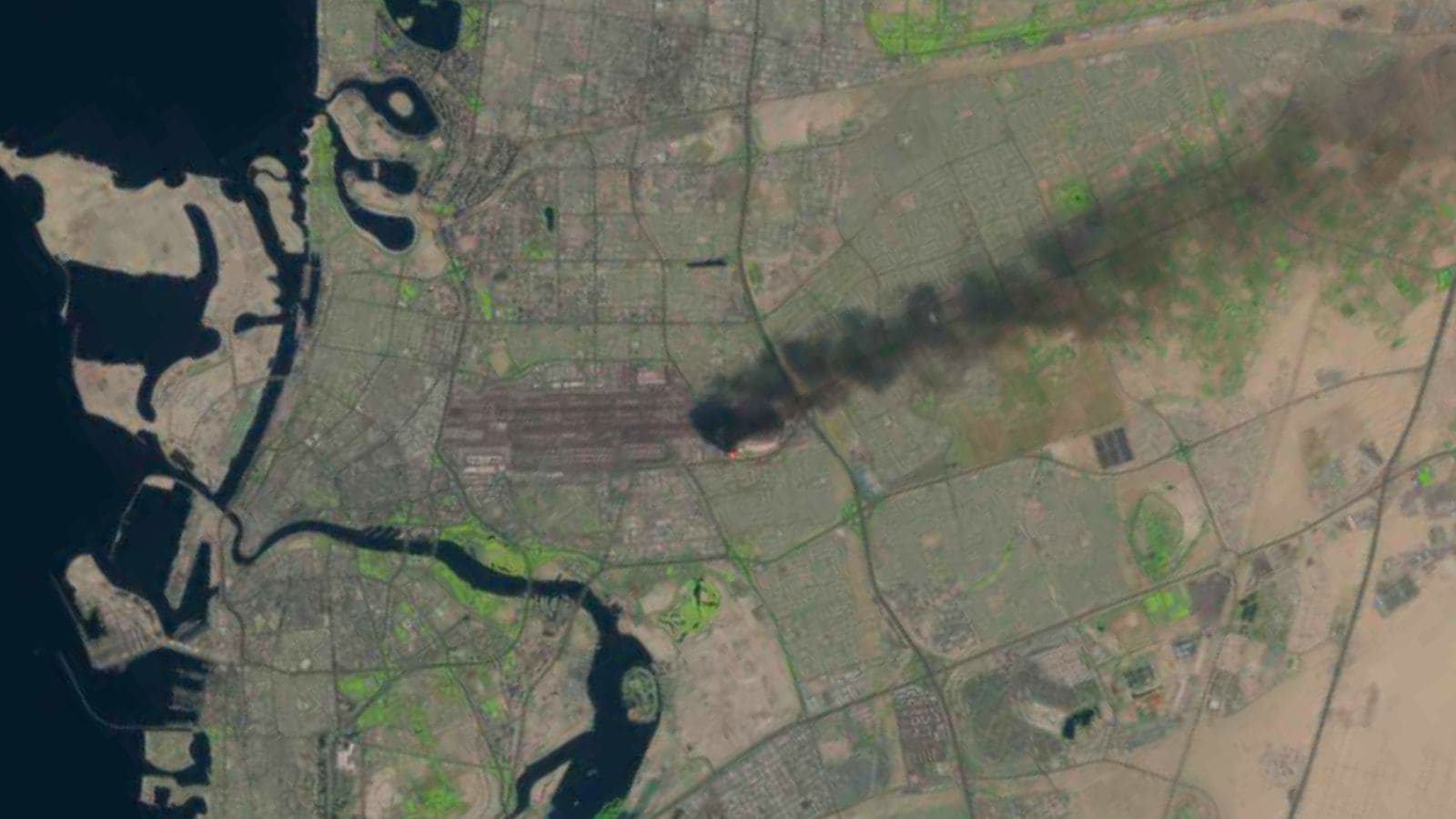
The headlines are screaming about a disaster. They want you to believe the global energy supply is hanging by a thread because a few drones found a target at Kuwait’s Mina Al-Ahmadi refinery. They talk about "volatility" and "supply shocks" as if we are still living in the 1970s.
They are wrong.
If you’re watching the smoke plumes and waiting for the world economy to stall, you’ve fundamentally misunderstood how modern energy infrastructure works. The panic is a product of lazy journalism and a failure to grasp the sheer redundancy built into the Gulf’s oil apparatus. This isn't a story about vulnerability. It is a story about why the "fragility" narrative is a myth sold to keep oil futures high.
The Myth of the Single Point of Failure
The common consensus is that a hit on a major refinery like Mina Al-Ahmadi—one of the largest in the world—is a catastrophic blow to the Kuwait National Petroleum Company (KNPC) and, by extension, your gas tank. This assumes our energy grid is a brittle glass sculpture.
In reality, it’s a hydra.
Mina Al-Ahmadi is an aging giant that has been undergoing massive upgrades via the Clean Fuels Project. When a fire breaks out in a sulfur-processing unit or a specific distillation column, the media treats it like the heart has stopped. I’ve spent enough time around midstream operations to tell you: it’s more like a bruised finger on a heavyweight boxer.
Modern refineries are designed for "segmented isolation." You can have a localized inferno in one unit while the rest of the facility continues to pump, blend, and export. The "live updates" you’re reading focus on the flames because flames make for good television. They ignore the automated bypass valves and the strategic reserves that make the actual market impact negligible.
Drones Are the New Cost of Doing Business
We need to stop acting surprised when drones hit infrastructure in the Middle East. Geopolitical risk isn't an "event" anymore; it’s a constant variable.
The shock value of drone warfare has plateaued. From a technical standpoint, the damage caused by a small-scale drone strike on a hardened industrial site is often superficial compared to the operational capacity of the plant. A refinery is a forest of steel, concrete, and fire-suppression systems. Unless a strike hits a critical "black start" component or the main control hub—which are shielded better than most bank vaults—the downtime is measured in days, not months.
The "lazy consensus" says this proves we are defenseless. The truth? This proves that the defense is in the redundancy. Kuwait has spent billions ensuring that if Ahmadi stumbles, Mina Abdullah can pick up the slack. These facilities are twin engines on a 747. One can catch fire, and the plane still stays in the air.
The Hidden Math of the Refining Margin
Let’s look at the numbers the pundits ignore. Refining margins are currently dictated more by global demand shifts and European industrial slowing than by a localized fire in Kuwait.
If you calculate the lost throughput from a temporary shutdown of a few units at Ahmadi, you’re looking at a drop in the bucket of the $100$ million barrels produced globally every day.
$$(Production_{global} - Loss_{Ahmadi}) \approx Production_{global}$$
The math simply doesn’t support a price spike. Any upward movement in Brent or WTI following this news is purely psychological—traders exploiting the ignorance of the masses. I’ve seen desks rake in millions by "pricing in" a disaster that never actually impacts the physical delivery of a single barrel of crude.
Stop Asking if the Supply is Safe
The most common question on search engines right now is: "Will the Kuwait fire raise gas prices?"
This is the wrong question. It’s built on the flawed premise that physical supply at the source dictates the price at your local station. It doesn't. Logistics, taxes, and speculative hedging do.
The real question you should ask is: "Why are we still surprised by the resilience of the fossil fuel supply chain?"
Every time there is a fire, a strike, or a blockade, the "experts" predict a collapse. And every time, the system recalibrates in hours. We have built a world that is terrifyingly good at moving carbon. To think a few drones can dismantle that overnight is to underestimate forty years of engineering specifically designed to survive exactly this scenario.
The Ethics of the Panic Cycle
There is a dark irony in the way we report these events. By overhyping the "crisis," the media actually assists the attackers. If the goal of a drone strike is to cause economic disruption, the disruption isn't caused by the fire—it’s caused by the reaction to the fire.
When news outlets blast "LIVE UPDATES" in red text over footage of black smoke, they are doing the PR work for whoever launched the drones. They create the volatility that wouldn't exist if we simply looked at the data.
I’ve sat in boardrooms where the response to these "disasters" is a shrug and a shift in the shipping schedule. The engineers on the ground aren't panicking; they’re following a manual written for this exact Tuesday.
The Hard Truth About Energy Transition
If you want to find a real threat to Kuwait’s energy dominance, don't look at drones. Look at the efficiency of the Clean Fuels Project itself. The irony is that the more "efficient" and "clean" these refineries become, the more complex their internal systems grow.
Complexity is the real enemy, not external attacks. A fire in a traditional atmospheric distillation unit is easy to manage. A fire in a high-tech, integrated hydrocracker with proprietary catalysts? That’s where the costs pile up.
But even then, the global market is oversupplied with refining capacity in the East. If Kuwait goes offline for a week, refineries in India and China are more than happy to fill the void. The world is not running out of oil, and it certainly isn't running out of ways to process it.
Your Action Plan for the Next "Crisis"
- Ignore the first 24 hours of reporting. It’s almost entirely guesswork based on social media videos.
- Check the VLCC (Very Large Crude Carrier) tracking data. If the ships are still moving, the "crisis" is a ghost.
- Watch the spreads. Look at the difference between spot prices and futures. If the spread isn't widening aggressively, the professionals aren't worried. You shouldn't be either.
- Accept that "Safe" is a relative term. In the energy sector, "safe" doesn't mean "nothing ever blows up." It means "when things blow up, the system handles it."
We are living through an era of unprecedented industrial durability. The Mina Al-Ahmadi fire isn't a warning sign of a collapsing order. It’s a boring, predictable data point in a world that has already priced in the chaos.
The smoke will clear. The units will be repaired. The oil will flow.
Stop buying into the theater of fragility. High-octane panic is just another product these refineries produce, and business is booming.
Stop looking at the fire. Look at the pipes that aren't burning. That’s where the power is.