Two dollar steak.
That is where the legend started, long before the roaches crawled across a live camera feed, long before the dead rat alarm clock became internet folklore, and long before a broadcast of Grand Theft Auto VI with his girlfriend Kaise dragged the whole messy spectacle back into the spotlight.
For years, Zack Hoyt—known to millions on Twitch and YouTube simply as Asmongold—built an empire out of Austin, Texas, without ever bothering to clean his bedroom. While his peers in the upper echelon of livestreaming bought glass-walled mansions in Los Angeles, leased matte-black supercars, and hired personal chefs to plate organic salmon, Zack stayed put. He remained in the house he grew up in. He drank two-liter bottles of soda straight from the plastic. He let empty fast-food wrappers accumulate on his desk until they formed a geological strata of grease and cardboard.
And then came the GTA 6 stream.
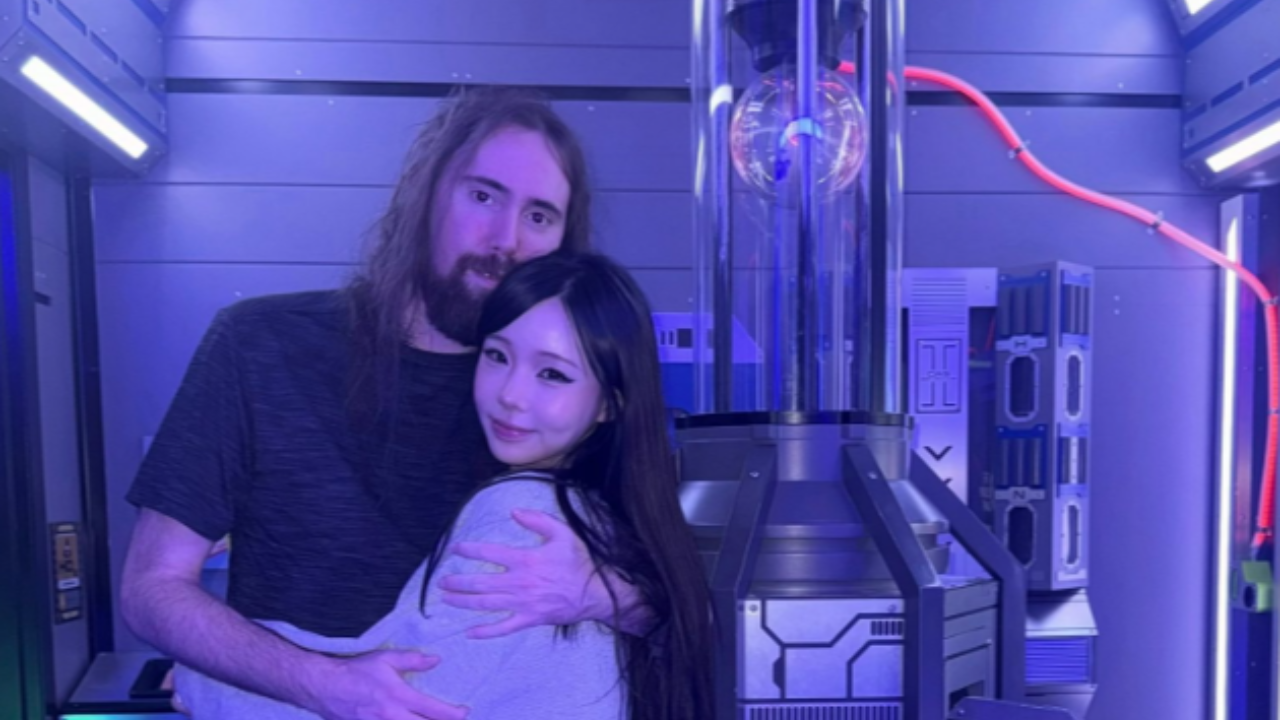
Picture the scene. Millions of gamers around the world are glued to their monitors, starving for every frame of Rockstar’s long-awaited return to Vice City. On screen, the neon-drenched streets of Leonida shimmer with hyper-realistic fidelity, every puddle reflecting palm trees and tail lights in breathtaking detail. In the corner of the screen sits Asmongold, accompanied by his girlfriend, Kaise. The contrast between the virtual world and the physical room behind him was violent. As the camera shifted slightly, catching the familiar, chaotic backdrop of Zack’s home—the stained walls, the towering piles of forgotten clutter, the unmistakable aura of domestic neglect—the chat exploded.
Within minutes, clips were circulating across X, Reddit, and TikTok. The internet had found its favorite punching bag again. How could a man with an estimated net worth well into the millions, sitting beside a partner during one of the biggest gaming events of the decade, still live like a broke college freshman who gave up on laundry in October?
To understand why this keeps happening—and why the internet’s reaction reveals far more about us than it does about Zack—you have to look past the trash bags. You have to look at the ghost in the floorboards.
The Architecture of Grief
I remember the first time I walked into a house that had stopped moving forward in time. It wasn’t a celebrity’s mansion. It was my uncle’s split-level home in Ohio, six months after my aunt passed away.
On the surface, it looked like simple laziness. Mail sat unopened in yellowed stacks on the kitchen island. Dishes from three different seasons occupied the sink. A broken toaster sat next to a brand-new toaster, because throwing the old one away required a decision he didn't have the emotional bandwidth to make. Visitors whispered about hygiene. They offered unsolicited advice about hiring a maid. What they failed to grasp was that every object in that house wasn't just clutter—it was an anchor holding him to the last version of his life that made sense.
Consider this analogy: imagine your mind is a high-performance computer running twenty-four hours a day in front of fifty thousand strangers. Every micro-expression is clipped. Every opinion is dissected. Every hesitation is mocked. Now imagine that the hard drive containing your entire personal life—your childhood, your safety net, your primary caregiver—suffers a catastrophic crash.
For Zack Hoyt, that crash happened in October 2021, when his mother passed away.
Anyone who followed Asmongold long before the GTA 6 hype knows that his mother wasn't just a background figure; she was his world. They lived together in that Austin house for decades. When she fell ill, Zack became her primary caregiver, navigating oxygen tanks, hospital visits, and the slow, agonizing erosion of the only person who truly knew him before the algorithms found his name.
When she died, the house didn't just lose a resident. It froze.
To clean that room, to tear down the stained drywall, to throw away the broken furniture and hire a crew to sanitize the carpets, isn't a weekend chore for someone carrying that kind of weight. It is an act of demolition. It requires acknowledging that the past is permanently over. So instead, you leave the cups on the desk. You step over the boxes. You turn on the microphone, boot up a video game, and retreat into a digital space where the rules are clear, the objectives are measurable, and nothing you love can unexpectedly die on a Tuesday afternoon.
The Virtual Mansion vs. The Real Attic
Let’s look at what actually unfolded during that GTA 6 broadcast with Kaise, because the internet’s game of telephone tends to distort the frame.
When Zack and Kaise went live, the intention was pure entertainment. Grand Theft Auto VI represents the pinnacle of modern escapism—a multi-billion-dollar digital playground where players can inhabit spotless penthouses, drive pristine sports cars, and command entire criminal empires from the comfort of a gaming chair. Having Kaise on stream added a rare personal warmth to Zack’s normally solitary, cynical broadcast style. Viewers watched them banter, react to the chaotic physics of Vice City, and share genuine moments of excitement.
Yet the human eye is trained to hunt for incongruity.
As the camera angle widened or shifted during the session, eagle-eyed viewers zeroed in on the background. There were the familiar hallmarks of the Asmongold aesthetic: dark, cluttered corners, unwashed surfaces, and the general impression of a space that hadn't seen a vacuum cleaner since the Obama administration.
Social media reacted with predictable fury and fascination. Comment sections split instantly into two warring tribes:
- The Disgusted Realists: Viewers who pointed out that basic sanitation is a non-negotiable adult responsibility, especially when you have millions of dollars in the bank and a partner sharing the space with you. To them, living in squalor by choice isn't quirky; it is a public health hazard and a failure of basic self-respect.
- The Cynical Defenders: Longtime fans who argued that Zack’s refusal to change his environment is the exact reason he remains relatable. In an era where every mid-tier influencer fakes a luxury lifestyle on rented private jets, Asmongold’s unfiltered decay feels weirdly honest.
Both sides missed the point.
Think of a hypothetical viewer named Marcus. Marcus is twenty-six, works forty-five hours a week at a logistics warehouse, and comes home to a cramped studio apartment where the sink drips and the rent just went up by two hundred dollars. When Marcus logs onto Twitch, he watches multi-millionaire streamers complain about their private chefs or show off seventy-thousand-dollar watches. He feels alienated. Then he clicks on Asmongold. He sees a guy worth millions eating cheap steak off a paper plate in a room that looks worse than Marcus’s worst depressive episode.
For Marcus, Zack’s messy house isn't an eyesore. It is a sedative. It whispers a comforting lie: Money doesn't actually change anything. You don't have to grow up. Look, he has everything, and he still lives like this.
The Economics of Authenticity
If you think Asmongold’s living situation is purely a personal quirk, you haven't been paying attention to the business of modern attention.
In the creator economy, perfection has become a liability. Five years ago, audiences craved aspiration. They wanted flawless lighting, curated bookshelves, and spotless minimalist desks. Today, audiences have developed an allergic reaction to polish. High production value smells like a sales pitch. When a creator sits in a studio designed by an interior architect, viewers subconsciously brace themselves for a sponsorship read or a merchandise drop.
Dirt, ironically, converts.
Every time a clip of Asmongold’s room goes viral—whether it’s a cockroach crawling up his shirt in 2019, a moldy cup on his desk in 2023, or a glimpse of clutter behind him and Kaise during a GTA 6 marathon—his metrics surge. Search volume spikes. Clips channels rack up millions of views. Mainstream gaming outlets publish breathless articles dissecting his domestic habits.
Consider the numbers behind the outrage. A standard gameplay stream might pull thirty to fifty thousand concurrent viewers. Add a viral controversy about his living conditions, and that audience doubles across secondary platforms within forty-eight hours. Algorithms do not distinguish between admiration and disgust; they only measure dwell time and comment velocity. A viewer typing "Bro, please hire a cleaner" generates the exact same engagement signal as a viewer typing "Best stream of the year."
Zack knows this. He has built an entire persona around radical, weaponized self-deprecation. By mocking his own hairline, his own diet, and his own house before anyone else can, he strips critics of their ammunition. You cannot shame a man who openly calls himself a goblin on live television.
Where the Joke Stops Being Funny
Still, there is a thin line between radical authenticity and slow-motion self-harm, and watching Kaise sit beside him during that broadcast forced many viewers to confront an uncomfortable question.
When you live alone, your habits belong strictly to you. If you want to sleep surrounded by empty soda bottles and eat cold fast food over a keyboard, the only person paying the physical price is the person in the chair.
Bring another human being into the frame, and the math changes.
Relationships are built on shared physical space. Even if Kaise doesn't live in the Austin house full-time, her presence on camera highlighted the stark collision between Zack’s isolated world and normal adult partnership. Viewers wondered aloud how someone navigates romance in a house famously plagued by pests, water damage, and decades of accumulated debris. Was she unfazed by it? Was she helping him slowly dig out from under it? Or was the camera simply catching the raw, unedited reality of two people who refuse to stage-manage their lives for internet approval?
I felt a strange knot in my stomach watching those clips circulate. Not disgust—at least, not the performative disgust flooding social media—but recognition.
Years ago, during the worst stretch of burnout in my twenties, I let my own apartment deteriorate until I stopped inviting friends over entirely. It started small. A missed trash day. A pile of laundry in the corner. A broken blind I never fixed. Within six months, the apartment became a physical mirror of my internal exhaustion. The worse the room looked, the less energy I had to fix it, and the more ashamed I felt whenever someone knocked on the door. When I finally met someone I cared about, the sheer terror of letting her step across my threshold forced me to spend three straight days filling contractor bags in the middle of the night.
That is the trap nobody talks about when they mock Asmongold.
The longer a mess sits, the heavier it becomes. It stops being a collection of physical objects and turns into a monument to your own inertia. You don't need millions of dollars to hire a cleaning crew; you need the psychological readiness to let strangers walk into your private sanctuary, touch your dead mother’s things, judge your failures, and haul your history away in a dumpster. For someone whose entire identity is rooted in control—controlling the narrative, controlling the stream, controlling his tiny corner of Texas—surrendering that space to outsiders feels less like cleaning and more like an invasion.
The Mirror We Refuse to Clean
Look closely at the fury surrounding the GTA 6 stream, and you will notice something strange. Nobody is actually angry about dust.
We live in a culture obsessed with curated illusions. Every day, millions of people scroll through feeds filled with filtered faces, staged living rooms, and hyper-optimized morning routines that bear zero resemblance to how real human beings actually live when the ring light turns off. We spend billions of dollars on self-improvement apps, minimalist storage bins, and aesthetic desk setups, hoping that if we organize the outside, the inside will finally stop feeling chaotic.
Then along comes Zack Hoyt.
He sits in front of a webcam with receding hair, a faded t-shirt, and a multi-million-dollar bank account, playing Grand Theft Auto VI with his girlfriend in a house that looks like it survived a hurricane. He refuses to perform wealth. He refuses to perform wellness. He refuses to pretend that success magically cures grief, executive dysfunction, or deep-seated habits formed over a lifetime.
And it drives people crazy.
Because if a guy can achieve the ultimate modern dream—wealth, fame, freedom from a nine-to-five grind, millions of loyal fans—and still struggle to throw away an empty Wendy’s bag, then maybe the scoreboard we’ve been worshiping is broken. Maybe money doesn't save you from yourself.
In Grand Theft Auto VI, players spend hours meticulously customizing their characters, upgrading their safe houses, and washing the blood and mud off their sports cars so they gleam under the Vice City streetlights. When the console turns off and the monitor fades to black, the room stays dark, the stacks of boxes remain against the wall, and the screen reflects only the person sitting in the chair.