The porcelain did not break. It merely rattled against the saucer, a sharp, rhythmic chatter that sounded entirely too loud in the dead of a Tehran night.
For those living near the Chardangeh district or the edges of Imam Khomeini International Airport, that subtle vibration was the first sign. Then came the sound. A low, thudding boom that traveled through the bedrock before it hit the air waves. In a city that has spent decades learning to read the subtle shifts in geopolitical barometers, a midnight explosion is never just an explosion. It is an unanswered question.
Windows rattled. Social media feeds, usually slowing to a crawl in the pre-dawn hours, instantly ignited with a flurry of blurred videos and panicked text. What was it? A pipeline malfunction? A drone strike? An industrial accident?
As the smoke cleared over the outskirts of the Iranian capital, the official explanations began to roll in, attributing the blast to a routine incident at a local industrial site. But in the modern Middle East, facts rarely exist in a vacuum. They exist in context. And the context of this specific night was unfolding more than a thousand miles away, in the quiet, coastal luxury of Muscat, Oman.
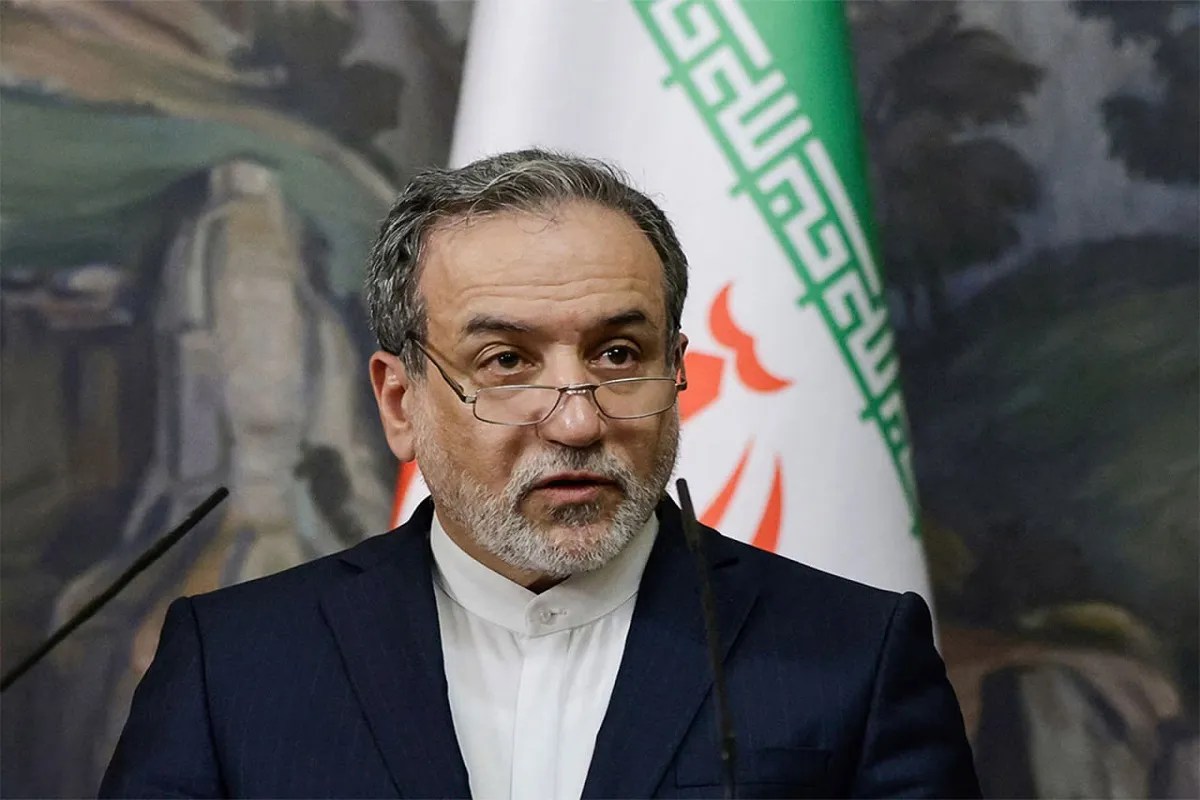
While Tehran caught its breath, a private aircraft touched down on the tarmac in Oman. Step down the stairs came Abbas Araghchi, Iran's veteran diplomat and foreign minister.
The contrast was stark, almost cinematic. In Tehran, the raw, chaotic anxiety of an unexplained detonation. In Muscat, the hushed, carpeted corridors of backchannel diplomacy. This is how modern brinkmanship functions. One hand holds the shield and watches the skies, while the other reaches out through trusted intermediaries to see if a catastrophic fire can still be prevented.
Oman has long played the role of the region's whisperer. It is the quiet room where enemies who cannot be seen talking in public sit down, drink cardamom coffee, and pass messages. Araghchi’s arrival in Muscat was not a casual diplomatic visit. It was an emergency valve release. With the region teetering on the edge of a wider war, the Iranian diplomat’s mission was clear: use Oman’s unique position to communicate with the West, specifically Washington, before the cycle of retaliation spins entirely out of control.
Consider the mechanics of a backchannel. When two nations lose direct diplomatic ties, they do not stop communicating; the communication simply becomes perilous. A message sent through a public press conference is loud, rigid, and prone to misinterpretation. A message sent through Muscat can be nuanced. It allows both sides to say what they cannot say out loud: This is our red line. This is where we can step back. This is what we need to save face.
Araghchi knows this dance better than most. He was a key architect of the 2015 nuclear deal, a man accustomed to the grueling, late-night semantics of international agreements. But the stakes now are different than they were a decade ago. The margins for error have shrunk to nothing.
The coincidence of the Tehran explosion and the Oman talks highlights the duality of survival in the region today. For the average citizen in Tehran, the big picture of international diplomacy matters far less than the immediate reality of safety. When the ground shakes, the mind does not immediately fly to backchannel negotiations in Muscat. It flies to the immediate vicinity. It checks on sleeping children. It looks out the window for flames.
This is the hidden tax of living under a perpetual shadow. It is the psychological weight of trying to decipher whether a loud noise is a mundane infrastructure failure or the opening salvo of a new conflict. The official reports may settle on an industrial accident, but the collective nervous system of a city takes much longer to calm down.
Meanwhile, the diplomatic machinery grinds on. Araghchi’s meetings in Oman are part of a broader, frantic tour of regional capitals. It is a race against time, an attempt to build a diplomatic firebreak before the sparks jumping across borders catch on something irreversible. The tragedy of modern diplomacy is that its greatest successes are invisible. When backchannels work, nothing happens. The missiles aren't launched. The factories don't blow up. The status quo, fragile as it is, holds for another day.
The world watches the maps, tracing the flight paths of diplomats and calculating the strike ranges of missiles. But the true story is found in the spaces between those data points. It is found in the quiet resolve of an Omani mediator trying to find a phrase that satisfies two bitter rivals. It is found in the exhaustion of a foreign minister traveling from city to city, carrying the weight of a nation’s anxieties in his briefcase.
And it is found in a quiet kitchen in Tehran, where someone is currently setting down a teacup, watching the liquid surface for the slightest hint of a ripple, and hoping the night remains quiet.

.webp)