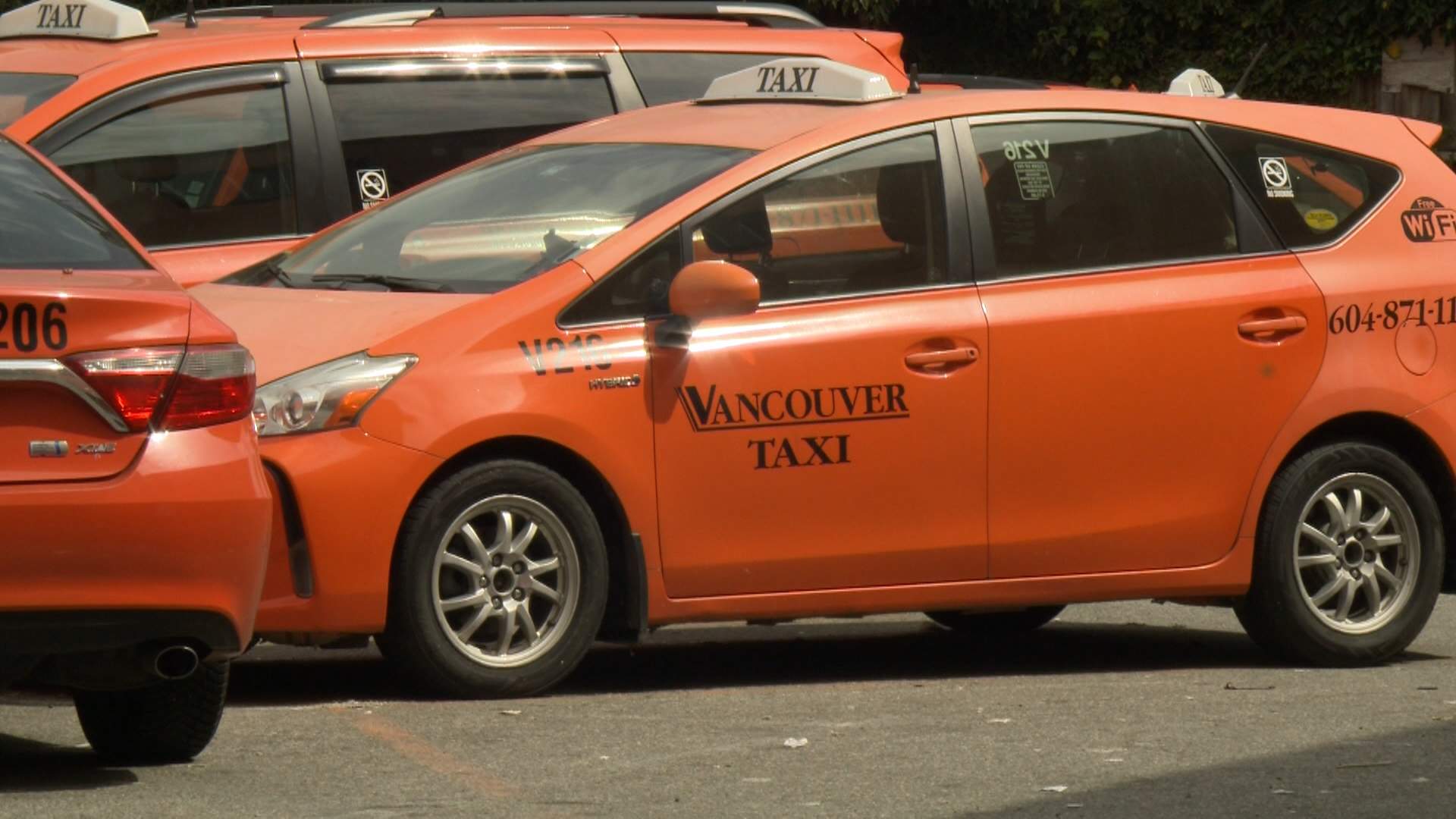
Public road rage incidents, such as the recent physical and verbal altercation recorded between a Vancouver taxi driver and a private vehicle operator, are not isolated outbursts of temper but predictable outcomes of high-density urban friction. This specific event functions as a case study in the breakdown of professional transit protocols and the failure of current "dashcam-as-deterrent" logic. To understand why these incidents persist despite near-constant surveillance, we must analyze the structural stressors of the Vancouver transit grid, the psychological erosion of the professional driver, and the technical limitations of video evidence as a regulatory tool.
The Friction Coefficient of the Vancouver Street Grid
The confrontation occurred within a specific geographical and economic context that mandates high-speed navigation in low-flow environments. Vancouver consistently ranks as one of the most congested cities in North America. For a commercial driver, congestion is not merely an inconvenience; it is a direct drain on the yield-per-hour metric.
The conflict originates from a mismatch in "Road Utility Expectations." A professional taxi driver views the asphalt as a workplace where efficiency is the primary KPI. A private motorist often views the same space as a personal transit corridor where safety and individual rights take precedence. When these two utility functions overlap in a constrained physical space, the probability of a "Hard Collision of Intent" increases exponentially.
Structural Stressors in the Professional Driving Environment
- The Metered Pressure Loop: Taxi drivers operate under a strict time-to-revenue ratio. Every minute spent behind a slow-moving or perceived "obstructive" driver represents a quantifiable loss in potential fares.
- Infrastructure Narrowing: Vancouver’s shift toward multi-modal transit (bike lanes, bus-only corridors) has reduced the available surface area for traditional vehicles. This creates a "bottleneck effect" where small errors in lane discipline by one driver trigger outsized frustration in others.
- The Anonymity Paradox: Drivers are encased in steel and glass, which creates a psychological buffer known as deindividuation. This state reduces the social inhibitions that usually prevent physical aggression. However, the presence of the taxi’s branding creates an asymmetry; the taxi driver is a visible representative of a firm, while the other driver remains a private entity.
Deconstructing the Escalation Ladder
Conflict on the road follows a rigid, discernible sequence. In the Vancouver incident, we see a failure to "de-escalate at the pivot point." The escalation ladder typically follows this trajectory:
- Phase 1: The Perceived Infraction: A lane change, a sudden brake, or a failure to signal. This is the trigger event.
- Phase 2: The Non-Verbal Challenge: Aggressive tailgating, horn usage, or flashing lights. This communicates "I have been wronged and I require acknowledgement."
- Phase 3: The Stationary Confrontation: Both vehicles stop. The drivers exit the "safety" of their vehicles. At this moment, the dispute transitions from a traffic violation to a criminal or civil liability event.
- Phase 4: Physicality and Documentation: The point where the Vancouver footage begins. Physical contact or verbal threats occur simultaneously with third-party recording.
The taxi driver in this scenario violated a core tenet of professional liability: The Occupational Buffer. By exiting the vehicle, the driver effectively voided the institutional protection provided by the taxi company’s insurance and regulatory standing. From a strategy perspective, the vehicle is a fortress; leaving it is a tactical error that shifts the liability from the corporation to the individual.
The Surveillance Fallacy and the Dashcam Effect
There is a widespread belief that the ubiquity of cameras will naturally reduce road rage. The Vancouver footage proves this is a fallacy. We are currently observing the "Observer Effect" in reverse: the presence of a camera can actually escalate a conflict as participants "perform" their anger for the record, or feel emboldened by the belief that they are "capturing the truth" of the other person’s villainy.
Limitations of Video as Regulatory Evidence
While the video in this case is visceral, it is analytically incomplete. Most road rage footage suffers from "The Context Void."
- Pre-Roll Blindness: Cameras rarely capture the three minutes of driving behavior that led to the explosion. Without the lead-up, regulators cannot determine who the primary aggressor was, only who won the physical confrontation.
- Perspective Bias: Dashcams are fixed-angle sensors. They do not capture the interior state of the vehicle—the driver’s heart rate, distractions, or verbal self-talk—which are the true leading indicators of an impending outburst.
- The Viral Distortion: Once a video hits social media, the public trial begins. This creates pressure on taxi companies and police departments to act swiftly rather than accurately. Rapid termination of a driver based on a 30-second clip may solve a PR crisis, but it fails to address the underlying systemic issues of driver fatigue and mental health.
The Economic Impact of Aggressive Driving in Commercial Fleets
For the Vancouver taxi industry, road rage is an unmanaged cost center. When a driver engages in a public dispute, the "Damage Function" includes:
- Brand Equity Erosion: Every view of the video associates the taxi brand with instability.
- Insurance Premium Spikes: Commercial fleets are rated on the collective behavior of their drivers. A single incident of physical aggression can trigger a "High-Risk" reclassification.
- Operational Downtime: If a driver is suspended or under investigation, that capital asset (the taxi) sits idle or must be remanned, incurring recruitment and training costs.
The industry currently relies on reactive discipline. A proactive strategy would involve "Telemetric Intervention." Modern fleet management software can detect "Hard G-Force Events"—sudden braking, rapid acceleration, and swerving. These are the mathematical signatures of an angry driver. By flagging these patterns in real-time, dispatch can intervene before the driver ever reaches the point of exiting the vehicle.
Cognitive Load and the Professional Driver
We must acknowledge the "Cognitive Saturation" experienced by professional drivers in Vancouver. A taxi driver is processing a constant stream of high-stakes data: GPS directions, dispatch pings, fare calculations, and the unpredictable movements of pedestrians and cyclists.
When cognitive load exceeds a certain threshold, the brain’s "Executive Function" (responsible for impulse control) begins to degrade. The "Amygdala Hijack" occurs, where the primitive brain takes over. In this state, a minor traffic slight is perceived as a life-threatening territorial invasion. This is not an excuse for the behavior, but it is the biological mechanism behind it.
To mitigate this, fleet operators must shift from a "Max Hours" mindset to a "Cognitive Freshness" model. Forcing drivers to take short, mandatory "Decompression Breaks" after a series of high-traffic maneuvers could statistically reduce the number of physical altercations.
The Regulatory Gap in Vancouver’s Transit Bylaws
The current regulatory framework for taxis in British Columbia focuses heavily on vehicle safety and fare honesty. There is a distinct lack of "Behavioral Compliance Metrics."
If a driver is caught on video in a road rage incident, the response is usually binary: fired or ignored. A more sophisticated approach would involve a "Graduated Sanction Scale." This would include mandatory conflict de-escalation training, psychological assessment, and a temporary probationary period monitored by interior-facing AI cameras that track facial stress markers.
Furthermore, the city's Passenger Transportation Board needs to address the "Gig Economy Pressure Gap." Taxis are competing with ride-share platforms in a race to the bottom on price. This competition forces drivers to take more risks and work longer hours, directly contributing to the volatility seen on the streets.
Mapping the Strategic Resolution
To eliminate these incidents, we cannot rely on the "Good Nature" of individuals. We must re-engineer the environment and the incentives.
First, implement "Mandatory Telemetric Reporting." Any commercial vehicle involved in a documented dispute should have its last 30 minutes of telemetric data audited. If the data shows a pattern of aggressive maneuvers leading up to the event, the driver is held liable for "Premeditated Aggression."
Second, redesign the "In-Cab Interface." Instead of constant pings and alerts, the dashboard should provide "Stress Feedback." If the system detects erratic driving, it should dim the screen and provide a calming auditory cue, or even temporarily lock the dispatch system to force a cooling-off period.
Third, establish a "Unified Conflict Registry" between taxi companies and ride-share platforms. Currently, a driver fired for road rage at one company can often simply switch to a competitor or a gig-app. A shared database of behavioral red flags would create a "Social Credit System" for professional drivers, making the cost of an outburst too high to risk.
The Vancouver incident is a failure of system design. Until the physical and economic stressors of the urban grid are addressed through technical and psychological intervention, the dashcam will continue to be a tool for documenting chaos rather than preventing it. The move is away from "Post-Event Punishment" and toward "Active Behavioral Modulation."
Operators must immediately audit their fleets for high-volatility drivers using historical telemetric data. This is no longer a human resources issue; it is a data-driven risk management necessity. Any driver exhibiting a "High-G Event Frequency" above the 90th percentile should be flagged for immediate intervention. Failure to act on this data constitutes a breach of the duty of care to the public.