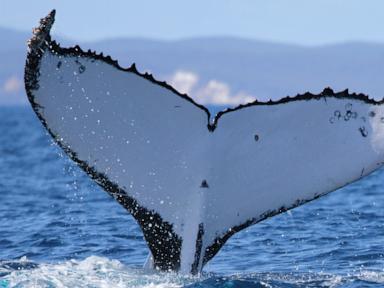
The standard model of humpback whale (Megaptera novaeangliae) migration dictates a linear, latitudinal trajectory between polar feeding grounds and tropical breeding lagoons. However, documented movements of individual whales between the temperate waters of Australia and the Atlantic coast of Brazil fundamentally challenge these geographic baselines. This transoceanic displacement represents a behavioral anomaly that cannot be explained by standard navigational drift. To understand the structural drivers behind this phenomenon, we must analyze it through three distinct lenses: energetic efficiency, oceanographic current coupling, and genetic metapopulation mixing.
The classic migratory paradigm assumes that Southern Hemisphere humpbacks exhibit high fidelity to specific breeding grounds, separated by continental landmasses and vast oceanic basins. The documented transit of whales across the Indian and South Atlantic Oceans invalidates the assumption of rigid population isolation. This analysis deconstructs the biophysical constraints and evolutionary mechanics governing these unprecedented long-distance journeys.
The Energetics of Transoceanic Displacement
A whale executing a journey of this magnitude operates under a strict energy budget. Humpback whales are capital breeders; they feed intensively during the high-latitude polar summer and fast during the winter migration. The energetic cost of locomotion ($P_{loc}$) during this period depends on hydrodynamic drag, swimming velocity, and metabolic efficiency.
The total energy expenditure over a distance ($D$) is governed by a balance between basal metabolic rate and the energy required to overcome drag:
$$E_{total} = \left( \frac{P_{met} + P_{loc}}{v} \right) D$$
Where:
- $P_{met}$ is the basal metabolic rate.
- $P_{loc}$ is the power required for locomotion, proportional to the cube of swimming velocity ($v^3$).
- $D$ is the total distance traveled.
Because power scales cubically with speed, a whale must maintain an optimal cruising velocity to maximize distance per unit of energy expended. Deviation from the standard north-south migration route to a prolonged east-west transoceanic route requires a significant metabolic surplus.
Two distinct scenarios explain how a cetacean balances this energy equation. The first scenario assumes the individual possesses an exceptional blubber layer, providing a larger initial energy reserve. The second scenario, which is more biologically plausible, suggests that these individuals utilize opportunistic foraging en route. While breeding grounds are nutrient-poor, specific open-ocean features such as seamounts and upwelling zones offer localized concentrations of prey.
Oceanographic Current Coupling and Navigational Vectors
Whales do not travel through static water. The South Indian Ocean and South Atlantic Ocean are dominated by massive counter-clockwise gyres and powerful current systems. A whale traveling from western or eastern Australia to Brazil must negotiate the Antarctic Circumpolar Current (ACC) and the Agulhas Current system.
The ACC flows eastward, driven by powerful westerly winds. For a whale to move westward from Australia toward Africa and subsequently South America, it must either swim against this dominant flow or position itself in the northern, lower-velocity margins of the subtropical gyres.
The navigational strategy can be broken down into three phases:
- The Indian Ocean Transit: The whale utilizes the westward-flowing South Equatorial Current, minimizing the energy required to cross from the Australian shelf to the East African coast.
- The Agulhas Leakage Corridor: To enter the Atlantic, the whale must navigate the Agulhas Current flowing down the east coast of Africa. The critical bottleneck occurs at the Agulhas Retroflection, where most of the current loops back east. Whales entering the Atlantic must exploit Agulhas rings—massive, warm-water eddies that shed westward into the South Atlantic.
- The South Atlantic Crossing: Once in the South Atlantic, the Benguela Current offers a northward vector along the African coast, but crossing to Brazil requires cutting across the South Equatorial Current system.
A failure to precisely time these oceanographic interactions increases hydrodynamic drag, accelerating lipid depletion and risking mortality before reaching the destination. This suggests that transoceanic movements are not random wanderings, but are highly dependent on prevailing oceanographic conditions.
Structural Drivers of Behavioral Plasticity
What triggers an individual to abandon a predictable migratory route for a high-risk ocean crossing? The underlying drivers can be categorized into environmental pressures and demographic shifts.
Habitat Degradation and Prey Availability
Climate-driven shifts in sea surface temperatures alter the distribution of Antarctic krill (Euphausia superba), the primary food source for Southern Hemisphere humpbacks. A reduction in prey density at traditional feeding grounds forces whales to extend their foraging search radii. If a cohort enters the migratory cycle with sub-optimal energy reserves, they may alter their trajectory in search of alternative feeding opportunities, leading them into entirely different ocean basins.
Population Density and Social Exploration
As Southern Hemisphere humpback populations recover from historical whaling pressures, traditional breeding grounds experience increased density. This crowding triggers a cascade of social behaviors:
- Acoustic Exploration: Male humpbacks emit complex songs to attract mates. These acoustic signals travel vast distances in the ocean's low-frequency sound channel. Whales may deviate from their paths to investigate acoustic signatures from distant populations.
- Mating Dispersal: High competitor density in native breeding grounds incentivizes younger or less dominant males to seek lower-density mating opportunities elsewhere, driving exploratory long-distance dispersal.
Genetic Implications for Metapopulation Dynamics
Historically, ocean basins served as geographical barriers that maintained genetic differentiation between distinct humpback populations. The International Whaling Commission recognizes several breeding stocks in the Southern Hemisphere, including Stock D (Western Australia), Stock E (Eastern Australia), and Stock A (Brazil).
Regular inter-basin exchange fundamentally alters how we model these populations.
[Stock D: Western Australia] <---> [Inter-Basin Vagrants] <---> [Stock A: Brazil]
                                           |
                                           v
                             [Genetic Homogenization]
When individuals successfully breed in a non-native basin, they introduce new alleles into the host population. This gene flow reduces genetic drift and mitigates the risks associated with localized bottlenecks. Consequently, these record-breaking journeys are not mere evolutionary dead ends; they serve as a critical mechanism for maintaining genetic diversity across the global metapopulation.
Methodological Limitations in Tracking Data
Our current understanding of these transoceanic movements relies on two primary methodologies: photo-identification of fluke patterns and satellite telemetry. Both approaches possess inherent structural limitations that color our conclusions.
Photo-Identification Selection Bias
Fluke matching relies on opportunistic encounters by research vessels or eco-tourism operators. The probability of capturing an image of the same whale in both Australia and Brazil is low. This data collection method underrepresents the true frequency of transoceanic travel, meaning these record-setting movements are likely common occurrences rather than isolated anomalies.
Satellite Tag Longevity Bottlenecks
Satellite transmitters attached to cetaceans face harsh marine conditions, biofouling, and tissue rejection. Most tags fail within three to six months. Because a transoceanic crossing spans several months, the track frequently cuts out mid-ocean, leaving researchers unable to verify the ultimate destination or the precise path taken.
Strategic Conservation Matrix
Management frameworks that protect migratory cetaceans must adapt to this fluid population structure. Traditional conservation models rely on static Marine Protected Areas (MPAs) designed around fixed, predictable habitats. A dynamic, transoceanic paradigm requires a shift in policy design.
The primary requirement is the establishment of dynamic ocean management corridors. Conservation zones must adapt in real-time based on sea surface temperature anomalies, chlorophyll-a concentrations, and acoustic monitoring data. When oceanographic conditions align to form favorable transoceanic pathways, shipping lanes must be modified dynamically to reduce the risk of ship strikes, and naval sonar activity must be restricted within these temporary corridors to prevent acoustic disorientation.
Furthermore, international policy frameworks must transition from regional agreements to a unified Southern Ocean management strategy. Because the actions of one nation regarding krill fisheries or offshore energy development directly impact the energy budgets and migratory choices of whales across entire ocean basins, localized conservation efforts are insufficient. Protecting the integrity of these transoceanic pathways requires treating the Southern Hemisphere as a single, interconnected habitat network.