The Mechanics of Doublet Seismicity
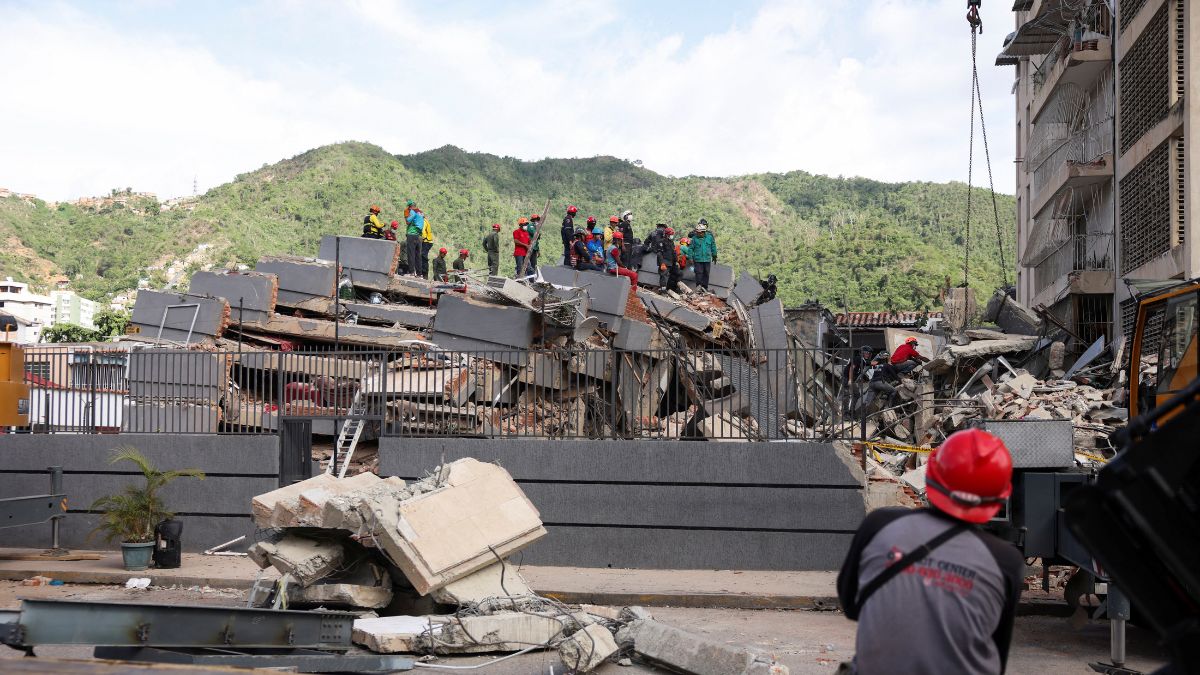
When back-to-back earthquakes strike within an exceptionally compressed timeframe, the resulting destruction is not a simple linear addition of two seismic events. Instead, it represents a non-linear compounding failure of both tectonic fault systems and engineered infrastructure. On June 24, 2026, northern Venezuela experienced a catastrophic sequence: a magnitude 7.2 earthquake followed a mere 39 seconds later by a magnitude 7.5 earthquake. The cumulative impact claimed at least 589 lives, injured nearly 3,000 people, and left tens of thousands missing or displaced.
Understanding this disaster requires looking past standard magnitude ratings to analyze the specific physical mechanisms of a seismic doublet, the structural vulnerabilities of urban engineering under sequential loading, and the geographic factors that channeled destructive energy directly into densely populated zones like Caracas and La Guaira.
The Physics of Tectonic Triggering
A seismic doublet occurs when an initial rupture alters the stress state of an adjacent fault segment, triggering a second distinct earthquake of comparable magnitude within a short timeframe. The primary driver of this phenomenon is the transfer of tectonic stress, which operates via two distinct mechanisms.
Static Stress Transfer
When a fault segment slips, it permanently displaces the rock mass on either side. This displacement unloads stress along the ruptured portion of the fault but shifts that stress directly onto the unruptured ends or onto neighboring parallel faults. If an adjacent fault segment is already near its critical failure threshold, this sudden incremental increase—measured in bars or kilopascals—acts as the final force necessary to overcome frictional resistance.
Dynamic Stress Transfer
As the initial rupture occurs, it radiates high-amplitude seismic waves (P-waves, S-waves, and surface waves) through the earth. The passage of these dynamic waves causes transient, oscillating changes in pore fluid pressure and normal stress within nearby faults. This momentary destabilization can weaken the frictional grip of a fault line, causing it to slip immediately while the dynamic waves are passing through or shortly thereafter.
In the Venezuelan sequence, the 39-second gap between the magnitude 7.2 and 7.5 events represents an extreme temporal compression. While typical doublets unfold over hours, days, or weeks, this sub-minute interval indicates that the combination of permanent static stress loading and transient dynamic wave disruption pushed the second segment past its failure threshold almost instantaneously.
The Fault System Architecture
The spatial distribution of this disaster is directly tied to the boundary where the Caribbean and South American tectonic plates interact. Here, the Caribbean plate moves eastward relative to the South American plate at a rate of approximately two centimeters per year. This plate boundary is expressed through the Bocono-Moron-El Pilar fault system, a complex network of right-lateral strike-slip faults running along northern Venezuela.
[Caribbean Plate -> Moving East]
-------------------------------------------- (Bocono-Moron-El Pilar Fault System)
[South American Plate -> Stationary/Westward]
Three specific variables converted this tectonic movement into a highly destructive event:
- Shallow Focal Depth: The ruptures occurred at an estimated depth of 10 to 20 kilometers. Shallow earthquakes focus their energy close to the surface, leaving little rock mass to absorb or dissipate the high-frequency seismic waves before they reach urban foundations.
- Rupture Length: The total fault rupture spanned an axis estimated between 90 and 150 kilometers. A longer rupture means that energy is released over a wider area and for a longer duration, extending the window of intense ground shaking.
- Directionality (Directivity Effects): The rupture propagated from west to east, initiating near San Felipe and Yumare and moving toward Caracas. This phenomenon, known as forward directivity, occurs when the fault rupture travels at a speed close to the velocity of the seismic waves themselves. The seismic energy accumulates along the leading edge of the rupture front, focusing a massive, concentrated pulse of kinetic energy straight at the capital city.
The Debate Between Doublets and Cascading Ruptures
Seismologists are currently analyzing data from global monitoring networks to determine whether the Venezuelan event fits the strict definition of a doublet or if it represents a single, continuous cascading rupture. The distinction carries operational weight for catastrophe modeling and hazard mapping.
The Doublet Hypothesis
This framework views the disaster as two separate earthquakes. The magnitude 7.2 event completed its rupture cycle, and the resulting stress field adjustments triggered an entirely separate fault patch to break 39 seconds later. This model implies that the two segments possessed distinct frictional properties and independent stress accumulation profiles prior to June 24.
The Continuous Cascade Hypothesis
Conversely, some researchers argue that the event is better classified as a single magnitude 7.6 or 7.7 continuous rupture that progressed in distinct pulses. A magnitude 7.2 earthquake typically requires roughly 30 seconds to complete its rupture process. Given the 39-second delay, the second slip may simply be a massive sub-event within a continuous, irregular rupture front where the failure of one structural barrier instantly initiated the next.
The resolution of this debate changes how regional seismic hazards are calculated. If the system is prone to distinct doublets, regional hazard maps must account for rapid secondary triggers. If it is prone to continuous cascades, the maximum credible magnitude assigned to the Bocono-Moron-El Pilar fault system must be revised upward, forcing a complete overhaul of building design requirements.
The Engineering Breakdown of Sequential Loading
The high death toll, particularly in coastal zones like La Guaira and the valley of Caracas, stems directly from how building materials respond to sequential seismic forces. The 39-second interval eliminated any opportunity for structural stabilization, evacuation, or emergency response between the two shocks.
Structural Fatigue and Building Degradation
When the magnitude 7.2 quake struck, the initial ground acceleration subjected structures to severe lateral forces. In many older or poorly reinforced buildings, this initial shock induced micro-cracking in concrete columns, yielded internal steel reinforcement bars, and compromised the stiffness of shear walls.
A building that survives an initial earthquake is often left with severely degraded structural capacity. The period of structural vibration shifts, and its ability to dissipate energy through deformation decreases. When the larger magnitude 7.5 earthquake struck 39 seconds later, it encountered an inventory of buildings already stripped of their structural reserves.
The Problem of Non-Ductile Concrete
A major driver of building collapse in the affected regions was the prevalence of non-ductile concrete frames. Ductility refers to the capacity of a structure or material to deform plastically without experiencing sudden, catastrophic failure. Modern seismic engineering mandates dense configurations of steel stirrups and ties inside concrete columns to confine the concrete core and keep it intact under cyclic bending.
Non-ductile concrete structures lack sufficient internal steel confinement. Under the intense cyclic loading of the first quake, the concrete cores began to crush and spall. Lacking the necessary structural reserve to withstand further movement, these columns suffered explosive shear failures during the second, more powerful shock. This led to rapid pancake collapses, where upper floors dropped straight down onto lower floors, trapping occupants instantly and leaving zero structural voids for survival.
Geotechnical Factors: Liquefaction and Amplification
The local geology of northern Venezuela aggravated the structural damage. Caracas sits within a high-altitude sediment-filled basin. When seismic waves pass from dense bedrock into soft, unconsolidated valley sediments, their velocity decreases, causing their amplitude to increase significantly. This sediment amplification effect forces the ground to shake longer and harder than it would on solid rock.
In coastal areas like La Guaira, saturated sandy soils subjected to rapid cyclic shaking experienced liquefaction. The pore water pressure within the soil increased to the point where the soil lost its shear strength and behaved like a liquid. Foundations tilted, sank, or slid, rendering even well-constructed buildings highly vulnerable to total failure when the second shock arrived.
Catastrophe Risk Management and Economic Vulnerabilities
The Venezuelan seismic sequence highlights a massive gap in international insurance coverage and risk mitigation strategies across Latin America. According to data from global reinsurance brokers, the region maintains a structural resilience score of just 8% to 9%, meaning that more than 90% of the economic exposure remains entirely uninsured.
The Funding Gap in Reconstruction
When a disaster of this scale occurs in an economy with minimal insurance penetration, the entire financial burden of reconstruction falls on public state budgets, international aid, or private capital. The Venezuelan government's announcement of a $200 million reconstruction fund utilizing International Monetary Fund resources represents only a fraction of the capital required to rebuild flattened residential high-rises, repair damaged shipping terminals, and reconstruct critical infrastructure like the Simón Bolívar International Airport.
Economic Exposure Breakdown:
[ Uninsured Exposure: 91-92% ] ------------------------> Borne by State/Individuals
[ Insured Exposure: 8-9% ] ------> Absorbed by Global Reinsurance
Infrastructure Interdependencies and Rescue Bottlenecks
The immediate aftermath of the double earthquake demonstrates how physical damage translates into operational paralysis. The destruction of key transportation linkages—specifically the highways connecting Caracas to the coast—coupled with extensive structural damage to the primary international airport, created an immediate logistical bottleneck. International rescue teams arriving from nations like Mexico, El Salvador, Spain, and the United States faced severe delays in deploying heavy machinery to the worst-hit zones in La Guaira.
Simultaneously, widespread electrical grid failures silenced communication networks, preventing accurate damage assessments and rendering early local rescue efforts uncoordinated. The temporary removal of specific international sanctions by foreign treasury departments allowed emergency financial transactions to proceed, yet the lack of pre-positioned physical assets and local search-and-rescue equipment meant that early operations had to be conducted by hand, reducing the survival rate for individuals trapped beneath collapsed concrete slabs.
Strategic Engineering Implementations for High-Risk Fault Zones
Relying on traditional single-event design principles is inadequate in regions characterized by complex, strike-slip fault networks capable of producing doublet seismicity. Municipalities and engineering firms operating along the Caribbean-South American plate boundary must shift toward multi-hazard, sequential-demand design frameworks.
Mandating Cumulative Damage Design
Current building codes generally evaluate structural capacity against a single design-basis earthquake, assuming that post-event inspections and repairs will occur before another major shock. In a doublet scenario, this assumption fails. Structural engineers must incorporate cumulative damage models into performance-based design protocols. This involves running non-linear time-history simulations using sequential ground motion records to ensure that a structure can retain its stability even after its initial stiffness has been compromised by a foreshock.
Systematic Retrofitting of Existing Building Stock
The presence of non-ductile concrete buildings in seismic zones represents an ongoing public safety crisis. Cities must implement aggressive, legally binding retrofitting mandates. Priority must be given to:
- Fiber-Reinforced Polymer (FRP) Jacketing: Wrapping vulnerable concrete columns with high-strength carbon or glass fiber sheets to provide external confinement, preventing explosive shear failures and boosting ductility.
- External Steel Bracing: Installing external structural steel frames on existing buildings to absorb lateral loads and reduce the demand placed on older concrete frames.
- Base Isolation Systems: Retrofitting critical structures, such as hospitals and emergency response centers, with elastomeric or friction-pendulum bearings that detach the building from ground movements, minimizing the energy transferred into the structure during both primary and secondary shocks.
Advanced Spatial Risk Mapping
Municipal zoning laws must be rewritten to integrate sediment amplification maps and liquefaction potential zones into development approvals. High-density residential construction must be restricted in valley basins and coastal zones unless specialized deep-foundation engineering—such as driven piles anchoring directly into underlying bedrock—is employed to bypass unstable surficial soils. This systematic hardening of urban construction is the only reliable defense against the compressed timelines and compounding forces of double seismic events.


