The resumption of mass grave excavations in Chemmani, Jaffna, represents more than a localized judicial procedure; it is a critical test of Sri Lanka’s forensic infrastructure and its capacity to execute transitional justice under international scrutiny. Success in this environment is not measured by the speed of discovery, but by the integrity of the chain of custody and the technical rigor applied to the site’s stratigraphy. The presence of diplomatic observers shifts the operation from a domestic criminal inquiry into a high-stakes verification of the state's commitment to the rule of law. To understand the implications of this development, one must examine the intersection of forensic archaeology, political willpower, and the logistical barriers that have historically stalled such efforts.
The Tripartite Architecture of Forensic Accountability
The Chemmani excavation operates within a three-pillar framework that determines whether the findings will be legally actionable or politically neutralized.
1. The Technical Integrity of the Site
Forensic archaeology in a post-conflict zone like Jaffna faces significant environmental and anthropogenic challenges. Soil composition in the Chemmani region, characterized by saline influence and fluctuating water tables, directly impacts the preservation of organic material.
- Decomposition Kinetics: Salinity and moisture accelerate the degradation of skeletal remains and any associated ballistic evidence or clothing.
- Stratigraphic Disturbance: Previous partial excavations or land use changes create "noise" in the data, making it difficult to establish the precise chronological sequence of burials.
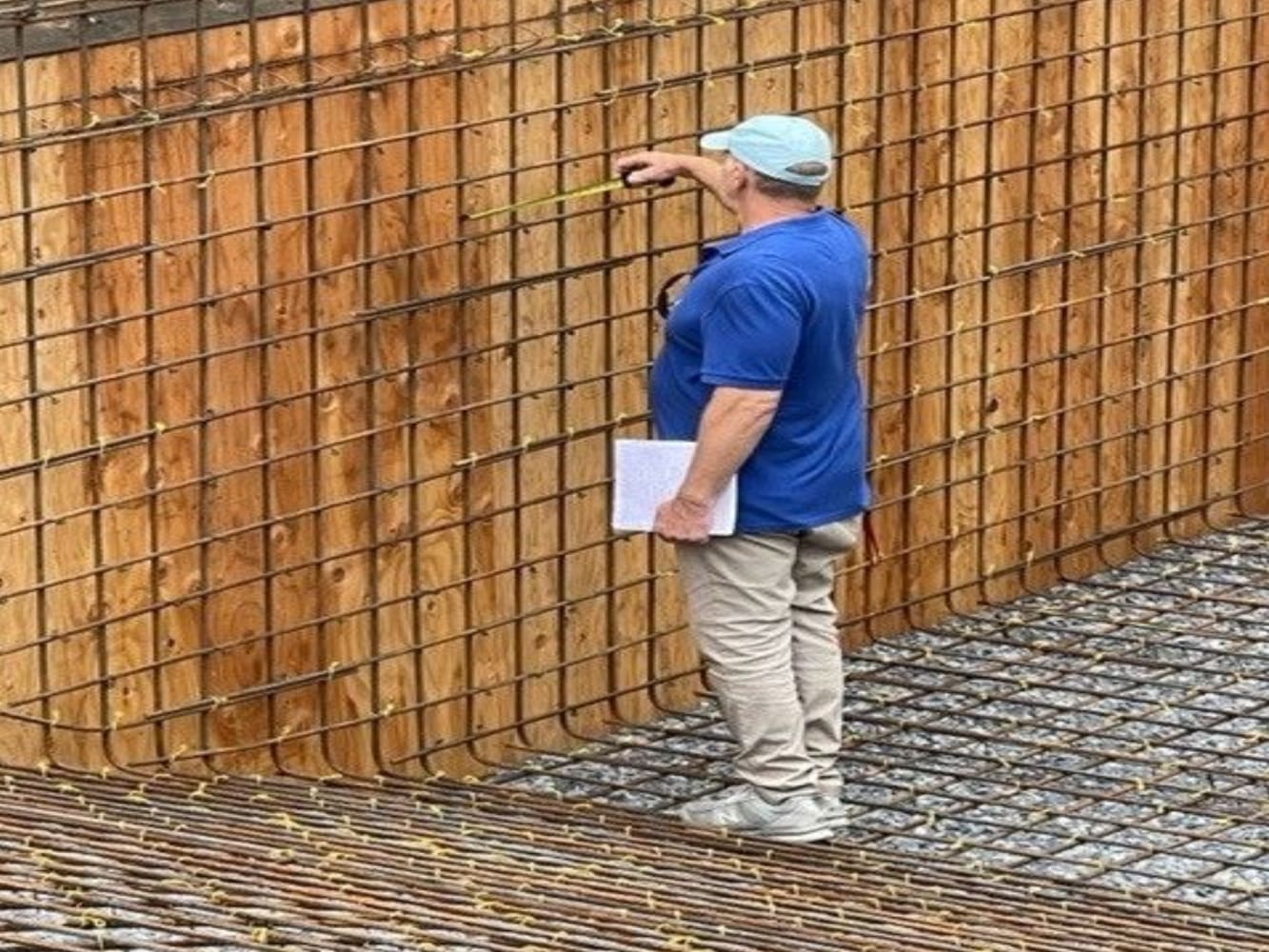
- Evidence Recovery: The methodology must transition from standard construction excavation to micro-stratigraphic recovery to ensure that minute artifacts—shell casings, ligatures, or personal effects—are not lost.
2. The Legal Chain of Custody
In cases involving potential state-actor involvement, the primary risk is not the lack of evidence, but the admissibility of that evidence in a future court of law. This requires a rigorous documentation process that accounts for every gram of soil and every fragment of bone from the moment of discovery to final analysis in the laboratory. The involvement of diplomatic presence serves as a secondary verification layer, intended to mitigate risks of evidence tampering or "lost" records that have plagued prior Sri Lankan commissions.
3. The Socio-Political Mandate
The excavation is a function of the state’s current political calculation. The timing of the resumption often correlates with pressure from international bodies such as the UN Human Rights Council (UNHRC). This creates a tension between the judicial requirement for a slow, meticulous process and the political requirement for visible progress.
Operational Bottlenecks and Strategic Failures
Historically, mass grave excavations in Sri Lanka—from Matale to Mannar—have followed a predictable pattern of initial discovery, intense media coverage, and eventual procedural stagnation. This stagnation is rarely accidental; it is a result of specific operational bottlenecks.
The Expertise Deficit
Sri Lanka possesses skilled medical professionals, yet the specific intersection of forensic anthropology and archaeology remains under-resourced. Identifying victims in a mass grave requires specific skills in:
- Osteological Profiling: Determining age, sex, and ancestry from fragmented remains.
- Trauma Analysis: Distinguishing between peri-mortem injuries (occurring at or near the time of death) and post-mortem damage caused by excavation equipment or environmental shifting.
- DNA Sequencing: The lack of a comprehensive national DNA database for the families of the disappeared renders even well-preserved remains difficult to identify without expensive, time-consuming cross-referencing with surviving relatives.
The Resource Allocation Gap
Excavations are frequently halted due to "funding constraints" or the unavailability of specific judicial officers. In the Chemmani context, the resumption under diplomatic presence suggests an attempt to bypass these domestic resource hurdles through external oversight, yet the core labor—the digging, the cataloging, and the guarding of the site—remains under the jurisdiction of the same state apparatus that is often a party to the underlying dispute.
The Causality of International Oversight
The presence of diplomats at Chemmani is a strategic variable that alters the behavior of local stakeholders. This "Observation Effect" operates on two levels:
Level One: Procedural Adherence
The presence of external witnesses forces a higher adherence to standard operating procedures. When international eyes are on the shovel, the likelihood of "accidental" damage to the site or the summary dismissal of findings decreases. It creates a temporary zone of transparency.
Level Two: Diplomatic Reporting as Leverage
The findings—or the lack thereof—become raw material for diplomatic cables and international reports. This transforms a hole in the ground in Jaffna into a data point for trade concessions, military cooperation agreements, and international debt restructuring negotiations. The excavation is not just about the past; it is a currency for the future.
Distinguishing Between Discovery and Identification
A common misconception in the reporting of mass graves is equating the discovery of bones with the delivery of justice. The analytical reality is far more complex.
- Phase A: Recovery. This is the physical extraction of remains. It is the most visible phase but the least informative regarding legal culpability.
- Phase B: Analysis. This happens in the lab. It determines the how of death. If the analysis reveals blindfolds or ligatures, the narrative shifts from "war casualties" to "extrajudicial executions."
- Phase C: Identification. This determines the who. Without identification, the remains are merely statistics. Identification requires a massive administrative effort to match antemortem data (records of the person while alive) with postmortem data.
- Phase D: Prosecution. This is the bridge that is rarely crossed. It requires linking a specific body to a specific unit, command structure, or individual perpetrator.
The Chemmani site is currently in Phase A. The bottleneck usually occurs between Phase B and Phase C, where the technical complexity provides a convenient shield for political inertia.
The Risk of Forensic Theater
There is a documented risk of "forensic theater," where excavations are conducted to satisfy international benchmarks without any intent to follow the evidence to its logical conclusion. To determine if Chemmani is a genuine pursuit of accountability or a performative gesture, one must monitor three specific metrics:
- The Budgetary Commitment: Is the funding secured for the full duration of the analysis, or only for the excavation phase?
- The Independence of the Lab: Where are the remains being sent? Is the facility shielded from military or political interference?
- Access for Families: Are the families of the disappeared allowed to appoint their own independent observers or technical experts to oversee the process?
If these three criteria are not met, the excavation remains a logistical exercise rather than a judicial one.
Structural Realignment of the Investigation
For the Chemmani excavation to yield a result that withstands international scrutiny, the process must move beyond the "excavation as an event" model toward an "excavation as a data stream" model. This involves the digitization of all records, the creation of a transparent repository for forensic data, and the decoupling of the forensic team from the ministry of defense or related entities.
The current move to resume under diplomatic eyes suggests a realization that domestic credibility has been exhausted. However, the international community's role must transition from passive observation to active technical support. This includes providing the high-throughput DNA sequencing and the geospatial mapping tools necessary to reconstruct the events that led to the creation of the Chemmani site.
The strategic play here is not found in the soil being turned today, but in the storage lockers where the evidence will sit tomorrow. The true indicator of success will be whether the findings lead to a formal indictment or if they are consigned to a permanent state of "pending further investigation." The diplomatic presence buys time and temporary transparency, but it does not inherently guarantee a judicial outcome. The focus must remain on the transition from recovery to identification, as identification is the only path to breaking the cycle of disappearance and denial.