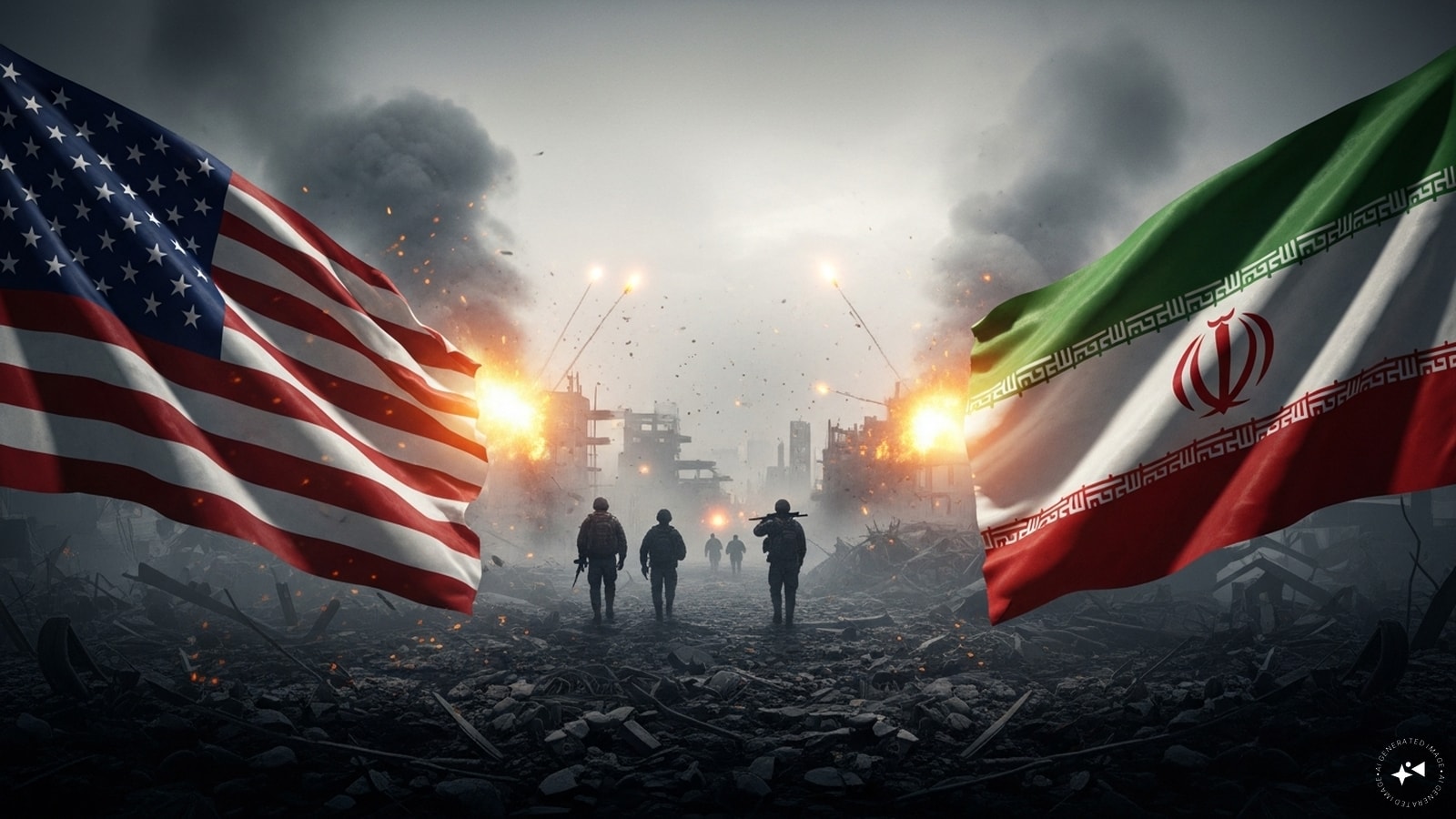
The current pause in active hostilities between the United States and Iran is not a stable peace but a high-friction maintenance of a "no-war, no-peace" status quo. While media reports focus on the binary outcomes of "ceasefire" or "war," the underlying reality is a calculated exchange of tactical leverage points designed to influence the Monday negotiations. Trump’s signaled reluctance to extend the current ceasefire functions as a Stochastic Pressure Tactic: a deliberate injection of uncertainty into the geopolitical environment to force concessions before the diplomatic window closes.
The Triad of Strategic Friction
The current tension is defined by three competing variables that dictate the durability of any temporary truce. When these variables align, a ceasefire holds; when they diverge, the probability of kinetic engagement increases exponentially.
- The Credibility of the Kinetic Threat: For a ceasefire to hold, both parties must believe the cost of breaking it exceeds the benefits of a tactical strike. By suggesting the ceasefire may expire, the U.S. administration is attempting to reset the "Risk Premium" Iran must pay for its regional proxy activities.
- Asymmetric Leverage Symmetries: Iran utilizes "Grey Zone" warfare—actions that fall below the threshold of open conflict—to counter conventional U.S. military superiority. The U.S. counter-strategy relies on "Maximum Pressure" economic scaffolding. The tension arises because these two forms of leverage do not have a standard exchange rate.
- The Domestic Audience Constraint: Both leaderships are beholden to internal hardliners. A ceasefire perceived as a "surrender" creates a domestic political deficit. Consequently, public rhetoric must remain bellicose even as private channels seek de-escalation.
Economic Attrition vs. Kinetic Escalation
The U.S. strategy operates on the principle of Capital Constriction. By isolating Iran from the global financial system, the U.S. aims to reduce Iran’s "Power Projection Budget." However, this creates a specific cause-and-effect loop: as the economic cost to Iran increases, the marginal cost of a military escalation decreases. From the Iranian perspective, if the economy is already devastated, the incremental damage of a limited military strike becomes a more acceptable risk if it buys them a seat at a more favorable negotiating table.
This creates a Deadlock Threshold. If the U.S. does not offer a clear path to sanctions relief, Iran has no incentive to maintain a ceasefire that offers them no economic breathing room. Conversely, if the U.S. eases pressure too early, it loses its primary tool for influencing Iranian behavior regarding its nuclear program and regional ballistic missile development.
The Monday Negotiation Framework
The upcoming talks are structured around four non-negotiable pillars of regional security. The success or failure of these talks will not be determined by the "mood" of the negotiators, but by the technical alignment of these specific points:
- Nuclear Enrichment Caps: The technical verification of uranium stockpile levels and centrifuge operations.
- Proxy Integration: The degree to which Tehran can or will restrain the "Axis of Resistance" in Lebanon, Iraq, and Yemen.
- Freedom of Navigation: The guarantee of unhindered transit through the Strait of Hormuz, a chokepoint through which approximately 20% of the world's petroleum passes.
- Sanctions Sequencing: The "How and When" of economic relief. Iran demands "Front-Loaded" relief (sanctions drop first), while the U.S. insists on "Performance-Based" relief (compliance first).
Strategic Bottlenecks in the Ceasefire Extension
The primary bottleneck is the Verification Gap. Trust is non-existent; therefore, any extension of the ceasefire requires a mechanism of "Simultaneous Reciprocity." The difficulty lies in the fact that military stand-downs are easily reversible, whereas the dismantling of nuclear infrastructure or the restructuring of a national economy is not.
The second limitation is the Proxy Paradox. Iran may agree to a ceasefire at the state level, but its decentralized network of regional allies often operates with a degree of tactical autonomy. If a proxy group conducts an unauthorized strike, the U.S. is forced to decide whether to hold Tehran directly responsible—thereby ending the ceasefire—or to treat the event as an isolated incident, which risks appearing weak and inviting further "Grey Zone" testing.
Quantifying the Cost of Failure
If the Monday talks collapse and the ceasefire is not extended, the shift from "Diplomatic Posturing" to "Active Containment" will follow a predictable kinetic sequence:
- Cyber-Kinetic Signaling: An increase in state-sponsored cyberattacks targeting critical infrastructure (power grids, financial systems) as a low-cost, high-impact warning.
- Maritime Interdiction: Increased harassment of commercial shipping to drive up global insurance premiums and pressure the international community to intervene.
- Targeted Attrition: Precision strikes on high-value military assets or leadership figures, designed to degrade capability without triggering a full-scale invasion.
The U.S. military posture in the region, characterized by the presence of Carrier Strike Groups and advanced missile defense systems (THAAD), serves as the "Physical Insurance Policy" for the diplomatic track. This presence is intended to convince Iranian planners that the cost of an escalatory response to an expired ceasefire would be "Catastrophic" rather than "Manageable."
The Intelligence Requirements for Monday
Negotiators will be monitoring three specific data points to determine if a breakthrough is possible:
- The Enrichment Rate: Any sudden uptick in enrichment levels above 60% would signal an Iranian "Breakout" strategy, rendering the talks moot.
- The Rhetoric Shift: Watch for a transition from "Precondition-heavy" language to "Mechanism-heavy" language in official state media.
- Third-Party Intermediation: The activity levels of neutral parties, such as Oman or Switzerland, who serve as the necessary "Buffer" for sensitive communications.
The "ceasefire" mentioned in current headlines is a misnomer; it is more accurately described as a Temporary Strategic Alignment. It exists only because, at this specific moment, the cost of war remains higher than the cost of a strained peace for both regimes. The expiration of this alignment is inevitable unless the Monday talks transition from "Crisis Management" to a "Framework Agreement" that addresses the underlying structural grievances of both nations.
Tactical success on Monday requires moving beyond the binary of "ceasefire extension" and toward a phased De-escalation Matrix where specific Iranian technical concessions are met with specific, time-bound U.S. sanctions waivers. Without this granular mapping, the rhetoric of "not extending the ceasefire" will move from a negotiating threat to an operational reality.