Chong xi (冲喜), translating literally to "washing away" or "clashing with joy," functions as an informal risk-transfer mechanism within traditional Chinese social systems, deploying high-energy celebratory rituals to counter acute personal or familial misfortune. Rather than operating as mere superstition, the practice acts as a structured behavioral and social intervention designed to interrupt negative psychological feedback loops, mobilize kinship capital, and reallocate household status during periods of severe crisis such as chronic illness, financial insolvency, or prolonged bad luck.
The Structural Architecture of Ritual Counter-Balancing
To analyze chong xi accurately, one must separate its metaphysical cosmology from its observable sociological mechanics. In traditional Chinese metaphysics—specifically frameworks rooted in Yin-Yang polarity and Wu Xing (Five Elements) theory—misfortune is conceptualized not as random statistical variance, but as an acute energetic imbalance. Prolonged illness, career stagnation, or bereavement represent an excess of stagnant, heavy, or depleting forces (Yin).
The foundational hypothesis of chong xi is homeostatic correction through deliberate shock. Instead of waiting for negative momentum to dissipate naturally, the household engineers a high-intensity positive event—historically a wedding, though modern iterations include milestone birthdays, business openings, or major real estate acquisitions—to inject an overwhelming surge of auspicious energy (Yang). The verb chong (冲) implies collision, flushing, or neutralization. The ritual does not ignore the crisis; it forces a direct confrontation between the crisis state and a socially validated triumph.
The Three Operational Pillars of Chong Xi
- Temporal Acceleration: Standard life milestones follow predictable, gradual timelines. Chong xi compresses these timelines artificially. A marriage scheduled two years out is executed within weeks. This sudden compression breaks the psychological paralysis that typically accompanies prolonged crises, forcing family members out of passive anxiety and into immediate logistical execution.
- Symbolic Reframing: The physical environment of a household experiencing severe illness or financial loss undergoes rapid semiotic degradation—medicine bottles, unpaid bills, and muted colors dominate the sensory field. Chong xi mandates a total environmental overhaul. Red decorations, loud acoustics (firecrackers, music), and formal attire overwrite the visual and auditory markers of distress with markers of vitality and continuity.
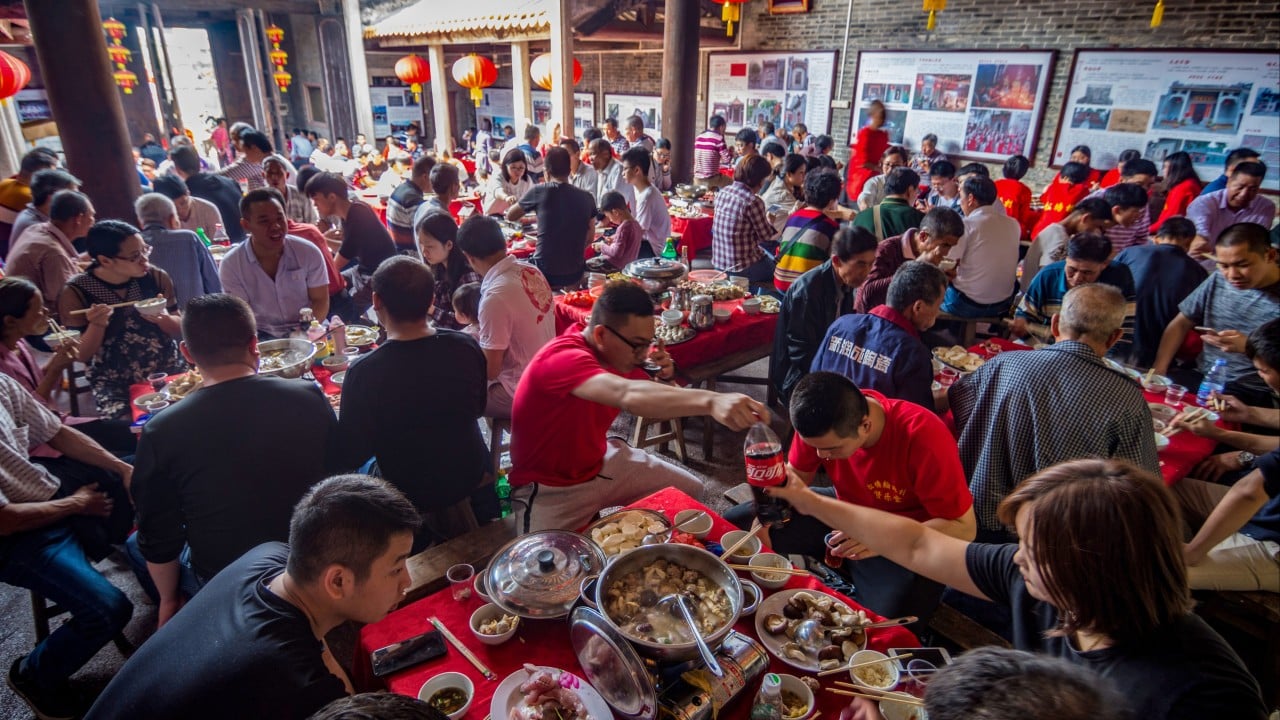
- Social Capital Mobilization: Crises naturally isolate households due to shame, caregiver burnout, or social awkwardness. A celebratory ritual reverses this vector. By issuing formal invitations, the family compels its extended network to converge, witness, and validate the household's resilience, converting latent social ties into active emotional and financial support.
Cause-and-Effect Mechanics in Historical and Modern Contexts
Standard cultural commentary often reduces chong xi to a quaint historical curiosity where a dying son is married off to a healthy bride to "cure" him. This framing misses the underlying economic and legal transfer mechanisms that drove the custom in pre-modern agrarian societies.
In imperial and early republican China, patrilineal continuity determined property inheritance and elder care security. When an eldest son fell critically ill, the household faced dual existential threats: the emotional loss of a child and the structural collapse of its lineage and labor base. Executing an emergency wedding served three pragmatic functions:
- Lineage Insurance: If the groom survived, the ritual was credited with his recovery. If he died shortly after, the bride was already legally integrated into the household, allowing the family to adopt an heir from a collateral branch under the deceased son's name, thereby securing ancestral rites and property retention.
- Labor Acquisition: Bringing a daughter-in-law into the household immediately added an able-bodied adult to manage domestic and caregiving duties during a period when the family's internal labor capacity was severely strained by medical care.
- Status Stabilization: Publicly executing a full wedding signaled to creditors, neighbors, and local authorities that the family retained sufficient liquidity and social standing to honor major obligations, preventing opportunistic predation during a moment of vulnerability.
Modern Behavioral Realignment
As nuclear family structures, institutional healthcare, and formal financial markets replaced lineage-based survival systems, the literal "deathbed wedding" became obsolete and legally untenable. However, the core psychological mechanism of chong xi migrated into modern lifestyle and behavioral practices.
Today, individuals experiencing sustained career setbacks, health scares, or emotional burnout frequently deploy scaled-down versions of the ritual. Buying a high-visibility luxury asset, hosting an unscheduled banquet for extended family, or accelerating an engagement during a period of familial illness are modern manifestations of the same underlying logic.
From a behavioral psychology perspective, these actions operate as pattern interrupts. Chronic stress locks the human nervous system into a sustained sympathetic response, impairing executive function and reinforcing learned helplessness. A high-stakes, socially public celebratory event forces a radical shift in cognitive load. Planning and executing the event requires forward-looking logistics, generates acute bursts of dopamine and oxytocin through social bonding, and establishes a clear temporal boundary: everything before the event belongs to the era of misfortune; everything after belongs to a reset baseline.
Known Facts Versus Speculative Hypotheses
Rigorous evaluation requires drawing a hard line between documented anthropological realities and unproven causal claims regarding health and luck.
Established Historical and Sociological Facts:
- Documented Prevalence: Imperial legal codes, local gazetteers (difangzhi), and late-Qing to Republican-era literature confirm that chong xi weddings were widely practiced across socioeconomic classes, particularly in southern and central China.
- Psychosomatic Effects: Modern clinical psychology confirms that acute positive social support, reduction of isolation, and shifts in patient morale measurably improve treatment adherence and subjective quality of life in chronically ill patients.
- Financial Signaling: Anthropological studies of Chinese kinship networks demonstrate that life-cycle banquets function as informal credit and mutual-aid clearinghouses, where gift money (hongbao) provides immediate liquidity to the hosting family.
Unverified Metaphysical and Medical Hypotheses:
- Direct Physiological Cures: There is zero empirical evidence that ritual celebration alters the cellular progression of infectious diseases, malignancies, or genetic disorders. Historical accounts of miraculous recoveries following a chong xi wedding reflect survivorship bias, misdiagnosis of self-limiting illnesses, or natural remission.
- Causal Fate Alteration: The proposition that auspicious symbols or coordinated joy exert an external, metaphysical force capable of altering probabilistic outcomes in business or personal safety remains an article of cultural belief rather than measurable reality.
Failure Modes and Operational Limitations
Deploying celebratory rituals to counter acute crises carries severe structural risks. When misapplied, the mechanism amplifies the exact distress it is intended to resolve.
The Coercive Asymmetry Problem
Historically, the primary failure mode of chong xi was extreme asymmetry in risk distribution. While the groom's family gained caregiver labor and lineage insurance, the bride absorbed catastrophic downside risk. If the groom died, the young woman faced lifelong widowhood, social stigma regarding remarriage, and potential mistreatment by in-laws who viewed her arrival as a failed ritual—blaming her personal horoscope (bazi) for failing to overcome the groom's misfortune. Modern equivalents occur when individuals pressure romantic partners or family members into premature life commitments solely to soothe their own existential anxiety.
Financial Over-Extension
In contemporary contexts, using large-scale celebrations or major purchases to "wash away" financial stagnation creates a direct liquidity trap. When a household or business owner responds to declining cash flow by hosting an expensive banquet or acquiring status symbols to project prosperity, they deplete essential capital reserves. Rather than reversing the downturn, the ritual accelerates insolvency.
Emotional Suppression and Delayed Processing
Forcing immediate celebration during active grief or severe medical trauma can induce toxic positivity and emotional dissociation. If family members are prevented from processing fear, anger, or sorrow because ritual protocol demands smiles and red attire, the unaddressed psychological trauma frequently surfaces later as severe burnout, interpersonal resentment, or clinical depression.
Tactical Framework for Modern Application
When stripping away fatalistic superstition and coercive historical baggage, the underlying logic of chong xi offers a viable tactical playbook for managing acute personal or organizational slumps. To execute a modern ritual reset without triggering its failure modes, apply four strict constraints:
- Audit Liquidity Before Execution: Never fund a morale-boosting milestone with debt or essential emergency reserves. The celebratory intervention must remain financially neutral or net-positive; if the cost of the ritual increases baseline financial stress, the intervention is net-negative.
- Eliminate Asymmetric Externalities: Ensure no third party bears uncompensated downside risk for your psychological reset. Do not rush interpersonal commitments—such as engagements, marriages, or business partnerships—as a reactionary response to unrelated personal crises. Keep the scope of the ritual focused on self-contained milestones (e.g., hosting a dinner, completing a personal physical challenge, or renovating a living space).
- Establish a Hard Temporal Boundary: Use the event explicitly as a psychological demarcation line. Define specific operational behaviors that terminate on the day of the event—such as rumination on a failed venture or passive avoidance of a health regimen—and pair the celebration with a concrete, disciplined action plan starting the following morning.
- Separate Ritual Morale from Objective Diagnostics: Treat the celebratory surge strictly as an energy and morale multiplier, never as a substitute for technical problem-solving. Execute the ritual to restore cognitive bandwidth and social support, then immediately deploy that restored energy into medical compliance, financial restructuring, or operational execution.
Organizations and individuals facing prolonged stagnation should stop waiting for external conditions to improve before authorizing morale-building milestones. Engineer a bounded, financially disciplined celebratory event at the trough of the cycle to break psychological paralysis, re-engage your immediate support network, and convert passive endurance into active execution.