The resurgence of measles in the United States is not an accident of nature. It is the predictable outcome of a deliberate political project. When public health policy is handed over to figures hostile to institutional medicine, contagious pathogens do not negotiate ideological differences. They simply find the unprotected hosts they require.
Over the past year, the return of measles outbreaks across multiple states has forced epidemiologists to confront a very different kind of problem. This is not just vaccine hesitancy driven by suburban anxiety or wellness influencers peddling unverified supplements. This is an organized, state-supported skepticism that has weaponized administrative authority against basic epidemiological science.
When Robert F. Kennedy Jr. assumed a prominent role influencing federal health policy, the warning bells did not ring quietly. They sounded like a five-alarm fire in an empty warehouse. Decades of public health infrastructure, built brick by brick through smallpox eradication and polio containment, are now being stress-tested by officials who treat consensus science as a conspiracy theory.
The mechanism of measles is brutally efficient. It is arguably the most contagious virus known to human medicine. A single infected person can walk into a room, leave, and up to two hours later, an unvaccinated individual who walks into that same space can contract the disease. The reproduction number, known as R-naught, sits between twelve and eighteen. For comparison, seasonal influenza sits closer to one or two.
Because the transmission dynamics are so punishingly effective, herd immunity requires an exceptionally high threshold of vaccination. Communities need roughly 95 percent coverage with the measles, mumps, and rubella vaccine to keep the pathogen at bay. When administrative rhetoric chips away at that buffer, dropping coverage rates even a few percentage points in a given zip code, the math turns lethal.
Public health has always operated on a social contract. You get vaccinated not just to protect yourself, but to form a living shield around the infant too young to receive the shot, the cancer survivor undergoing chemotherapy whose immune system has been wiped clean, and the elderly neighbor whose cellular memory is fading.
When political leaders undermine that contract under the banner of medical freedom, they misunderstand the nature of infectious disease. Your freedom to refuse a proven prophylactic ends where my child's right to breathe uninfected air begins. Contagion does not respect libertarian philosophy.
The Anatomy of Institutional Erosion
To understand how a preventable childhood disease makes a national comeback, we have to look past the individual parent scrolling through social media at midnight. We have to look at the top.
For decades, the public health apparatus enjoyed a quiet, technocratic stability. Agencies like the Centers for Disease Control and Prevention and the Food and Drug Administration operated with a degree of insulation from partisan swings. Flawed? Absolutely. Bureaucratic? Often to a fault. But their core mission remained tethered to empirical data.
When that insulation was breached, the machinery of trust began to seize. Figures entering the orbit of federal health leadership brought with them a career's worth of grievance against pharmaceutical manufacturers and regulatory agencies. While legitimate criticism of corporate pharma is a necessary element of modern journalism, conflating corporate greed with the biological efficacy of a measles vaccine is a catastrophic category error.
The rhetoric sounds populist. It frames institutional medicine as an elite cartel attempting to force compliance on a free populace. But the casualties of this narrative are not pharmaceutical executives sitting in corporate boardrooms. The casualties are toddlers hospitalized with pneumonia, children suffering from acute encephalitis, and communities scrambling to quarantine schools.
The messaging from prominent vaccine skeptics relies on a sophisticated distortion of risk. They isolate rare adverse events, magnify them out of all proportional reality, and cast the tried-and-true MMR vaccine as an experimental intervention.
Let us look at the historical record clearly. The MMR vaccine has been administered to hundreds of millions of children over more than half a century. Its safety profile is among the most thoroughly documented in the history of pharmacology. The original paper linking it to autism was thoroughly debunked, retracted by the journal The Lancet, and its lead author stripped of his medical license for scientific fraud. Yet the ghost of that fraudulent paper continues to walk the earth, resurrected whenever it suits a political agenda.
On the Ground in Outbreak Zones
Reporting from a community experiencing an active measles outbreak reveals a chilling sociological pattern. These clusters are rarely distributed randomly across a map. They concentrate tightly in areas where institutional trust has collapsed entirely.
In suburban enclaves and rural pockets alike, alternative health networks have filled the vacuum left by retreating public health departments. These networks offer a powerful sense of belonging. To reject standard medical advice is to signal membership in an in-group that fancies itself uniquely enlightened.
When local health officials attempt to trace contacts during an outbreak, they frequently hit a wall of silence. Parents refuse to share attendance lists at private gatherings. School administrators hesitate to enforce exclusion policies for unvaccinated children out of fear of legal retaliation or community backlash.
The financial cost alone is staggering. A single measles case can trigger a public health investigation requiring hundreds of hours of contact tracing, laboratory testing, and quarantine enforcement. Multiply that by dozens of cases, and municipal health departments—already chronically underfunded and exhausted from the post-pandemic exodus of personnel—are pushed past the breaking point.
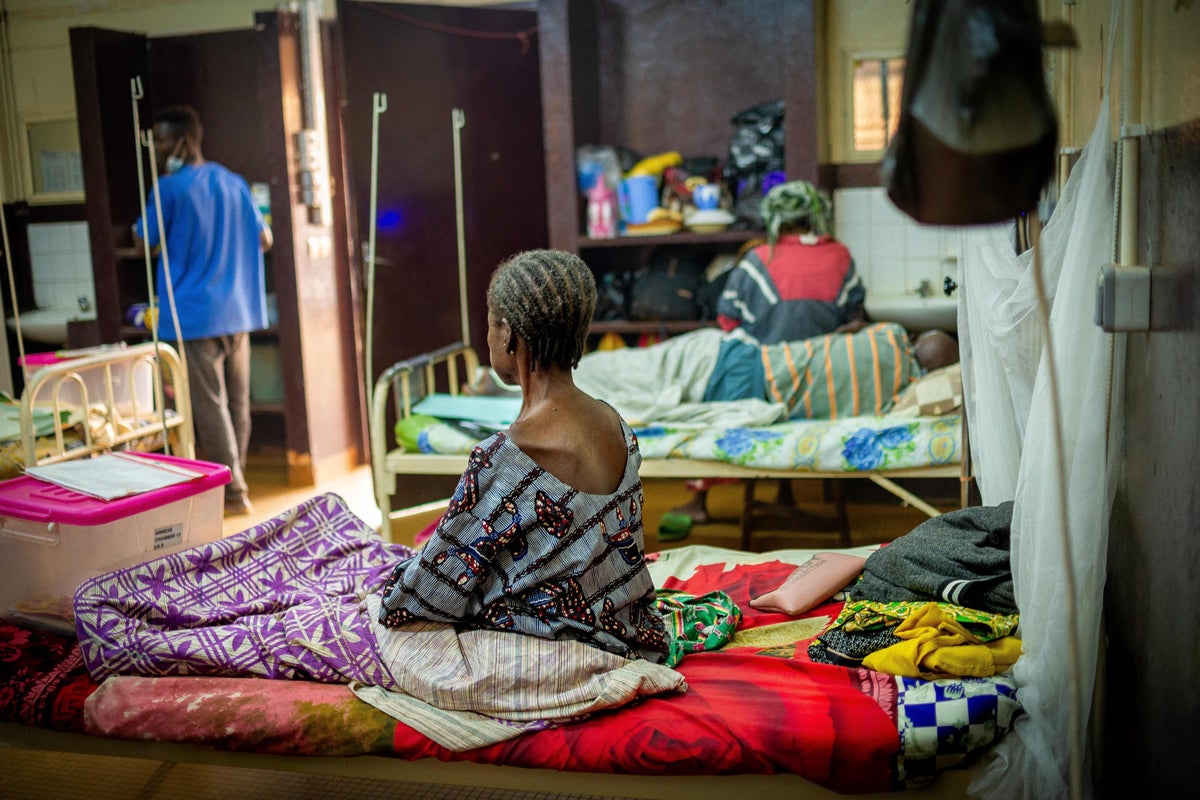
Meanwhile, the human toll accumulates quietly in pediatric intensive care units. Physicians watch parents realize, too late, that measles is not just a mild childhood rash that results in a day off school and some itchy spots.
Measles wipes out the immune system's memory. This phenomenon, known as immune amnesia, means that a child who survives measles can suddenly become vulnerable to other infectious diseases they had previously immunity against, such as influenza or strep throat. The body forgets what it has learned.
The Policy Failure at the Federal Level
The danger of an administration elevating figures who question basic virology goes beyond mere bad advice. It changes the legal and regulatory framework within which local health departments operate.
When federal guidance becomes muddled or openly hostile to standard vaccination schedules, state legislators take their cue from Washington. Bills emerge aiming to strip health departments of their authority to mandate vaccines for school entry. Religious and philosophical exemptions expand, turning the concept of a school vaccine mandate into a voluntary suggestion.
This is where the political game turns dangerous. Politicians who are themselves fully vaccinated reap the short-term electoral rewards of pandering to an anti-establishment base, while the long-term biological consequences are paid by constituents who were fed a diet of sophisticated disinformation.
There is a profound difference between healthy skepticism and willful blindness. Science is built on self-correction. Hypotheses are tested, data is scrutinized, and conclusions are revised when new evidence demands it.
Vaccine hesitancy, in its current political manifestation, does not operate this way. It rejects the entire framework of empirical verification. If a study shows vaccines are safe, the study is dismissed as corrupt. If surveillance data shows rising infection rates in unvaccinated populations, the data is called a fabrication. When evidence is rendered unfalsifiable by conspiracy theory, rational debate becomes impossible.
What Real Recovery Requires
Rebuilding the broken architecture of public health will take a generation, assuming we begin the work immediately. It cannot be accomplished by lecturing parents or mocking those who have fallen down the rabbit hole of health misinformation.
It requires radical transparency from regulatory agencies, an unyielding crackdown on fraudulent wellness marketers who profit from fear, and political leaders who refuse to trade children's health for short-term political leverage.
The resurgence of measles serves as a brutal diagnostic tool for our political culture. It tells us precisely how much damage can be done when truth is treated as optional and expertise is branded as tyranny.
Until we restore a shared baseline of reality where the biological facts of contagion outweigh the political convenience of denial, the charts will keep trending upward, the hospital beds will fill, and children will continue to pay the price for adult delusions.