When flames tear through the heart of a small town, the physical ash is only half the story.
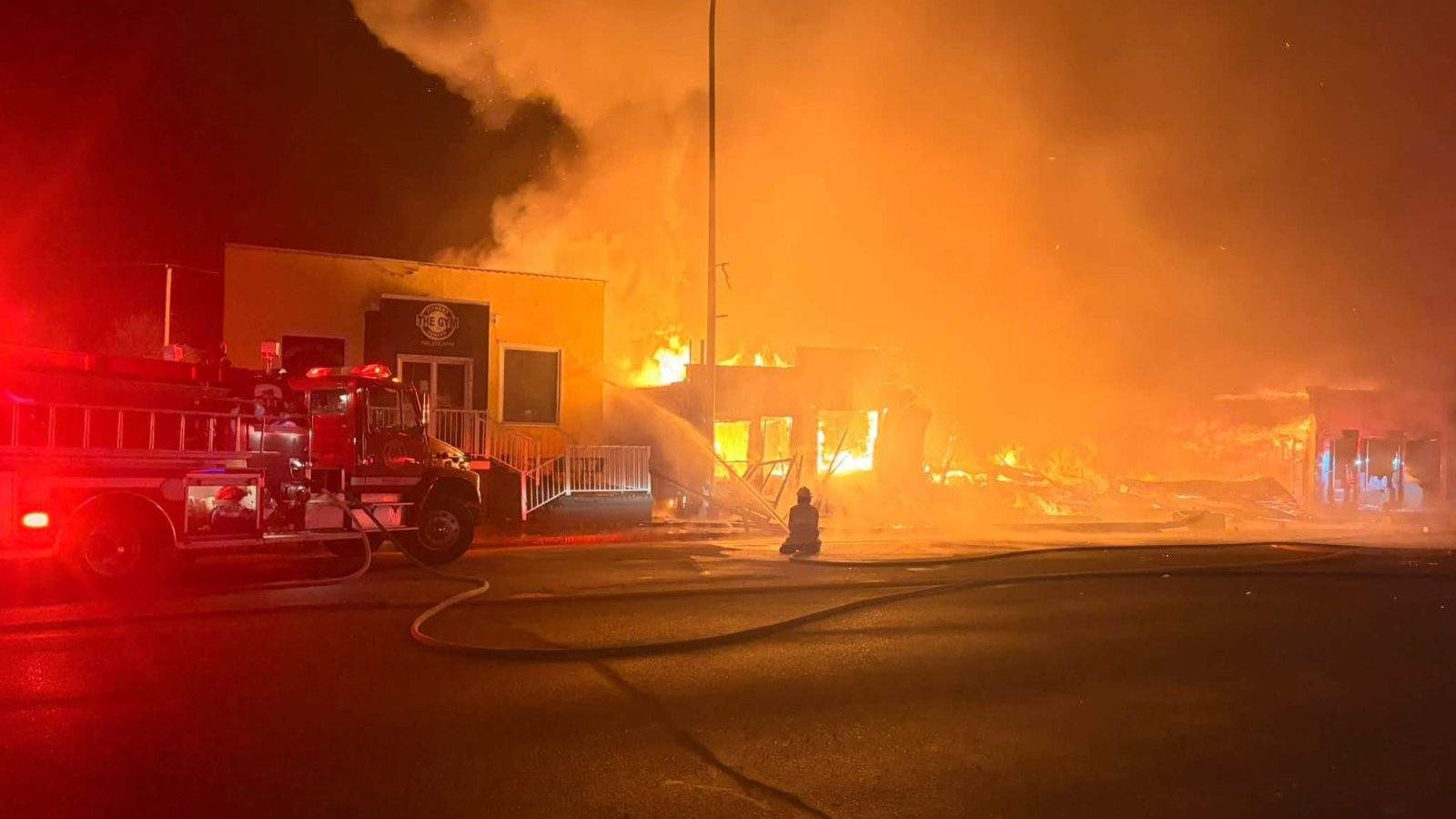
In Mayerthorpe, Alberta, a major blaze destroyed at least three local businesses, leaving a gaping hole right in the middle of the community's commercial core. Most news reports stop at the immediate spectacle—the smoke plumes, the fire trucks, and the initial damage estimates. That misses the actual crisis. For another look, read: this related article.
For a rural municipality northwest of Edmonton, losing three storefronts at once isn't just an insurance headache. It's an economic earthquake that shakes everything from local tax revenue to where residents buy groceries, grab coffee, or get basic services done without driving an hour down the highway.
Why Small-Town Commercial Fires Hit Differently
Big cities absorb disaster through sheer volume. If a block burns down in Edmonton or Calgary, commuters take a different street, customers walk two blocks over, and the municipal tax base barely notices a blip. Similar analysis regarding this has been shared by Al Jazeera.
Rural towns don't have that buffer.
In communities like Mayerthorpe—located along Highway 43 in Lac Ste. Anne County—Main Street is an ecosystem where every single business relies on the foot traffic generated by its neighbors. When three businesses vanish overnight, the surviving shops next door immediately feel the drop in walk-in traffic. People stop making the trip into the town center if half their errands can no longer be completed there.
Here is the reality nobody likes talking about after the fire trucks leave:
- Shared infrastructure vulnerabilities: Older rural commercial buildings frequently share party walls, attic spaces, and aging electrical systems. Once a fire takes hold in one roof cavity, stopping it before it jumps to adjacent structures becomes a brutal fight against time and wind.
- Water supply pressure: Volunteer and regional fire departments across rural Alberta often have to shuttle water via tanker trucks or max out municipal hydrant systems when battling multi-structure blazes.
- Underinsurance traps: Construction costs in rural areas have skyrocketed over the past few years. Business owners who haven't updated their replacement-cost coverage often discover their payout won't even cover clearing the rubble and pouring a new foundation, let alone rebuilding to modern commercial fire codes.
The Hidden Timeline of Rural Recovery
People assume rebuilding starts the week after the fire marshals finish their investigation. It almost never works that way.
First comes the environmental and structural assessment. Older commercial buildings in small towns frequently contain asbestos, lead paint, or unstable masonry that requires specialized abatement crews brought in from larger urban centers. Just getting a fenced-off lot cleared safely can stretch into months.
Then comes the permitting and code gap. A building constructed in the 1950s or 1970s was grandfathered under old regulations. The moment you rebuild from scratch, you have to meet current Alberta building and fire codes—sprinkler systems, updated egress routes, modern insulation standards, and accessibility requirements. For an independent shop owner, those mandatory upgrades can double the projected cost of reconstruction.
Honestly, this is the exact point where many small-town business owners quietly walk away. Facing two years of lost income while fighting insurance adjusters and contractors, taking a partial payout and retiring—or relocating to a leased space elsewhere—often looks like the only financially sane choice.
What Fire Investigation and Mutual Aid Look Like on the Ground
When a major structure fire breaks out in a community the size of Mayerthorpe, no single station handles it alone.
Regional mutual aid agreements kick in immediately. Neighboring departments from surrounding communities in Lac Ste. Anne County and nearby jurisdictions send pumpers, ladder trucks, and tanker support. Firefighters work in rotating shifts, often in harsh Alberta weather conditions, just to protect exposures—the buildings standing right next to the active fire.
Once the hotspots are drowned, the focus shifts to origin and cause. Fire investigators examine burn patterns, electrical panels, heating equipment, and security footage to determine whether the blaze started accidentally or requires further scrutiny. Until that official report is signed off, insurance companies rarely release major reconstruction funds.
How Residents and Business Owners Can Respond Right Now
Waiting around for government grants or slow-moving insurance checks kills momentum. If you live in Mayerthorpe or run a small business in any rural community watching this unfold, there are concrete steps that actually make a difference.
- Spend your money on the surviving block. The businesses that didn't burn are currently facing a massive drop in foot traffic because the surrounding storefronts are gone. Buy your lunch there. Use their services. Keep cash circulating locally so a three-business loss doesn't turn into six closures by next winter.
- Audit your commercial replacement coverage today. If you own a rural storefront, pull out your policy this week and look at the actual dollar cap per square foot. Call your broker and ask whether your policy includes bylaw and code upgrade coverage—without it, you'll pay out of pocket to bring a rebuilt shop up to modern safety standards.
- Verify off-site backups and inventory records. You can't claim what you can't prove you owned. Keep digital copies of equipment receipts, supplier invoices, and cloud-synced point-of-sale data completely separate from your physical storefront.
- Support local emergency responders directly. Rural fire departments rely heavily on community backing for equipment upgrades, training, and volunteer recruitment. Showing up when they fundraise matters long before the sirens go off.
Rebuilding a burned-out stretch of Main Street takes years of stubborn local grit, smart insurance planning, and neighbors refusing to take their business down the highway.