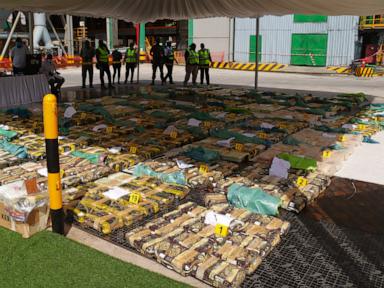
The seizure and subsequent destruction of 1,024 kilograms of high-purity crystal methamphetamine in the western Indian Ocean exposes structural vulnerabilities in maritime security architectures along the East African coastline. Valued at approximately 63 million dollars, the consignment—intercepted roughly 630 kilometers off the coast of Mombasa aboard a flagless motor vessel—demonstrates how transnational drug syndicates exploit vast jurisdictional gaps in oceanic surveillance. Understanding this event requires moving past superficial descriptions of police success and examining the economic incentives, logistical vectors, and institutional pressures that govern maritime narcotics trafficking.
The Geography of Maritime Vulnerability
The western Indian Ocean functions as a transit vector for illicit commodities due to the convergence of sparse naval patrols, complex commercial shipping lanes, and localized governance deficits. Transnational cartels shifting product from manufacturing hubs in Southwest Asia toward African domestic markets and onward distribution nodes utilize non-commercial craft, commonly referred to as dhows or flagless vessels, to evade automatic identification system tracking.
The operational economics of maritime trafficking rely on volume distribution to offset interdiction probability. Transporting over a metric ton of crystal methamphetamine in a single hull requires substantial capital expenditure, indicating that the underlying syndicates operate with institutional-grade financial backing. When naval forces, operating with intelligence support from international bodies such as Interpol and foreign naval criminal investigative agencies, interdict a shipment of this scale, the financial loss alters local market dynamics temporarily but rarely disrupts the overarching supply network.
The Mechanics of Interdiction and Chain of Custody
Executing a high seas interdiction 630 kilometers offshore demands multi-agency coordination, spanning tactical maritime assets, forensic chemistry, and international legal frameworks. In this instance, the Kenya Navy and specialized marine units executed the interception, followed by joint investigative protocols with anti-narcotics units and international crime partners.
The evidentiary chain of custody dictates the legal viability of subsequent prosecutions. Government chemists confirmed the purity of the seized crystalline substance at 98 percent, anchoring the judicial proceedings that led to the eventual incineration of the narcotics under secure supervision. However, the institutional friction generated by high-value seizures often extends internally. The arrest and prosecution of military personnel linked to the logistics chain highlight the vulnerability of state apparatuses to cartel infiltration, proving that maritime security failures are frequently compounded by institutional corruption.
Cost-Benefit Dynamics of Drug Destruction
Publicly incinerating multi-million-dollar drug hauls serves a dual purpose: signaling state compliance with international counter-narcotics treaties and preventing secondary leakage back into illicit markets via corrupt custodians. From an economic perspective, destruction represents a total write-off for the syndicate while imposing recurring operational security costs on state defense budgets.
The following variables dictate the systemic impact of large-scale maritime seizures:
- Interdiction frequency relative to total estimated regional shipping volume
- Intelligence-sharing velocity between regional maritime operations centers
- Judicial processing efficiency to transition from custody to final destruction
- Penetration resistance of domestic security institutions against cartel bribery
Policymakers evaluating maritime drug enforcement must measure success not by the headline-grabbing street value of a single intercept, but by the degree to which interdictions increase the operational overhead and risk profile for trafficking syndicates.
Strategic Allocation of Surveillance Assets
To shift from reactive interception to systemic deterrence, maritime security frameworks must transition toward predictive asset allocation. Relying on intelligence triggers from foreign navies after a vessel has already cleared primary transit zones allows cartels high operational margins.
Enhance radar and satellite monitoring across the Mozambique Channel and the Somali Basin to identify loitering behavior among flagless vessels before consignments reach East African territorial waters.