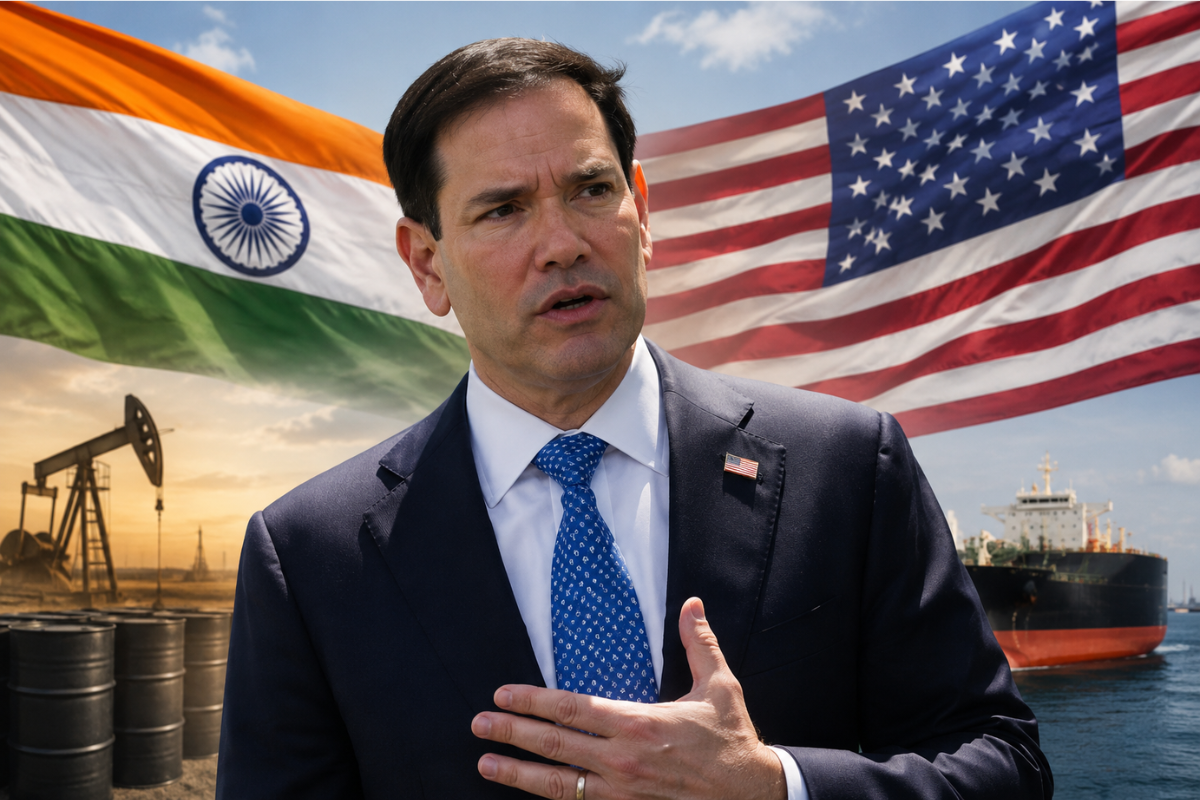
US Secretary of State Marco Rubio just dropped a major statement about sending American crude to New Delhi. He made it clear that the US is ready to sell as much oil as India needs. On the surface, it looks like a massive geopolitical shift. It sounds like a total win-win for both nations.
But it isn't that simple.
Global energy markets don't shift on promises alone. If you look past the bold headlines, the actual mechanics of global oil trading tell a very different story. India wants cheap crude. The US wants to isolate its adversaries. These two goals are currently on a direct collision course.
The Real Story Behind the Marco Rubio Oil Offer to India
Washington is playing a specific strategic game here. By offering unlimited oil, the US is trying to give India an exit ramp from its heavy reliance on discounted Russian crude. Ever since Western sanctions tightened on Moscow, India stepped up to become one of the largest buyers of Russian Urals. It was a pure value play by New Delhi. They saved billions of dollars.
Rubio's statement is a direct attempt to disrupt that flow. The US wants to show it can be a reliable energy guarantor. They want to prove that New Delhi doesn't need to rely on Moscow or volatile Middle Eastern regimes to fuel its economic growth.
It's a textbook diplomatic move. But politics don't pay for supertankers. Economics do.
Why Indian Refiners Aren't Rushing to Buy American Crude
Refineries aren't built on political alliances. They are built on chemical compositions. This is the technical reality most mainstream media reports completely ignore.
Indian refineries, especially the older state-run units, are highly optimized for medium, sour crude grades. Russian Urals fit this profile perfectly. Middle Eastern grades like Arab Light also fit right in.
American oil is different.
The vast majority of US exports consist of West Texas Intermediate (WTI) and Light Sweet Crude from the Permian Basin. It's light. It's sweet. It yields a lot of gasoline but less of the heavy distillates like diesel, which India absolutely craves to power its massive industrial and transport sectors. Processing too much light American crude actually disrupts the operational balance of many Indian plants.
Then there is the issue of price.
Crude Grade Comparison:
- Russian Urals: Medium, Sour / High Diesel Yield / Deeply Discounted
- US WTI: Light, Sweet / High Gasoline Yield / Market Pricing + High Freight
Russia sells its oil to India at a steep discount, often using opaque shipping networks and non-dollar currencies to bypass Western price caps. The US cannot offer discounts. American oil is produced by private corporations, not a state-owned enterprise. Marco Rubio cannot order ExxonMobil or Chevron to lower their per-barrel price for Indian buyers. Indian refiners will have to pay the going market rate, plus the massive shipping costs of moving oil across the Atlantic and through the Cape of Good Hope.
The Shipping Bottleneck No One Talks About
Moving oil from the US Gulf Coast to the west coast of India is a logistical headache. It takes roughly 30 to 40 days for a Very Large Crude Carrier (VLCC) to make that journey. Compare that to shipping oil from the Persian Gulf, which takes less than a week. Even Russian shipments from Novorossiysk or the Baltic ports manage to arrive faster and cheaper through established dark fleet routes.
Longer transit times mean higher freight costs. It means more capital tied up in transit. For a margin-squeezed Indian refiner, those extra dollars per barrel completely ruin the math.
Washington's True Motivation
This offer isn't just about helping India. It's about tightening the screws on Iran and Russia. The US administration is signaling a much harder line on enforcement. They are telling New Delhi that tougher sanctions are coming, and they want to remove India's favorite excuse: "We have no other choice."
By putting this offer on the table, the US sets up a strategic justification. If Washington decides to penalize Indian banks or shipping companies for dealing with sanctioned entities later, they can point back to this moment. They will argue they offered a clean alternative.
What India Will Scale Up Instead
India won't reject the US outright. That would be bad diplomacy. Expect Indian state refiners like IOC and BPCL to sign a few token, long-term supply contracts for US crude. It makes for great press releases.
But the real volume won't shift overnight. India will keep playing the field. They will continue to maximize imports of cheap Russian barrels as long as the shipping channels remain viable. They will keep buying from Iraq and Saudi Arabia to maintain strategic flexibility.
Keep an eye on private refiners like Reliance Industries and Nayara Energy. They possess advanced, complex refineries capable of processing lighter US crude efficiently. If the price spread between WTI and Brent widens enough to offset the freight costs, these private players will buy American. If it doesn't, Rubio's offer remains nothing more than a well-timed political talking point. Watch the price charts, not the diplomatic statements, to see where the oil actually flows.