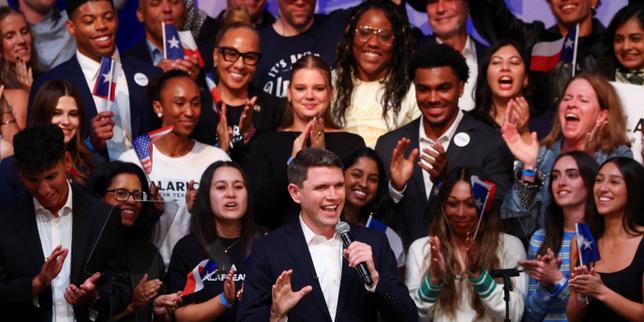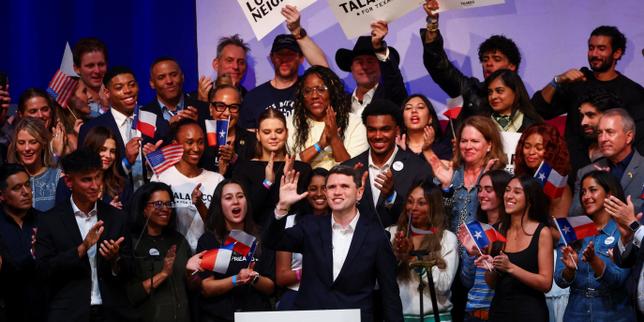
On a chilled November night, when the glare of television monitors washes over rooms filled with leftover coffee and lukewarm pizza, power shifts quietly. We are accustomed to looking at the nation through the prism of Washington. We watch the Senate chamber, count votes on Capitol Hill, and treat state boundaries as mere lines on a map. But real power in America has always lived closer to the dirt, the asphalt, and the public schools. It lives in state capitols.
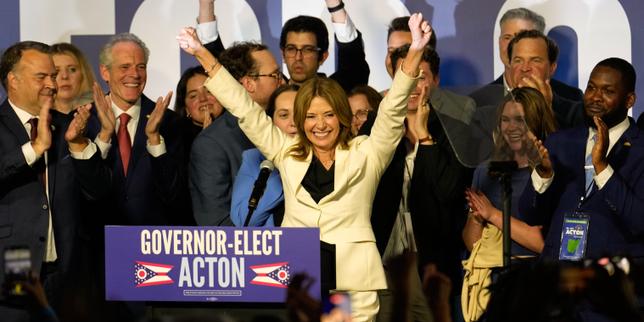
The 2026 midterm elections sent a distinct tremor through the federal landscape, but the true earthquake happened in the gubernatorial races. Long after the national news anchors turned off their teleprompters, state leaders across the country woke up to a rewritten reality. The Democratic Party did not merely hold ground; it secured historic, unprecedented victories in governorships—striking deeply into territory long considered impenetrable and fundamentally altering who controls the levers of everyday life.
The Silent Architecture of the Executive Mansion
To understand why a governor’s race matters, you have to leave the noise of federal cable news behind.
Consider a woman named Sarah. She lives in a mid-sized suburban township outside a rapidly growing state capital. She does not spend her mornings reading federal policy papers or tracking judicial appointments in Washington. Sarah cares about whether the state route near her house will be paved this spring, whether her local public clinic remains open, and whether her small retail business will face shifting state tax codes next year.
When the federal government stalls in gridlock, the governor’s pen remains sharp.
A governor decides whether a state expands healthcare access, signs off on congressional district maps, or vetoes laws passed by a hostile state legislature. They command the National Guard during severe weather emergencies. They appoint the judges who interpret state constitutions. When national politics turns into a war of words, state executive mansions remain the engines of tangible action.
For years, state executive power had tilted heavily toward conservative control in vast stretches of the country. But as the 2026 votes were tallied, that long-standing dynamic cracked open.
Beyond the Usual Borders
Elections are often described using tired metaphors of combat or sport. But what occurred during this cycle was less about political posturing and more about a fundamental shift in local sentiment.
Democratic candidates captured gubernatorial seats not just in predictable coastal enclaves, but across regions where conservative executive rule had been treated as an immovable law of physics. They did it by reframing what state leadership actually means to people living through economic uncertainty.
In key battlegrounds, campaigns were not won on sweeping national soundbites. They were won in diner booths, hardware stores, and union halls. Candidates focused relentlessly on state-specific issues: fixing crumbling infrastructure, lowering energy costs, protecting local education budgets, and ensuring state courts remained independent.
The numbers tell a stark story. Margin by margin, county by county, rural and exurban communities saw shifts that eroded long-standing conservative strongholds. In several states, Democratic contenders achieved historic wins—marking the first time in decades that their party had taken the executive office in those regions, or setting records for voter turnout in off-year elections.
When the dust settled, the geographic balance of power among American governors looked profoundly different than it had just forty-eight hours earlier.
The Veto Pen and the Courtroom
Power is not abstract when it sits on a desk in the governor's mansion. It is immediate.
In many of the states where these unprecedented victories occurred, state legislatures remain firmly in opposition hands. This creates an intense, highly charged environment of divided government. The governor’s office becomes the ultimate line of defense or the primary catalyst for compromise.
Without a governor’s signature, controversial legislation dies on the desk. With a governor’s executive order, state agencies can alter environmental enforcement, adjust labor guidelines, or protect access to reproductive healthcare overnight.
Moreover, these state-level executive victories carry massive implications for the future of electoral mechanics. Governors often hold significant influence over state election boards and appoint the officials who certify electoral outcomes. In a nation where electoral trust has been repeatedly tested, having a steady hand at the top of state administration changes the calculus for every election that follows.
A New Generation of Leadership
Behind the cold data of electoral maps are the individuals who ran, organized, and voted.
The slate of Democratic governors swept into office in 2026 reflects a distinct shift in political profiles. These were not all career politicians molded in national think tanks. Among them were former state prosecutors, local mayors who had managed city budgets during economic downturns, and organizers who had built networks from the ground up.
Their platform rested on a simple, persuasive premise: competence over culture wars.
They argued that state government should function like an essential service rather than an arena for ideological battles. Voters, exhausted by constant national friction, responded to candidates who talked about fixing bridges, supporting local hospitals, and protecting individual rights at the state level.
This pragmatic focus resonated across demographic lines. Independent voters, who had drifted away in previous cycles, returned in significant numbers. Suburban women, crucial to any winning coalition, turned out with remarkable consistency. Even in heavily rural districts, margins tightened enough to allow statewide candidates to cross the finish line ahead.
The Ripple Effect Across the Country
What happens in state capitols rarely stays contained within state lines.
When a party secures a historic wave of state executive victories, it creates an immediate proving ground for national policy ideas. Governors have the unique ability to test policies in real time—whether that involves state-funded childcare initiatives, clean energy investments, or innovative workforce training programs.
If a policy works in one state, it spreads. Other governors copy it. National lawmakers draft federal legislation based on its success. The state executive office is the ultimate incubator for what political strategy looks like in practice.
These victories also establish a visible, high-profile bench of national talent. The governors who emerged victorious in 2026 are no longer just regional figures; they are automatically pushed into the national conversation. They have proven they can win tough races in divided territory, an asset that instantly elevates their standing within their party.
The Reality on the Ground
Back in Sarah's town, the election night broadcasts have ended. The signs along the state highway will soon be pulled down and recycled.
The quiet work of governing now begins.
The political commentators will move on to the next crisis, the next polling cycle, the next debate in Washington. But in state capitals across the nation, new administrations are walking into offices, laying out agendas, and opening the folders that contain the immediate future of millions of citizens.
The victory speeches were loud, filled with cheers and falling confetti. But the true measure of this historic shift will not be found in the speeches. It will be found in the quiet decisions made behind heavy wooden doors, where a single signature on a piece of paper transforms political promises into the lived reality of everyday life.