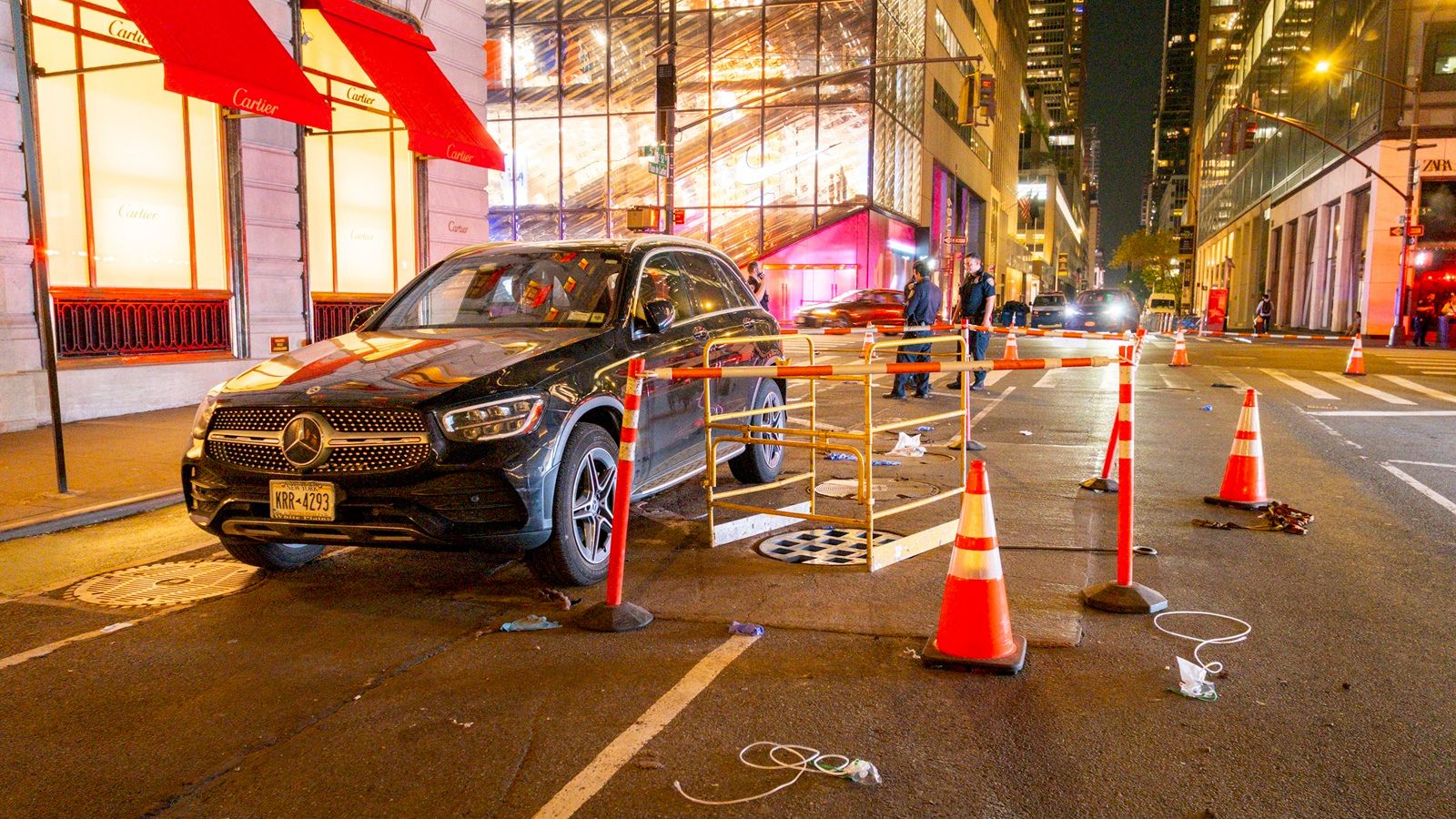
A routine New York City ride ends in a split-second tragedy. A passenger steps out of a luxury vehicle onto a Manhattan street, takes a single step, and falls through an unsecured manhole cover to their death. It sounds like a freak accident. The truth is much more disturbing. Infrastructure failures like this happen far more often than city officials want to admit, and the legal battle to hold anyone accountable is a nightmare.
When infrastructure fails, the human cost is absolute. You expect city streets to hold your weight. You assume the metal grates and heavy iron disks under your feet are secure. But in a dense urban environment like New York, miles of aging utility tunnels run directly beneath the sidewalks and roadways. A loose cover is a cloaked landmine.
Understanding how these accidents happen requires looking past the shocking headlines. It means examining the entities responsible for maintaining what lies beneath the pavement, the specific mechanical failures that turn iron plates into traps, and what you can actually do to stay safe.
The Reality of Urban Infrastructure Failure
Manhole accidents are rarely random acts of God. They are almost always the result of compounding maintenance failures. New York City sits on top of one of the oldest utility grids in the world. Thousands of miles of electrical cables, gas lines, and steam pipes snake under the borough of Manhattan alone.
Con Edison, the city's primary utility provider, manages over 250,000 manholes and service boxes. When underground electrical cables degrade, they can create intense heat and buildup of gases. This pressure sometimes dislodges heavy cast-iron covers, which can weigh anywhere from 200 to 300 pounds. In worse scenarios, the covers are left unbolted or improperly seated after routine maintenance by utility crews or subcontractors.
The weight of a manhole cover gives a false sense of security. You think it cannot move unless a machine lifts it. That is wrong. If a cover is not seated perfectly within its collar, a tire hitting the edge or a pedestrian stepping on the exact wrong spot can flip the disk like a coin. The gap opens instantly.
Who Is Liable When the Ground Swallows a Pedestrian
Filing a lawsuit over a manhole injury or wrongful death is incredibly complex. The legal strategy depends entirely on ownership. Not all manholes belong to the city.
If you trip or fall into a hole, the first hurdle is identifying the owner. The cover itself usually bears an inscription. It might say "Con Ed," "ECS," "NYTel," or "DEP." Each represents a different entity.
- Utility Companies: If a private utility company owns the hardware, general negligence principles apply. You must prove they knew, or should have known, about the hazardous condition and failed to fix it.
- The City of New York: If the cover belongs to a city agency, the legal mountain gets steeper. New York has a "prior written notice" law. Under this rule, the city cannot be held liable for a street or sidewalk defect unless it received written notice of the specific danger at least 15 days before the accident occurred.
There are narrow exceptions to the prior written notice rule. If the city created the hazard through an affirmative act of negligence, or if the city derived a special benefit from that specific section of the street, you might have a case. Proving this requires massive resources, expert engineering testimony, and deep forensic investigation of city records.
Spotting the Signs of a Dangerous Cover
You cannot live your life in fear of the pavement. Still, walking through Manhattan requires a level of situational awareness that most people ignore. Some clear warning signs indicate you should never step on a utility plate.
Rattling sounds are a dead giveaway. If you see a car drive over a manhole cover and hear a loud, metallic clanking, the cover is loose or the frame is warped. Avoid it.
Smoke or steam rising from the holes or gaps is another major red flag. While New York is famous for its steam plumes, smoke accompanied by a burning plastic smell means an electrical fire is brewing downstairs. The risk of a pressure blast or a structural collapse of the surrounding asphalt is high.
Look at the pavement surrounding the iron ring. If the asphalt is cracked, sunken, or crumbling, the structural integrity of the entire vault structure is compromised. The ring can shift under human weight, causing the cover to slide out of its groove.
What to Do If You See a Defective Manhole
Do not assume someone else reported it. If you spot a loose, displaced, or smoking manhole cover in New York City, you need to act immediately to protect others.
Call 911 if there is active smoke, fire, or if the cover is completely missing, leaving an open pit in the street. This is a life-threatening emergency that requires the fire department to secure the perimeter.
For loose, rattling, or sunken covers that are not actively smoking, call 311 or use the NYC 311 mobile app to file a report. Take a photo of the cover and the nearest storefront address. Specify if the cover has a utility name stamped on it. These digital reports create a paper trail. If an accident happens later, that 311 log becomes the crucial "prior written notice" that prevents a negligent entity from claiming they had no idea there was a problem. Walk around the plates, keep your eyes on the ground when stepping off curbs, and never assume the street beneath you is solid.