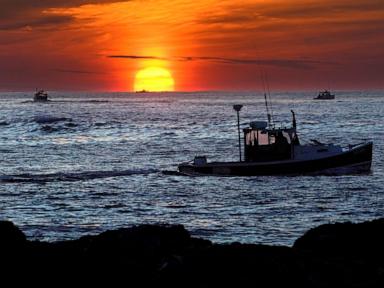
The Maine lobster industry wants you to believe they are victims of a high-tech corporate smear campaign. They spent millions dragging the Monterey Bay Aquarium into federal court over a simple red-list warning.
Now, reality is hitting. The First Circuit Court of Appeals is balking, and appellate judges are openly questioning whether this entire circus has any legal ground to stand on.
Everyone is weeping about free speech versus economic survival. They are missing the entire point. This lawsuit was never a legitimate legal crusade. It is a temper tantrum packaged in legal filings, designed to bully independent science watchdogs into silence.
The Lazy Consensus is Falling Apart
The narrative pushed by industry lobbyists goes like this: an influential aquarium rating program slapped a red label on American and Canadian lobster, grocery chains panicked, and innocent fishermen watched their livelihoods evaporate because of bad data. Therefore, the argument goes, that is defamation.
Hold on. Let us look at how defamation actually works under the law.
Defamation requires a false statement of fact directed explicitly at a specific entity, causing verifiable harm. Monterey Bay Aquarium’s Seafood Watch program did not target individual shacks in Portland or specific captains hauling traps in Bar Harbor. They evaluated an entire fishery management category based on entanglement risks to the critically endangered North Atlantic right whale.
If evaluating an entire industry's ecological footprint counts as defamation, then every consumer report, every ESG rating agency, and every auto-safety review group in America is open to endless litigation. Judge Seth Aframe put it bluntly during oral arguments: broaden this class of plaintiffs, and suddenly everybody can sue anyone for expressing an institutional opinion.
That is not a loophole. That is the death of public advocacy.
The Flawed Strategy of Suing Your Critics
Let us look at the mechanics of what the lobstermen are trying to achieve. They want to weaponize the courts to force independent watchdogs to bake institutional optimism into scientific assessments.
Imagine a scenario where a credit rating agency gets sued for downgrading junk bonds because the issuers claim the rating hurts their stock price. Absurd? Exactly. Yet that is precisely what the commercial fishing lobby expects judges to endorse.
The industry argues that the aquarium omitted countervailing evidence regarding whale populations and alternative dangers posed by Canadian snow crab fisheries. Even if true, omission in an environmental advisory report is a matter for academic debate, legislative hearings, and public relations campaigns. It is not a tort.
When you take a scientific disagreement and force it into a defamation framework, you lose. You reveal that you cannot win the argument in the court of public opinion, so you are renting a courtroom to intimidate the scorekeeper.
The Real Cost of Bad Legal Precedent
Let us talk about what happens if the lobster industry somehow wins this legal anomaly.
Retail giants like Whole Foods pulled Gulf of Maine lobster not because the Monterey Bay Aquarium holds a monopoly on marine biology, but because corporate risk managers hate bad PR. Consumers care about whales. When an advisory group flags a gear entanglement hazard, corporate buyers react to protect their brand image.
Suing the aquarium does not put lobster back on supermarket shelves. It alienates conscious consumers further. It signals that an industry would rather litigate sustainability than adapt to it.
I have watched traditional trade groups burn millions in legal fees on doomed proxy wars, only to watch their market share shrink while they posture on courthouse steps. Litigation is a terrible substitute for innovation. If the gear is a risk to marine mammals, redesign the gear. Stop trying to sue the calendar for changing.
The Uncomfortable Truth About Free Speech
The First Amendment does not protect only speech that you agree with. It protects controversial, stinging, and economically damaging opinions.
Seafood Watch is an advocacy tool backed by interpretation of marine data. Whether you agree with their weighting models or think their risk thresholds are overly cautious, their right to publish that assessment is foundational. Carve out an exception for hurt feelings in the commercial fishing sector, and you open the floodgates for every corporate polluter, pharmaceutical giant, and factory farm to sue environmentalists into bankruptcy.
The appellate court sees right through the veneer. The lawsuit is a systemic threat wrapped in a local grievance.
Stop pretending this is about defending small-town heritage. It is an expensive, failing attempt to criminalize uncomfortable truths.