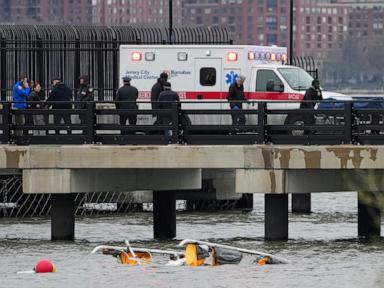
Low-altitude helicopter operations in dense urban corridors exist at the intersection of high avian density and razor-thin safety margins. When a rotary-wing aircraft encounters wildlife, the physical forces involved are fundamentally different—and significantly more destructive—than those experienced by fixed-wing aircraft.
Understanding the catastrophic failure modes of a helicopter bird strike requires analyzing the engineering limits of rotorcraft design, the aerodynamics of rotary flight, and the operational constraints of low-altitude urban corridors.
The Physics of High-Velocity Avian Impact in Rotary Flight
The kinetic energy ($E_k$) transferred during an avian impact is dictated by the velocity square law:
$$E_k = \frac{1}{2} m v^2$$
Where $m$ is the mass of the bird and $v$ is the relative velocity at the point of impact.
In fixed-wing aviation, $v$ is equivalent to the aircraft's true airspeed. In rotary-wing aviation, the equation is complicated by the vector sum of the helicopter's forward airspeed ($v_f$) and the rotational velocity of the rotor blade ($v_r$) at the specific radial station where the strike occurs.
The velocity at the tip of a main rotor blade typically ranges from $650 \text{ to } 750 \text{ feet per second}$ ($440 \text{ to } 510 \text{ mph}$). If a helicopter cruising at $120 \text{ knots}$ ($202 \text{ ft/s}$) strikes a $4\text{-pound}$ Canada goose, the relative velocity at the advancing blade tip ($v_{adv} = v_r + v_f$) can exceed $950 \text{ ft/s}$ ($647 \text{ mph}$).
This extreme velocity elevates the kinetic energy transfer to levels that exceed the structural design limits of standard composite or aluminum rotor blades. The resulting structural damage is not localized; it propagates through the entire dynamic system of the aircraft.
The Three Structural Vulnerability Nodes of Rotary-Wing Aircraft
Unlike modern commercial airliners, which feature redundant engines and robust, bird-strike-certified airframes, light and medium helicopters present three critical single-point-of-failure nodes during an avian encounter.
Node A: Rotor Blade Delamination and Aerodynamic Imbalance
Main rotor blades are highly engineered, hollow or honeycomb-core composite structures designed to flex and twist under aerodynamic loads. A high-mass bird strike on a rotor blade causes immediate structural deformation.
- Skin-to-Core Delamination: The impact shears the adhesive bond between the outer composite skin (often fiberglass or carbon fiber) and the internal honeycomb core. Once delamination occurs, centrifugal forces cause the skin to balloon outward, destroying the airfoil shape.
- Aerodynamic Asymmetry: The damaged blade loses lift while the undamaged blades continue to generate design lift. This creates a severe, once-per-revolution ($1\text{-R}$) aerodynamic imbalance.
- Extreme Mechanical Vibration: This aerodynamic asymmetry translates into violent lateral and vertical vibrations. The mechanical force of these vibrations can quickly exceed the structural limits of the transmission mounts, sever pitch control linkages, or induce "mast bumping" in teetering rotor systems, leading to in-flight separation of the main rotor hub.
Node B: Canopy Penetration and Pilot Incapacitation
The physical barrier between the flight crew and the external environment is a critical point of vulnerability in light helicopters.
+-------------------------------------------------------------------------+
|                  REGULATORY CERTIFICATION COMPARISON                    |
+-------------------------------------------------------------------------+
| FAR Part 27 (Normal Category)       | FAR Part 29 (Transport Category)  |
| - Maximum Weight: < 7,000 lbs       | - Maximum Weight: >= 7,000 lbs    |
| - No bird strike windshield test    | - Must withstand 2.2-lb bird      |
|   required for most legacy models.  |   strike without penetration.     |
+-------------------------------------------------------------------------+
Because many tour and charter helicopters operating in urban environments are certified under historical Federal Aviation Regulation (FAR) Part 27 standards, their windshields are often made of thin acrylic or polycarbonate materials designed primarily for weather protection rather than impact resistance.
When a bird penetrates the windshield, the pilot faces immediate physical trauma, temporary or permanent blindness from acrylic shards, and aerodynamic forces entering the cockpit that make communication and control input nearly impossible.
Node C: Propulsion System and Tail Rotor Vulnerability
Turboshaft engines utilized in helicopters require high volumes of clean airflow. Because these engines are mounted on top of the fuselage, often without protective screens to avoid performance penalties, they are highly susceptible to foreign object ingestion.
- Compressor Blade Distortion: Ingesting avian mass deforms the compressor blades, disrupting the precise airflow required for combustion and triggering an immediate compressor stall or engine surge.
- Tail Rotor Loss of Effectiveness (LTE): The tail rotor, spinning at much higher RPMs than the main rotor, is equally vulnerable. A bird strike on the tail rotor can destroy the pitch change mechanism or fracture a blade, causing an instantaneous loss of anti-torque capability. At low altitudes, this leads to an uncontrollable spin from which recovery is mathematically impossible.
The Urban Corridor Risk Matrix
Urban low-altitude helicopter operations, such as those over New York City, are structurally funneled into high-risk avian zones.
Noise abatement procedures, air traffic control routing, and geographic obstacles force helicopter traffic to conform to narrow corridors, primarily over rivers and coastal waterways. These same waterways serve as natural migratory highways and feeding grounds for heavy waterfowl, such as geese, gulls, and cormorants.
This spatial intersection creates a statistical bottleneck. Helicopters are forced to fly at altitudes between $500 \text{ and } 1,500 \text{ feet}$—the exact altitude band where over $90%$ of avian flights occur. Because these aircraft operate in congested airspace, pilots must maintain constant visual vigilance for other traffic, reducing the scan time available to spot and avoid fast-moving bird flocks.
The Height-Velocity Diagram and Recovery Envelope Constraints
When a bird strike causes mechanical damage or engine failure at low altitudes, the pilot’s options are restricted by the physics of autorotation. This limitation is defined by the Height-Velocity (H-V) diagram, commonly referred to as the "dead man's curve."
The H-V diagram plots the combinations of altitude and airspeed from which a safe landing can be made following an engine failure.
- Low Altitude, Low Airspeed Region: If an engine fails or a rotor is damaged at $300 \text{ feet}$ and $20 \text{ knots}$, the helicopter lacks the potential energy (altitude) to trade for rotor RPM, and the kinetic energy (airspeed) to flare and cushion the touchdown.
- Low Altitude, High Airspeed Region: At $500 \text{ feet}$ and $120 \text{ knots}$, while airspeed is sufficient to drive the rotor blades through autorotation, the time available to recognize the failure, transition the aircraft into a stable descent, and select a landing site is reduced to mere seconds.
In an urban bird strike scenario, the onset of the emergency is instantaneous. If the windshield is breached or the rotor system is damaged, the pilot's cognitive and physical bandwidth is instantly overwhelmed. The transition to autorotation requires lowering the collective pitch lever within approximately $1.0 \text{ to } 1.5 \text{ seconds}$ to prevent the rotor RPM from decaying past the point of no recovery. If mechanical vibrations or physical injury delay this input, the rotor blades stall, and aerodynamic control is lost.
Systemic Risk Mitigation
Mitigating the risk of low-altitude bird strikes requires a shift from reactive investigation to proactive engineering and operational standards. Relying solely on pilot vigilance to avoid birds at cruise speeds is an ineffective safety strategy due to human visual acquisition limits.
- Mandatory Windshield Retrofits: Aviation authorities must phase out legacy acrylic windshields on Part 27 aircraft operating in commercial passenger-carrying configurations. Replacing these with laminated polycarbonate windshields capable of flexing and absorbing high-velocity impacts is the single most effective way to prevent pilot incapacitation.
- Active Avian Radar Integration: Utilizing ground-based, real-time avian radar at urban heliports to track bird flock movements and density. This data must be integrated into pilot pre-flight briefings and air traffic control routing, establishing temporary "no-fly" or "reduced-speed" corridors when high-mass bird activity is detected.
- Structural Health Monitoring (SHM): Implementing continuous vibration-monitoring systems (such as Health and Usage Monitoring Systems, or HUMS) on light helicopters. These systems detect micro-changes in rotor balance, allowing maintenance crews to identify structural delamination or damage that may not be visible during a standard pre-flight walkaround.