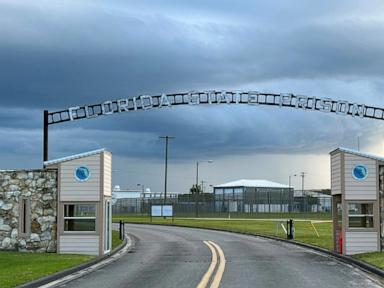
The hum of the air conditioner in the death house is a flat, sterile sound. It does not rise or fall. It simply exists, a constant baseline underneath the squeak of rubber-soled shoes on polished linoleum and the low, occasional murmur of men in uniform.
In a small cell, a man sits on the edge of a steel bunk. His knees ache. The ache is not new; it is the slow, grinding accumulation of decades spent on concrete. He is seventy-four years old. His hair is the color of dry salt, his skin mapped with the pale, papery wrinkles that come from a lifetime lived under fluorescent tubes rather than the sun.
In the eyes of the law, he is a file number, a stack of court transcripts, and the subject of a freshly signed death warrant. In the eyes of history, he is about to become a statistical milestone: the oldest inmate executed in Florida’s modern era.
But here, in the quiet gravity of the cell, those abstractions disappear. There is only a frail body, a ticking clock, and the heavy, unresolved weight of a life defined entirely by its worst day.
The Slow Rust of Union Correctional
To understand how a man reaches this point, you have to understand the passage of time inside. It does not move like water. It moves like glaciers, grinding down everything in its path until only the hardest edges remain.
For forty years, the world outside these walls transformed. Entire technologies rose and fell. Cities expanded. Children grew into middle-aged adults, their faces changing in ways this man would only ever see in faded, state-inspected photographs. Inside, the routine remained absolute. Breakfast at five. Mail call. The steel doors sliding shut with a heavy, metallic thud that vibrates in the teeth.
Imagine a life measured not by achievements, but by the slow decay of your own biology.
First, the eyes go. Reading the tiny print of legal appeals becomes a chore, requiring him to squint through cheap, state-issued glasses that never quite fit. Then, the joints. The daily walk in the recreation yard—once a vital escape—shrinks to a slow shuffle. Eventually, the walker arrives, a metal frame that rattles against the bars, a stark reminder that the state is keeping a man alive just long enough to kill him.
There is a strange, quiet irony in the medical care of death row.
Prisons are legally obligated to maintain the health of the condemned. If this seventy-four-year-old man’s heart begins to fail, doctors will rush to stabilize him. If his blood pressure spikes, he is given medication. The state expends immense effort and taxpayer resources to ensure his heart keeps beating, his lungs keep expanding, and his mind remains clear. All of this is done so that, on a specific Tuesday at six in the evening, a team of executioners can systematically shut those systems down.
It is a bureaucratic paradox that defies simple logic. It is the sterile, mechanical application of justice.
The Ghost of a Long-Ago Crime
Every story on death row has a prologue, and this one is written in blood.
Decades ago, before the grey hair and the arthritis, there was a crime. There were victims—real people whose lives were violently cut short, leaving behind a wake of grief that has not faded with the passing of the seasons. For the families of those victims, the passage of forty years has not cured the pain. It has only hardened it into a quiet, enduring demand for a final reckoning.
To them, the age of the man on the gurney is irrelevant.
They do not see a frail seventy-four-year-old grandfather figure. They see the young, cold-eyed man who shattered their world. They see the empty chairs at their Thanksgiving tables, the birthdays never celebrated, the futures stolen in a flash of violence. For these families, the execution is not about cruelty; it is about the final, overdue closure of a ledger that has remained open for far too long.
But as the date approaches, the question of what this execution actually accomplishes begins to hover over the proceedings.
Is it justice to wheel an elderly, infirm man into an execution chamber? Or does the passage of so much time turn the punishment into something else entirely—a performative act of vengeance on a man who no longer resembles the person who committed the crime?
The Chemistry of the Final Hour
When the time comes, the procedure is handled with the efficiency of a high-school science lab.
The state of Florida utilizes a three-drug cocktail designed to anesthetize, paralyze, and finally stop the heart. It is a process that has been challenged, debated, and litigated in supreme courts for generations. Yet, the machinery of the state grinded onward, unimpeded by the philosophical doubts of those outside.
Consider the physical reality of the chamber.
The gurney is leather and steel. The straps are worn smooth by the wrists of the men who came before. For an elderly man, the simple act of climbing onto that table is an ordeal. His frail arms, mapped with delicate, blue veins, must be accessed by the execution team. In older inmates, finding a viable vein is notoriously difficult. The skin is thin, the vessels prone to collapsing.
What should be a clinical, rapid process can easily devolve into a agonizing search, with technicians probing the flesh of an old man as the witnesses watch through a glass partition.
It is a scene that evokes discomfort in even the most ardent supporters of the death penalty. It forces us to look at the machinery of our justice system not as an abstract concept, but as a physical act performed by human beings upon another human being.
The Silence Left Behind
When the curtain finally falls, there are no grand revelations.
The witnesses will file out into the humid Florida night, the reporters will rush to file their stories, and the family of the victims will take a deep, shaky breath, hoping that the ghost that has haunted them for forty years has finally been laid to rest.
Back inside the prison, a cell will stand empty.
The mattress will be rolled up. The few personal belongings—a couple of books, a radio, a stack of yellowed letters—will be packed into a cardboard box to be claimed by relatives or discarded as waste. The rattle of the walker on the concrete will be gone.
We are left to grapple with the quiet, unsettling reality of what occurred. We did not just execute a criminal; we executed a history. We extinguished a life that had become a permanent fixture of the state's darkest corner, leaving behind only the cold, unyielding silence of the limestone walls.