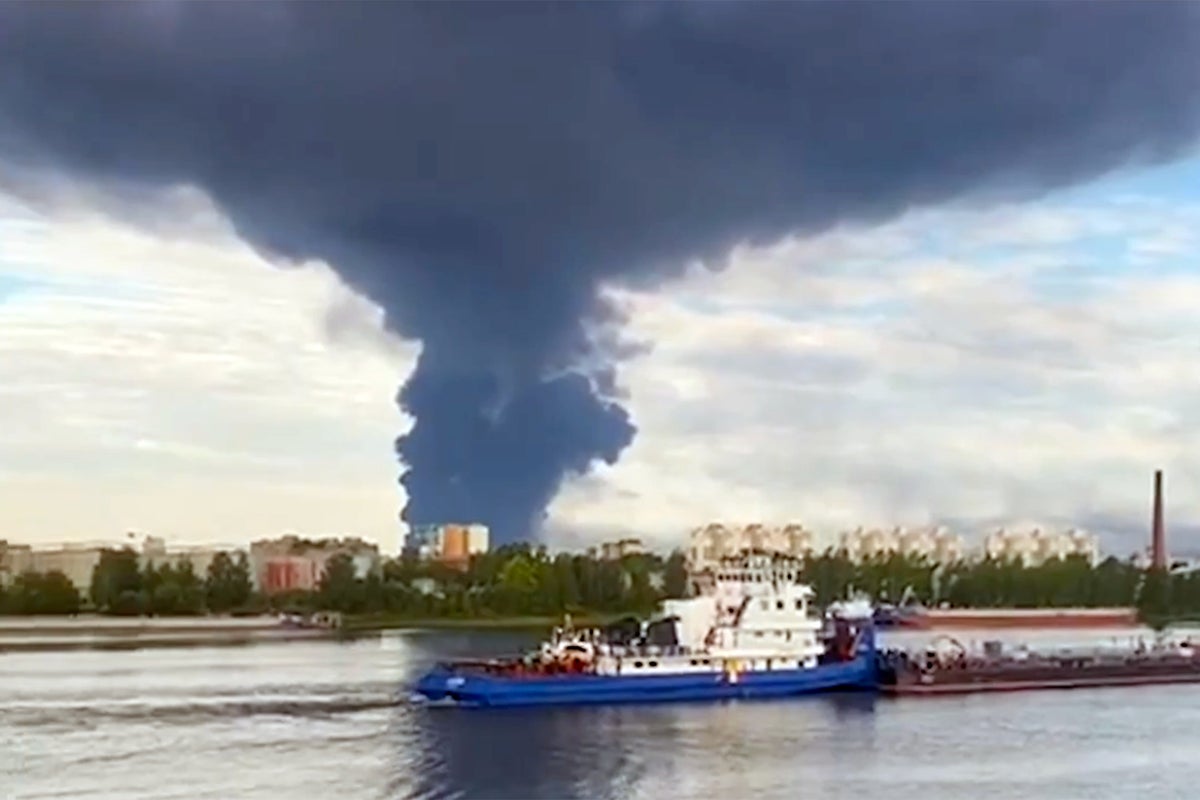
Everyone is cheering for the coordinates. When headlines blare about a drone hitting a processing unit thirteen hundred kilometers deep inside Russian territory, the internet erupts with maps, vector lines, and breathless commentary about technological prowess.
It feels good. It looks like justice on a monitor.
It is also strategically irrelevant to the actual outcome of the conflict.
I have spent years looking at energy logistics, supply chain vulnerabilities, and the brutal mathematics of state-level attrition. When analysts look at a burning distillation column and see a fatal blow to the Russian war machine, they are falling for the oldest trap in modern warfare: mistaking tactical theater for strategic gravity.
Let us dismantle the lazy consensus.
The Geography of Resilience
The conventional narrative assumes that high-value targets equate to high-impact vulnerabilities. If you hit a refinery, you stop the fuel. If you stop the fuel, the tanks stop moving. Simple. Clean. Completely wrong.
Russia is not a modern, hyper-optimized, just-in-time logistics startup. It is a sprawling, inefficient, highly decentralized energy behemoth built specifically to survive structural collapse. When a drone detonates on a primary processing unit in Tatarstan or Ryazan, it makes a spectacular fireball. It destroys millions of dollars worth of specialized Western-built catalytic cracking hardware—hardware that is admittedly hard to replace under sanctions.
To the armchair general, that looks like a checkmate move.
To anyone who understands Soviet-legacy industrial design, it is a localized annoyance. Russia possesses the largest refining capacity in Europe. It produces vastly more fuel than its domestic economy and military combined can consume. Taking out ten or fifteen percent of nominal throughput via targeted strikes does not starve the frontlines. It creates localized price spikes, forces internal rerouting, and shifts export portfolios away from refined products toward crude oil.
Crude is harder to stop. It flows through pipelines that cannot be easily grounded by a drone strike, or it gets loaded onto shadow fleet tankers in the Baltic and the Black Sea.
The Fallacy of the High Tech Fix
Let us address the mechanics. Why do these strikes happen? Because they are asymmetrical, cheap to produce, and politically mandatory for Kyiv to demonstrate retaliatory capability to domestic audiences and western donors.
The political logic is undeniable. The military logic is a mirage.
Every long-range drone sent thirteen hundred kilometers requires complex telemetry, satellite navigation backups, and evasion paths through dense electronic warfare bubbles. It is an engineering marvel. But military utility is not measured by how far something flies; it is measured by how much it shifts the enemy's willingness or ability to prosecute a war.
If you burn a secondary distillation tower, the Kremlin does not pull back a single artillery brigade from Donetsk. They simply shift refined product allocation from civilian consumption in Siberia to military logistics hubs in the west. The civilian driver pays more at the pump in Nizhny Novgorod. The Russian soldier gets his diesel anyway.
This is the nuance the breathless headline-writers miss. Modern industrial states have massive fat layers. Burning the fat does not starve the muscle.
The Replacement Trap
Proponents of the deep-strike strategy point to sanctions and technology import bans. They argue that because Russian refineries rely heavily on European and American engineering firms for maintenance—companies like UOP or ABB—these strikes inflict permanent, unhealable wounds.
Here is where I have to correct the record based on industrial reality: machinery can be bypassed, smuggled, or substituted.
China exists. India exists. Domestic parallel import networks exist.
When a Western catalyst unit is destroyed, repair times are measured in months, not years, and the workarounds are already priced into the black-market cost of war. Russia's state revenue does not collapse because a few fractionating columns are out of commission. It fluctuates based on global Brent crude benchmarks, OPEC production quotas, and the discount rate demanded by buyers in Asia.
As long as crude keeps pumping out of Western Siberia and the Urals, the cash registers in Moscow keep ringing. Refineries are downstream. You are attacking the tap while the reservoir is wide open.
What the People Also Ask Section Gets Wrong
Type the parameters of these strikes into any search engine and you will see the same recurring questions: Are drone strikes crippling the Russian economy? Can Ukraine win the war through strategic bombing?
The answers given by mainstream pundits are almost uniformly affirmative, driven by wishful thinking rather than hard numbers.
Let us answer them brutally honestly.
Are drone strikes crippling the Russian economy? No. They are annoying it. They are creating inflationary pressures in specific regions and forcing the central bank to manage domestic fuel shortages, but the macroeconomic engine remains heavily insulated by wartime Keynesian spending and massive oil and gas export rents.
Can Ukraine win through strategic bombing? Historical precedent says no. Air campaigns against industrial infrastructure—from the Blitz to the Rolling Thunder campaign in Vietnam to the allied bombing of Germany—consistently overestimate the psychological and logistical fragility of centralized states. Populations under authoritarian pressure do not rise up because gas prices double. They hunker down. Military logistics adapt.
Strategic bombing is a force multiplier, not a substitute for ground attrition. If the frontline infantry cannot hold or advance, burning a refinery a thousand miles away is an expensive fireworks display.
The Unspoken Downside
Every strategy has a cost, and our contrarian approach demands that we admit the downsides of my own skepticism.
By pointing out that these long-range strikes have limited strategic weight, am I arguing that Kyiv should stop launching them? Absolutely not.
War is not just a spreadsheet of kinetic efficiency. It is a psychological contest. If the Russian public has to look at air defense sirens in major industrial centers, the illusion of a safe, untouched homeland evaporates. Putin's social contract—quiet compliance in exchange for domestic stability—gets frayed.
That matters. Domestic friction in an autocracy is a real asset.
Furthermore, forcing Moscow to deploy expensive, sophisticated air defense systems—like Pantsir and S-400 batteries—away from the frontline to protect provincial oil refineries creates tactical blind spots where frontline aviation and drone operators can operate with greater impunity.
That is the true value of the thirteen-hundred-kilometer strike. It is not the destruction of the refinery. It is the forced misallocation of the enemy's air defense capital.
The Real Objective
If you want to understand what actually hurts the Russian war machine, stop looking at burning metal in the deep interior. Look at the mud, the trench lines, the artillery barrel lifespan, the electronic warfare suppression rates, and the demographic exhaustion of trained personnel.
Wars of attrition are won by breaking the adversary's capacity to generate mass at the point of contact. Everything else is noise designed to look good on an evening news broadcast.
The next time you see a headline about a drone shattering a record for distance, remember what is actually happening. It is a brilliant tactical stunt masking a strategic stalemate.
Stop cheering for the smoke. Look at the map where the blood is actually being spilled.